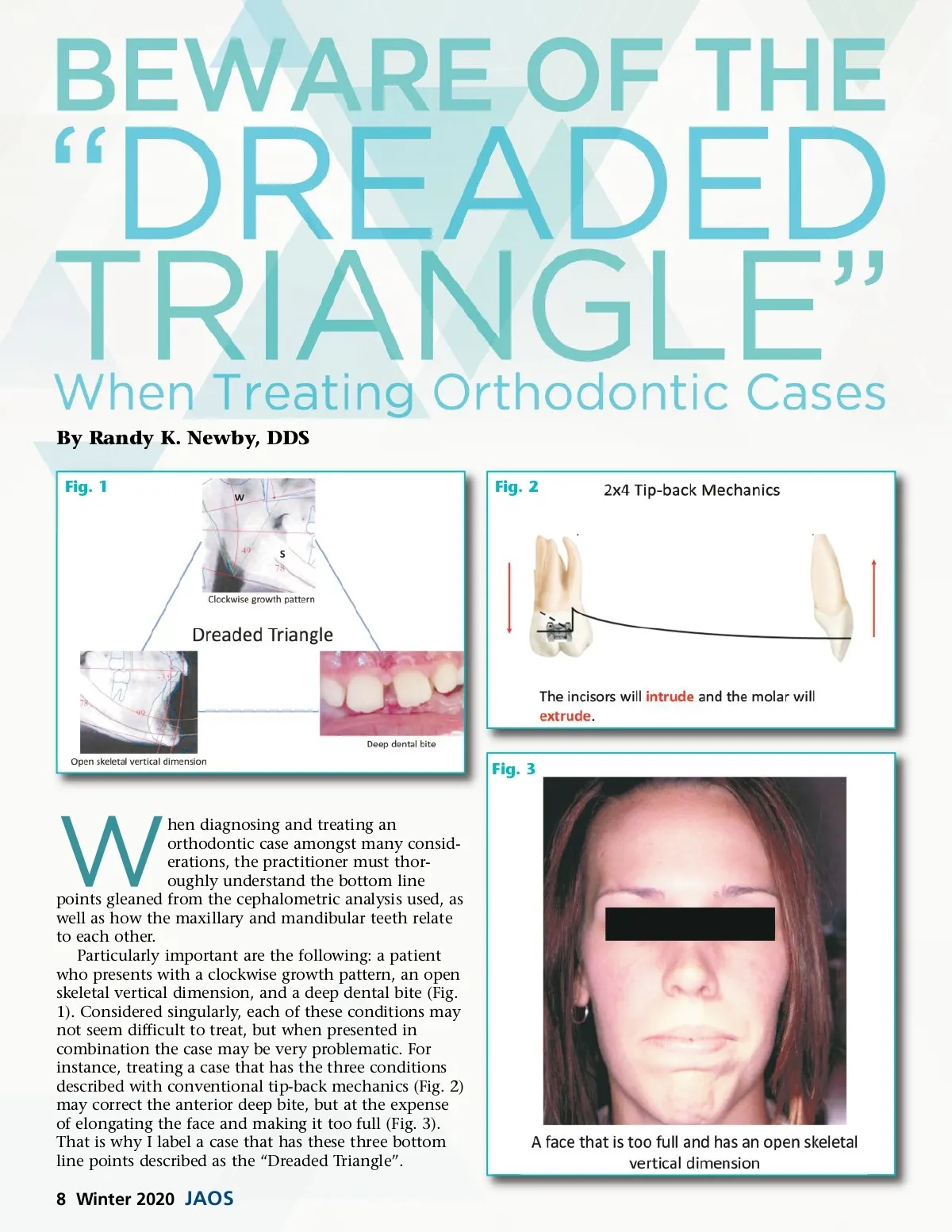
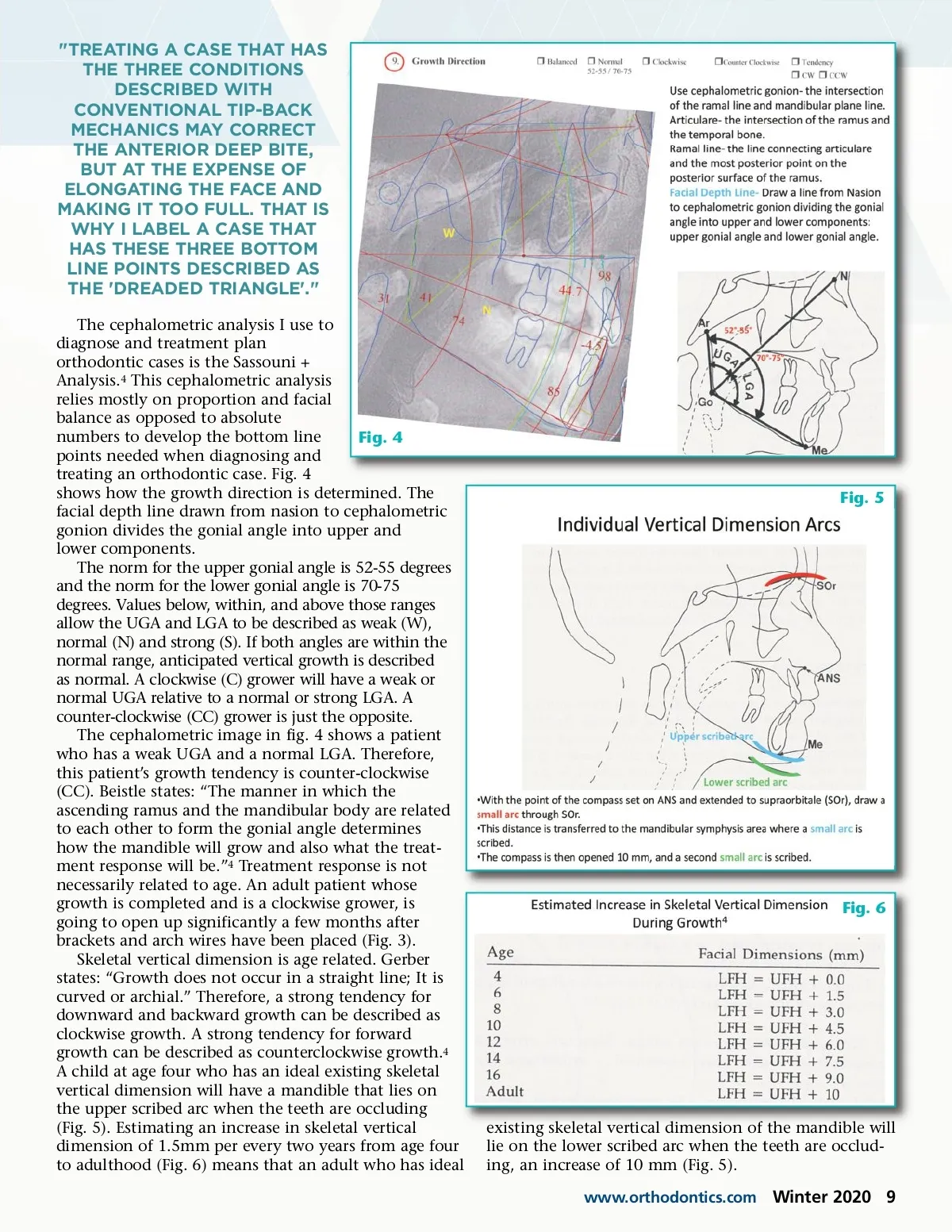
By Randy K. Newby, DDS Fig. 1 Fig. 2 Fig. 3 W hen diagnosing and treating an orthodontic case amongst many consid-erations, the practitioner must thor-oughly understand the bottom line points gleaned from the cephalometric analysis used, as well as how the maxillary and mandibular teeth relate to each other. Particularly important are the following: a patient who presents with a clockwise growth pattern, an open skeletal vertical dimension, and a deep dental bite (Fig. 1). Considered singularly, each of these conditions may not seem difficult to treat, but when presented in combination the case may be very problematic. For instance, treating a case that has the three conditions described with conventional tip-back mechanics (Fig. 2) may correct the anterior deep bite, but at the expense of elongating the face and making it too full (Fig. 3). That is why I label a case that has these three bottom line points described as the “Dreaded Triangle”. 8 Winter 2020 JAOS
Journal of the American Orthodontic Society Winter 2020: Page 8