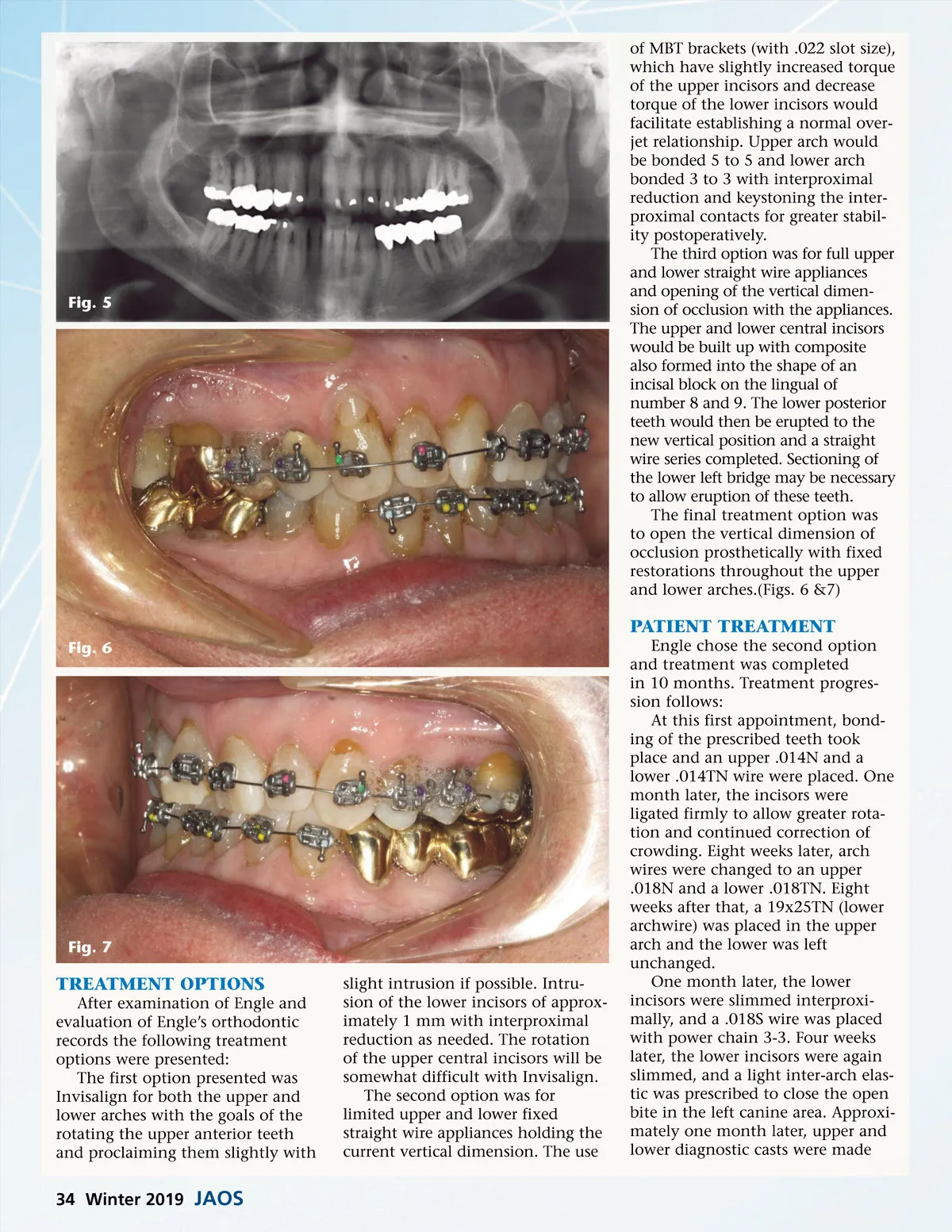
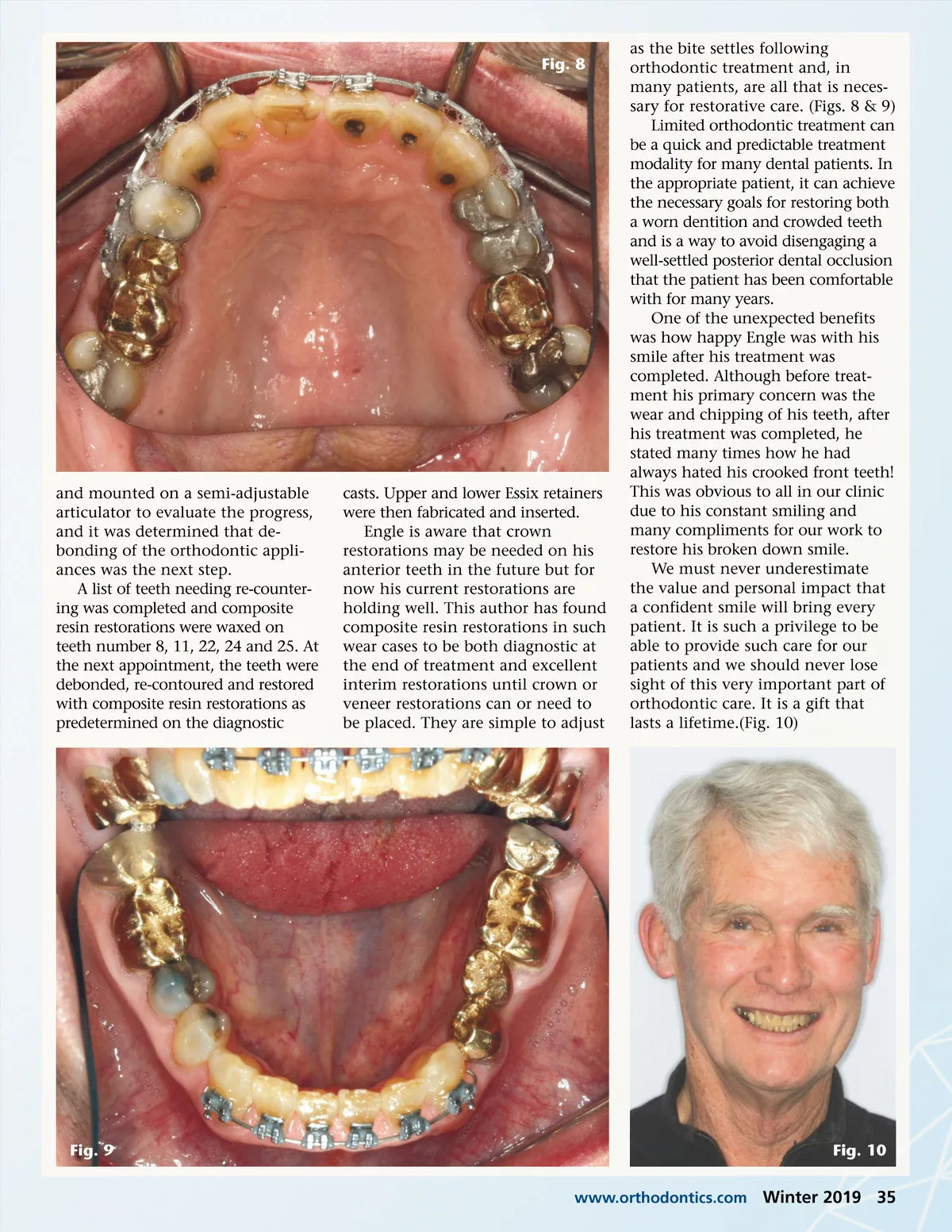
Fig. 8 and mounted on a semi-adjustable articulator to evaluate the progress, and it was determined that de-bonding of the orthodontic appli-ances was the next step. A list of teeth needing re-counter-ing was completed and composite resin restorations were waxed on teeth number 8, 11, 22, 24 and 25. At the next appointment, the teeth were debonded, re-contoured and restored with composite resin restorations as predetermined on the diagnostic casts. Upper and lower Essix retainers were then fabricated and inserted. Engle is aware that crown restorations may be needed on his anterior teeth in the future but for now his current restorations are holding well. This author has found composite resin restorations in such wear cases to be both diagnostic at the end of treatment and excellent interim restorations until crown or veneer restorations can or need to be placed. They are simple to adjust as the bite settles following orthodontic treatment and, in many patients, are all that is neces-sary for restorative care. (Figs. 8 & 9) Limited orthodontic treatment can be a quick and predictable treatment modality for many dental patients. In the appropriate patient, it can achieve the necessary goals for restoring both a worn dentition and crowded teeth and is a way to avoid disengaging a well-settled posterior dental occlusion that the patient has been comfortable with for many years. One of the unexpected benefits was how happy Engle was with his smile after his treatment was completed. Although before treat-ment his primary concern was the wear and chipping of his teeth, after his treatment was completed, he stated many times how he had always hated his crooked front teeth! This was obvious to all in our clinic due to his constant smiling and many compliments for our work to restore his broken down smile. We must never underestimate the value and personal impact that a confident smile will bring every patient. It is such a privilege to be able to provide such care for our patients and we should never lose sight of this very important part of orthodontic care. It is a gift that lasts a lifetime.(Fig. 10) Fig. 9 www.orthodontics.com Fig. 10 Winter 2019 35
Journal of the American Orthodontic Society Winter 2019: Page 35