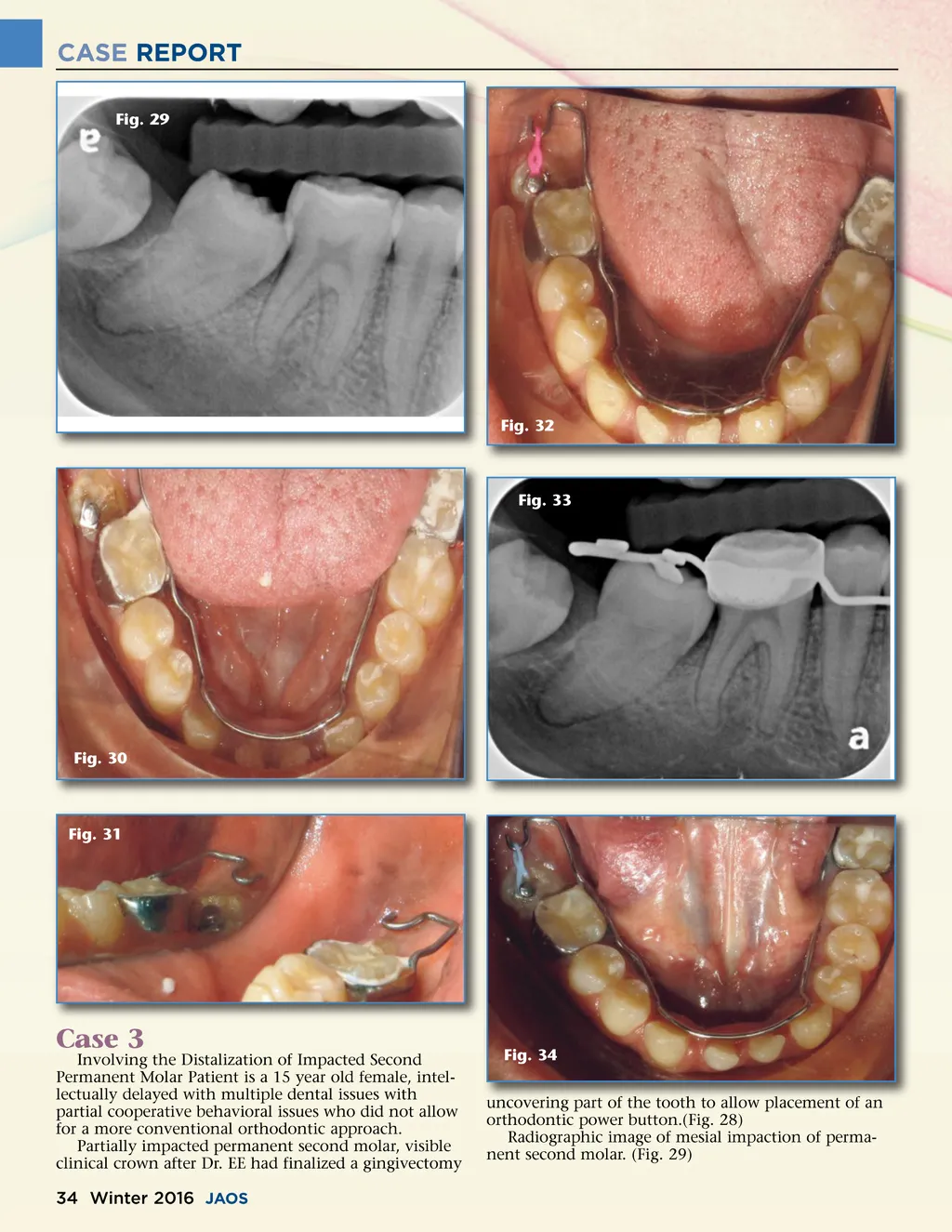
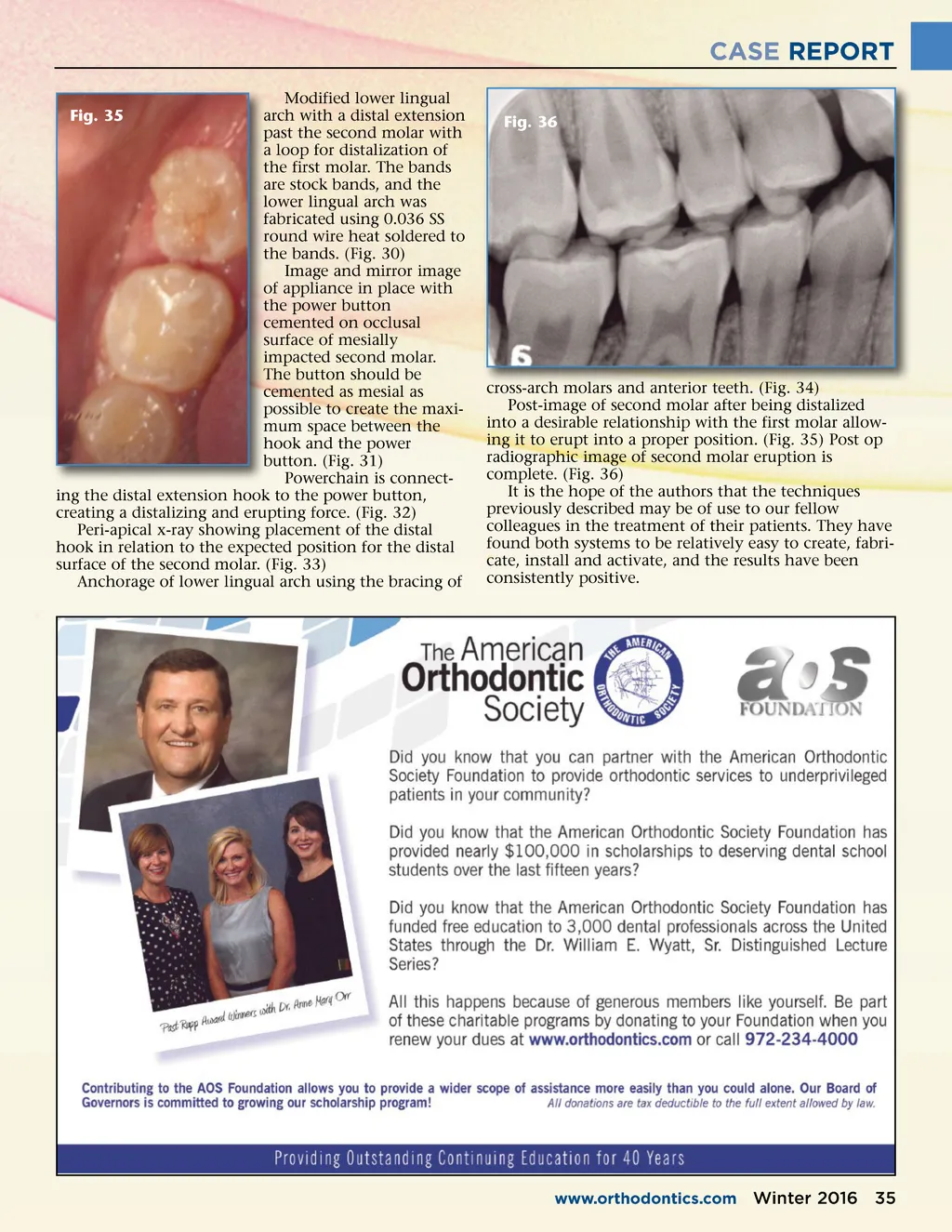
CASE REPORT Modified lower lingual arch with a distal extension past the second molar with a loop for distalization of the first molar. The bands are stock bands, and the lower lingual arch was fabricated using 0.036 SS round wire heat soldered to the bands. (Fig. 30) Image and mirror image of appliance in place with the power button cemented on occlusal surface of mesially impacted second molar. The button should be cemented as mesial as possible to create the maxi-mum space between the hook and the power button. (Fig. 31) Powerchain is connect-ing the distal extension hook to the power button, creating a distalizing and erupting force. (Fig. 32) Peri-apical x-ray showing placement of the distal hook in relation to the expected position for the distal surface of the second molar. (Fig. 33) Anchorage of lower lingual arch using the bracing of Fig. 35 Fig. 36 cross-arch molars and anterior teeth. (Fig. 34) Post-image of second molar after being distalized into a desirable relationship with the first molar allow-ing it to erupt into a proper position. (Fig. 35) Post op radiographic image of second molar eruption is complete. (Fig. 36) It is the hope of the authors that the techniques previously described may be of use to our fellow colleagues in the treatment of their patients. They have found both systems to be relatively easy to create, fabri-cate, install and activate, and the results have been consistently positive. www.orthodontics.com Winter 2016 35
Journal of the American Orthodontic Society Winter 2016: Page 35