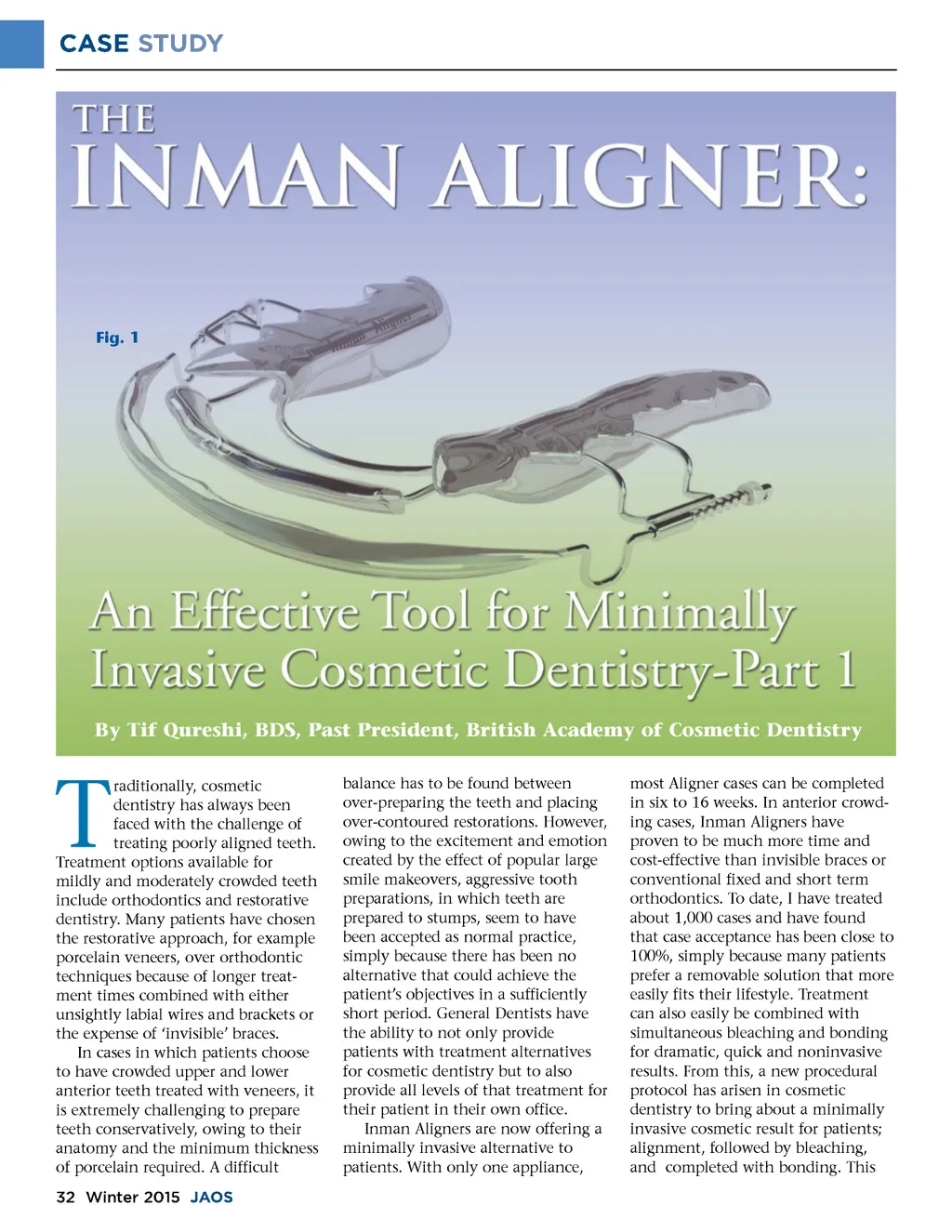
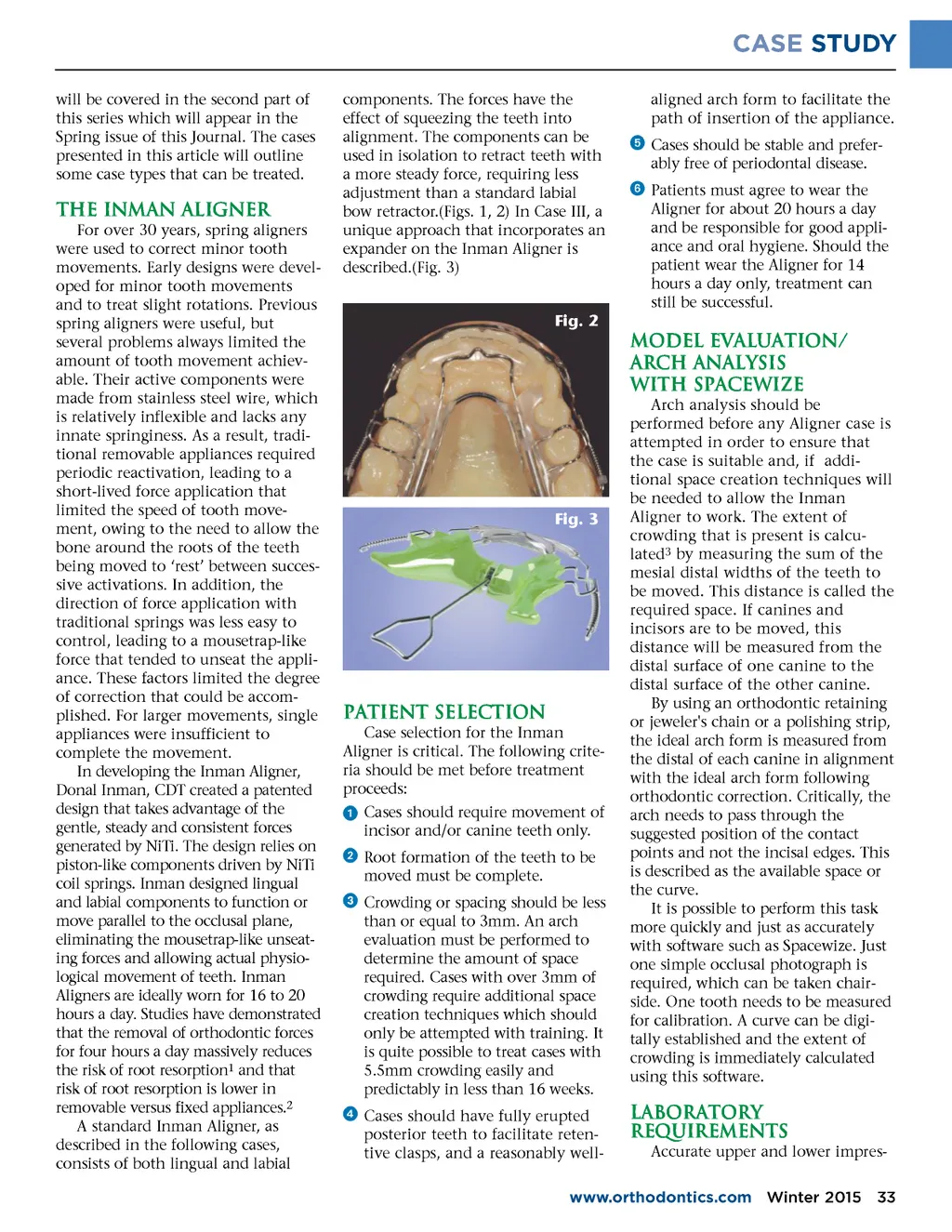
CASE STUDY Fig. 1 By Tif Qureshi, BDS, Past President, British Academy of Cosmetic Dentistry T raditionally, cosmetic dentistry has always been faced with the challenge of treating poorly aligned teeth. Treatment options available for mildly and moderately crowded teeth include orthodontics and restorative dentistry. Many patients have chosen the restorative approach, for example porcelain veneers, over orthodontic techniques because of longer treat-ment times combined with either unsightly labial wires and brackets or the expense of ‘invisible’ braces. In cases in which patients choose to have crowded upper and lower anterior teeth treated with veneers, it is extremely challenging to prepare teeth conservatively, owing to their anatomy and the minimum thickness of porcelain required. A difficult balance has to be found between over-preparing the teeth and placing over-contoured restorations. However, owing to the excitement and emotion created by the effect of popular large smile makeovers, aggressive tooth preparations, in which teeth are prepared to stumps, seem to have been accepted as normal practice, simply because there has been no alternative that could achieve the patient’s objectives in a sufficiently short period. General Dentists have the ability to not only provide patients with treatment alternatives for cosmetic dentistry but to also provide all levels of that treatment for their patient in their own office. Inman Aligners are now offering a minimally invasive alternative to patients. With only one appliance, most Aligner cases can be completed in six to 16 weeks. In anterior crowd-ing cases, Inman Aligners have proven to be much more time and cost-effective than invisible braces or conventional fixed and short term orthodontics. To date, I have treated about 1,000 cases and have found that case acceptance has been close to 100%, simply because many patients prefer a removable solution that more easily fits their lifestyle. Treatment can also easily be combined with simultaneous bleaching and bonding for dramatic, quick and noninvasive results. From this, a new procedural protocol has arisen in cosmetic dentistry to bring about a minimally invasive cosmetic result for patients; alignment, followed by bleaching, and completed with bonding. This 32 Winter 2015 JAOS
Journal of the American Orthodontic Society Winter 2015: Page 32