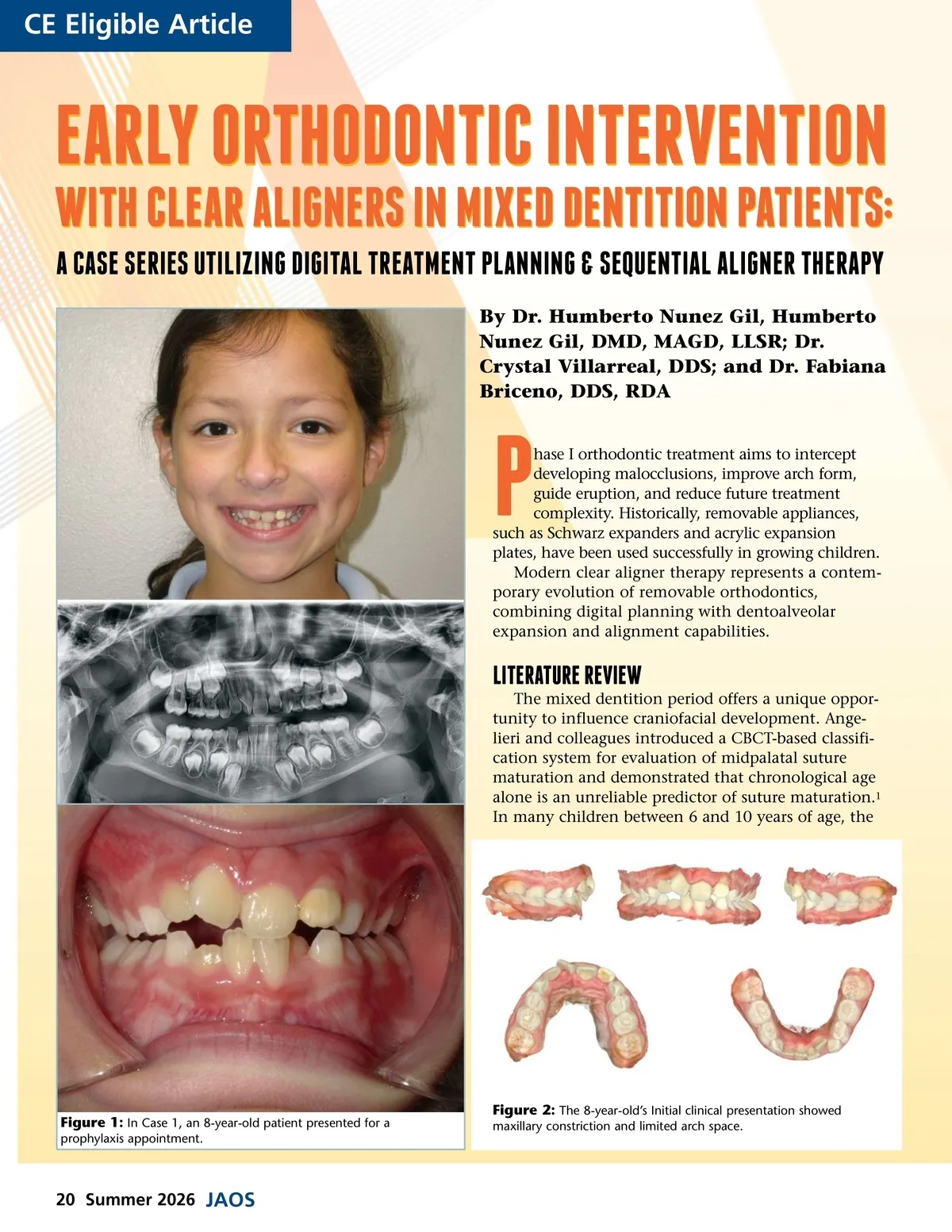
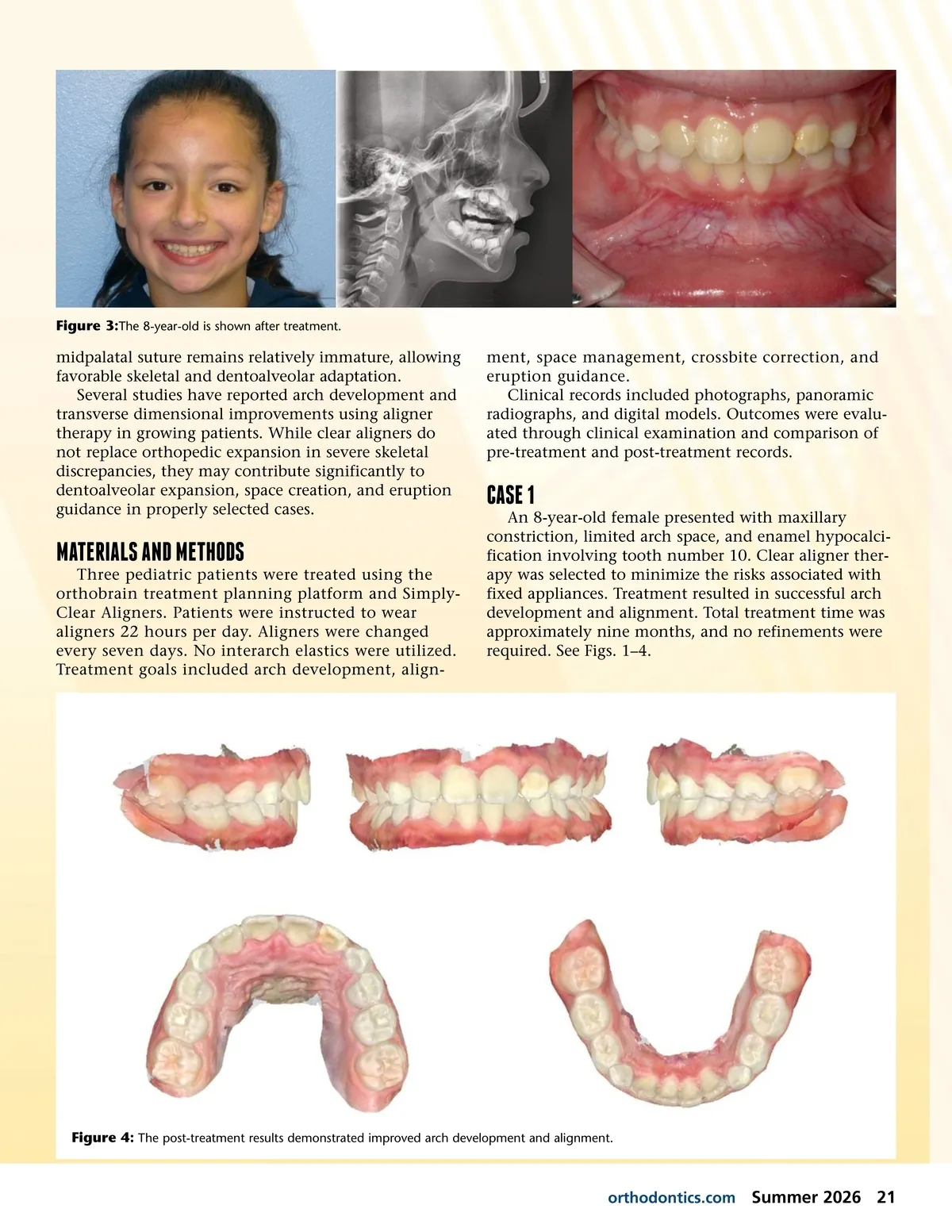
Figure 3: The 8-year-old is shown after treatment. midpalatal suture remains relatively immature, allowing favorable skeletal and dentoalveolar adaptation. Several studies have reported arch development and transverse dimensional improvements using aligner therapy in growing patients. While clear aligners do not replace orthopedic expansion in severe skeletal discrepancies, they may contribute significantly to dentoalveolar expansion, space creation, and eruption guidance in properly selected cases. ment, space management, crossbite correction, and eruption guidance. Clinical records included photographs, panoramic radiographs, and digital models. Outcomes were evalu-ated through clinical examination and comparison of pre-treatment and post-treatment records. casE 1 An 8-year-old female presented with maxillary constriction, limited arch space, and enamel hypocalci-fication involving tooth number 10. Clear aligner ther-apy was selected to minimize the risks associated with fixed appliances. Treatment resulted in successful arch development and alignment. Total treatment time was approximately nine months, and no refinements were required. See Figs. 1–4. MatErials and MEthOds Three pediatric patients were treated using the orthobrain treatment planning platform and Simply-Clear Aligners. Patients were instructed to wear aligners 22 hours per day. Aligners were changed every seven days. No interarch elastics were utilized. Treatment goals included arch development, align-Figure 4: The post-treatment results demonstrated improved arch development and alignment. orthodontics.com Summer 2026 21
Journal of the American Orthodontic Society Summer 2026: Page 21