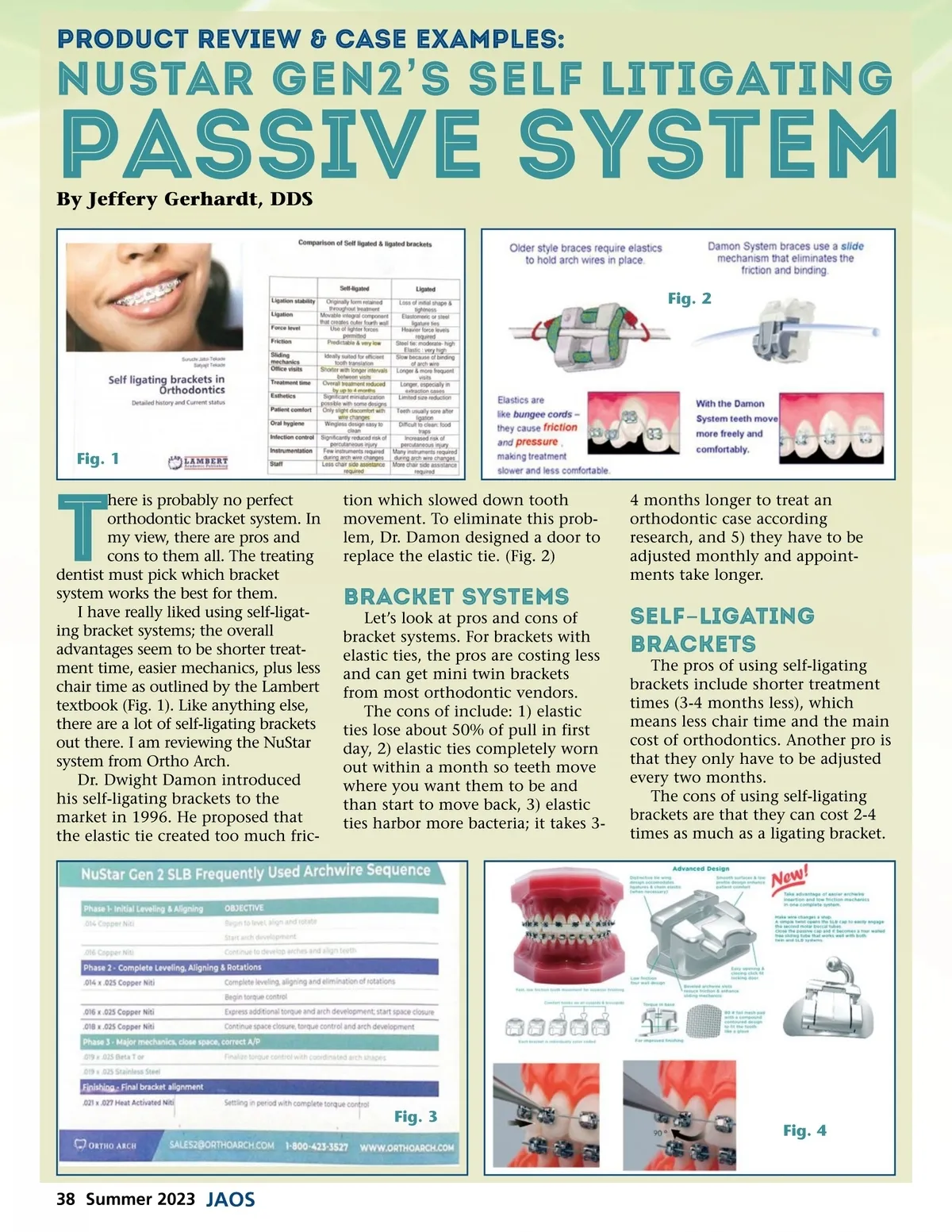
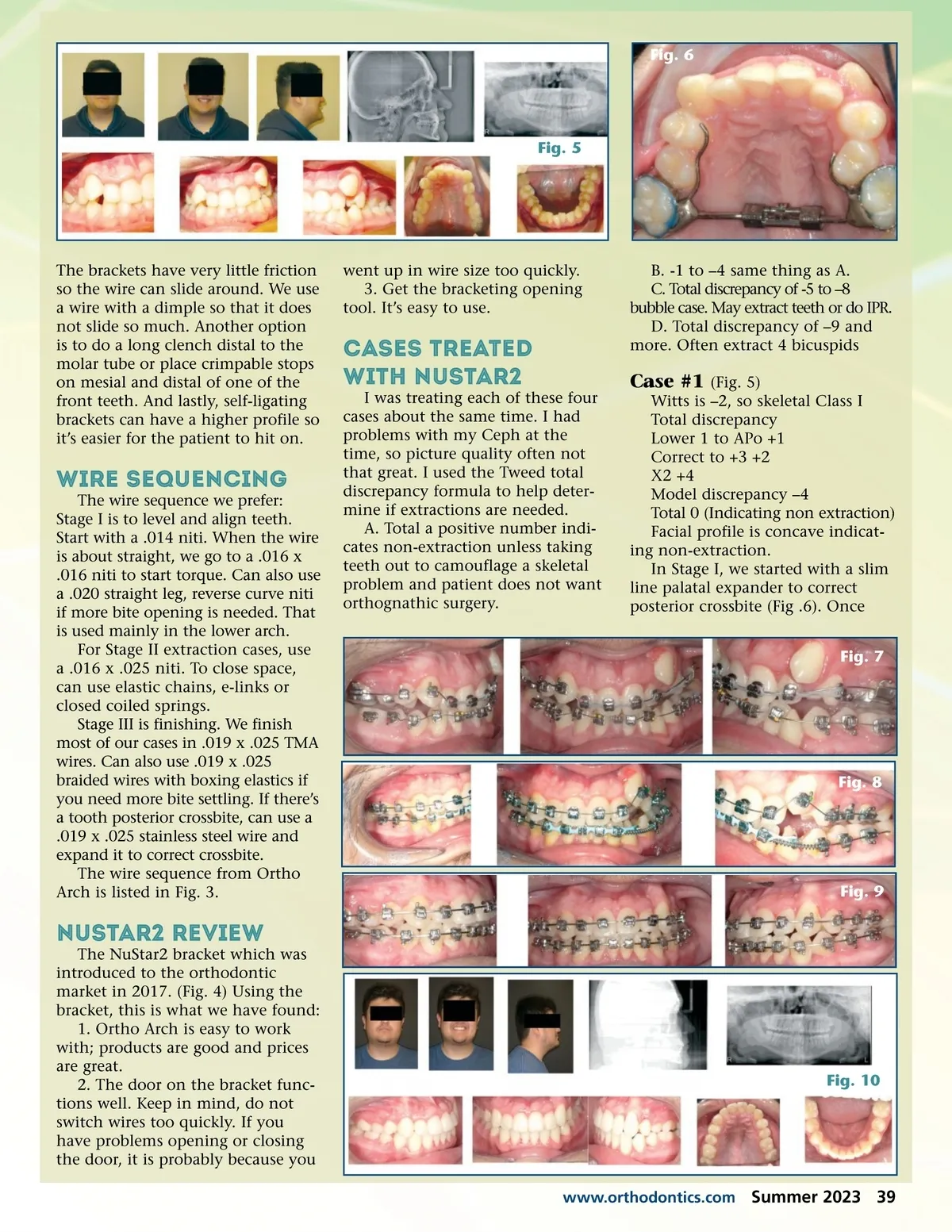
Product Review & Case Examples: Nustar Gen2 ’ s Self Litigating Passive System By Jeffery Gerhardt, DDS Fig. 2 Fig. 1 here is probably no perfect orthodontic bracket system. In my view, there are pros and cons to them all. The treating dentist must pick which bracket system works the best for them. I have really liked using self-ligat-ing bracket systems; the overall advantages seem to be shorter treat-ment time, easier mechanics, plus less chair time as outlined by the Lambert textbook (Fig. 1). Like anything else, there are a lot of self-ligating brackets out there. I am reviewing the NuStar system from Ortho Arch. Dr. Dwight Damon introduced his self-ligating brackets to the market in 1996. He proposed that the elastic tie created too much fric-T tion which slowed down tooth movement. To eliminate this prob-lem, Dr. Damon designed a door to replace the elastic tie. (Fig. 2) 4 months longer to treat an orthodontic case according research, and 5) they have to be adjusted monthly and appoint-ments take longer. Bracket Systems Let’s look at pros and cons of bracket systems. For brackets with elastic ties, the pros are costing less and can get mini twin brackets from most orthodontic vendors. The cons of include: 1) elastic ties lose about 50% of pull in first day, 2) elastic ties completely worn out within a month so teeth move where you want them to be and than start to move back, 3) elastic ties harbor more bacteria; it takes 3-Self -Ligating Brackets The pros of using self-ligating brackets include shorter treatment times (3-4 months less), which means less chair time and the main cost of orthodontics. Another pro is that they only have to be adjusted every two months. The cons of using self-ligating brackets are that they can cost 2-4 times as much as a ligating bracket. Fig. 3 Fig. 4 38 Summer 2023 JAOS
Journal of the American Orthodontic Society Summer 2023: Page 38