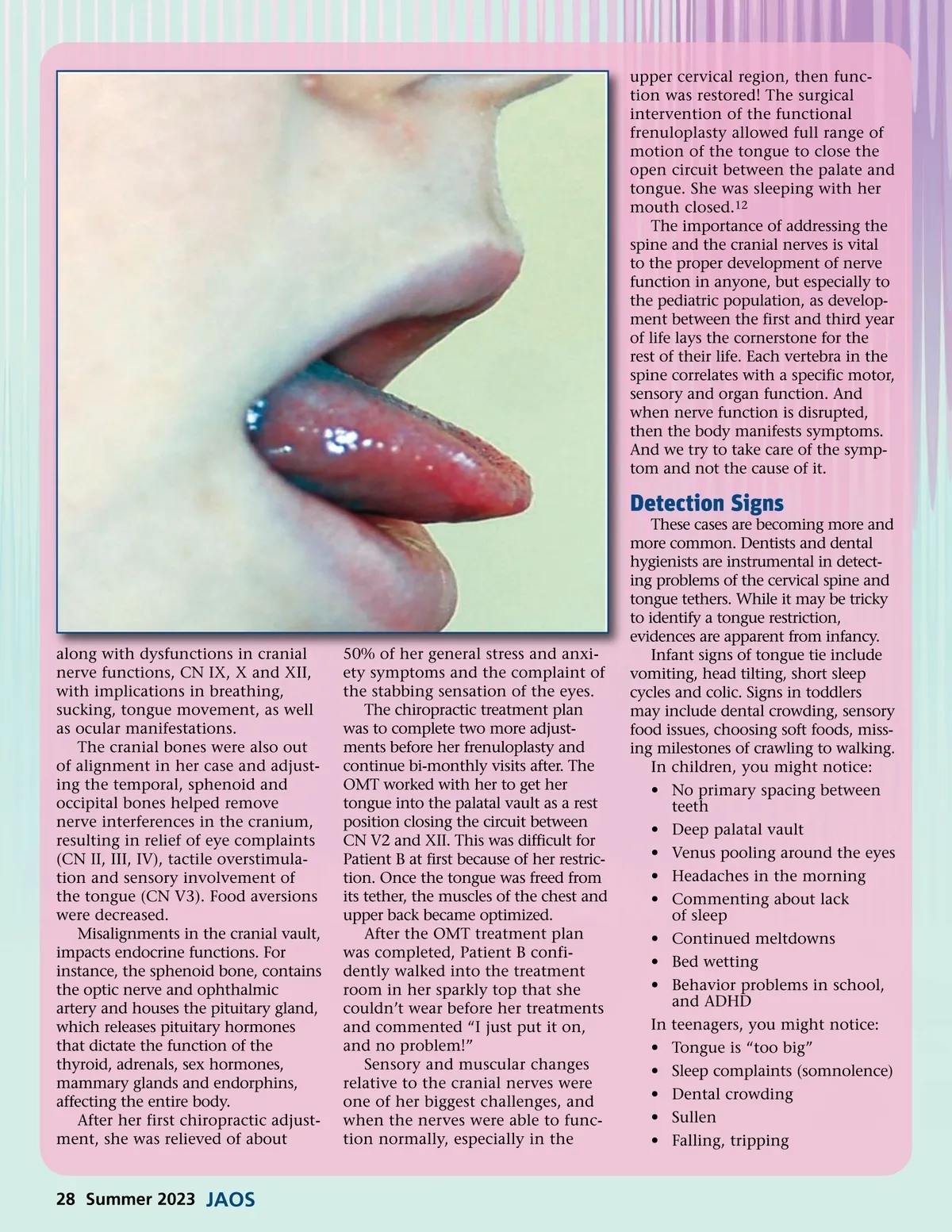
upper cervical region, then func-tion was restored! The surgical intervention of the functional frenuloplasty allowed full range of motion of the tongue to close the open circuit between the palate and tongue. She was sleeping with her mouth closed. 12 The importance of addressing the spine and the cranial nerves is vital to the proper development of nerve function in anyone, but especially to the pediatric population, as develop-ment between the first and third year of life lays the cornerstone for the rest of their life. Each vertebra in the spine correlates with a specific motor, sensory and organ function. And when nerve function is disrupted, then the body manifests symptoms. And we try to take care of the symp-tom and not the cause of it. Detection Signs These cases are becoming more and more common. Dentists and dental hygienists are instrumental in detect-ing problems of the cervical spine and tongue tethers. While it may be tricky to identify a tongue restriction, evidences are apparent from infancy. Infant signs of tongue tie include vomiting, head tilting, short sleep cycles and colic. Signs in toddlers may include dental crowding, sensory food issues, choosing soft foods, miss-ing milestones of crawling to walking. In children, you might notice: • No primary spacing between teeth • Deep palatal vault • Venus pooling around the eyes • Headaches in the morning • Commenting about lack of sleep • Continued meltdowns • Bed wetting • Behavior problems in school, and ADHD In teenagers, you might notice: • Tongue is “too big” • Sleep complaints (somnolence) • Dental crowding • Sullen • Falling, tripping along with dysfunctions in cranial nerve functions, CN IX, X and XII, with implications in breathing, sucking, tongue movement, as well as ocular manifestations. The cranial bones were also out of alignment in her case and adjust-ing the temporal, sphenoid and occipital bones helped remove nerve interferences in the cranium, resulting in relief of eye complaints (CN II, III, IV), tactile overstimula-tion and sensory involvement of the tongue (CN V3). Food aversions were decreased. Misalignments in the cranial vault, impacts endocrine functions. For instance, the sphenoid bone, contains the optic nerve and ophthalmic artery and houses the pituitary gland, which releases pituitary hormones that dictate the function of the thyroid, adrenals, sex hormones, mammary glands and endorphins, affecting the entire body. After her first chiropractic adjust-ment, she was relieved of about 50% of her general stress and anxi-ety symptoms and the complaint of the stabbing sensation of the eyes. The chiropractic treatment plan was to complete two more adjust-ments before her frenuloplasty and continue bi-monthly visits after. The OMT worked with her to get her tongue into the palatal vault as a rest position closing the circuit between CN V2 and XII. This was difficult for Patient B at first because of her restric-tion. Once the tongue was freed from its tether, the muscles of the chest and upper back became optimized. After the OMT treatment plan was completed, Patient B confi-dently walked into the treatment room in her sparkly top that she couldn’t wear before her treatments and commented “I just put it on, and no problem!” Sensory and muscular changes relative to the cranial nerves were one of her biggest challenges, and when the nerves were able to func-tion normally, especially in the 28 Summer 2023 JAOS
Journal of the American Orthodontic Society Summer 2023: Page 28