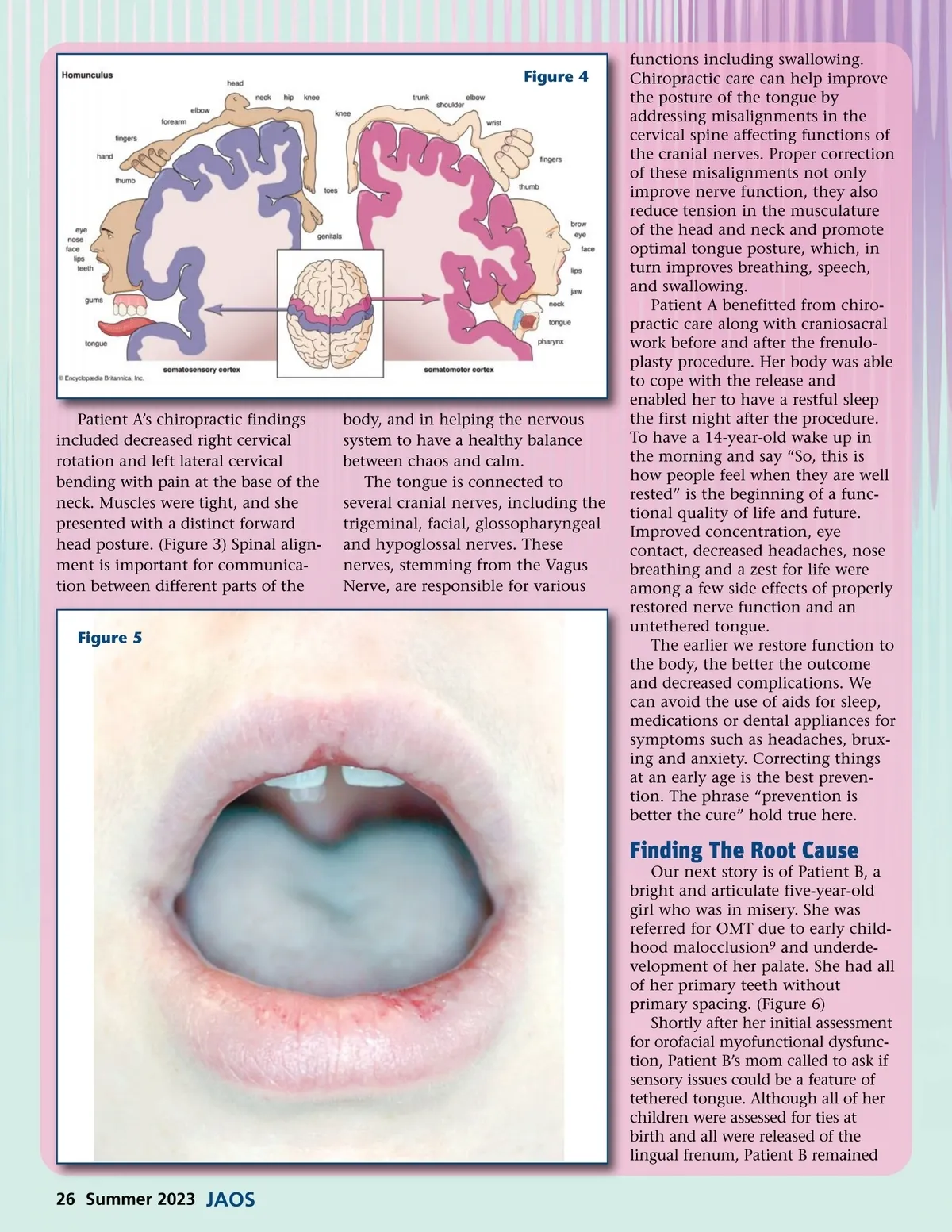
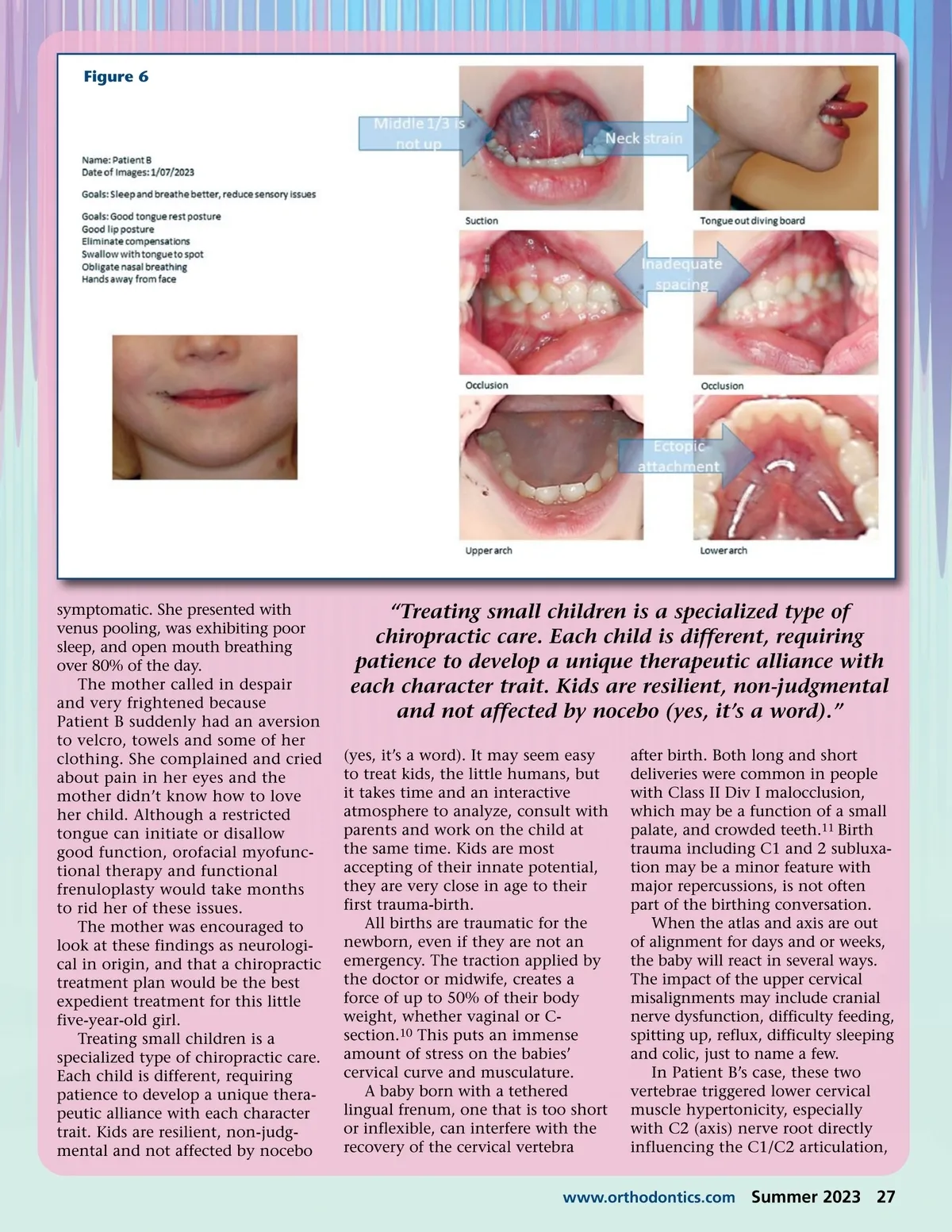
Figure 4 Patient A’s chiropractic findings included decreased right cervical rotation and left lateral cervical bending with pain at the base of the neck. Muscles were tight, and she presented with a distinct forward head posture. (Figure 3) Spinal align-ment is important for communica-tion between different parts of the Figure 5 body, and in helping the nervous system to have a healthy balance between chaos and calm. The tongue is connected to several cranial nerves, including the trigeminal, facial, glossopharyngeal and hypoglossal nerves. These nerves, stemming from the Vagus Nerve, are responsible for various functions including swallowing. Chiropractic care can help improve the posture of the tongue by addressing misalignments in the cervical spine affecting functions of the cranial nerves. Proper correction of these misalignments not only improve nerve function, they also reduce tension in the musculature of the head and neck and promote optimal tongue posture, which, in turn improves breathing, speech, and swallowing. Patient A benefitted from chiro-practic care along with craniosacral work before and after the frenulo-plasty procedure. Her body was able to cope with the release and enabled her to have a restful sleep the first night after the procedure. To have a 14-year-old wake up in the morning and say “So, this is how people feel when they are well rested” is the beginning of a func-tional quality of life and future. Improved concentration, eye contact, decreased headaches, nose breathing and a zest for life were among a few side effects of properly restored nerve function and an untethered tongue. The earlier we restore function to the body, the better the outcome and decreased complications. We can avoid the use of aids for sleep, medications or dental appliances for symptoms such as headaches, brux-ing and anxiety. Correcting things at an early age is the best preven-tion. The phrase “prevention is better the cure” hold true here. Finding The Root Cause Our next story is of Patient B, a bright and articulate five-year-old girl who was in misery. She was referred for OMT due to early child-hood malocclusion 9 and underde-velopment of her palate. She had all of her primary teeth without primary spacing. (Figure 6) Shortly after her initial assessment for orofacial myofunctional dysfunc-tion, Patient B’s mom called to ask if sensory issues could be a feature of tethered tongue. Although all of her children were assessed for ties at birth and all were released of the lingual frenum, Patient B remained 26 Summer 2023 JAOS
Journal of the American Orthodontic Society Summer 2023: Page 26