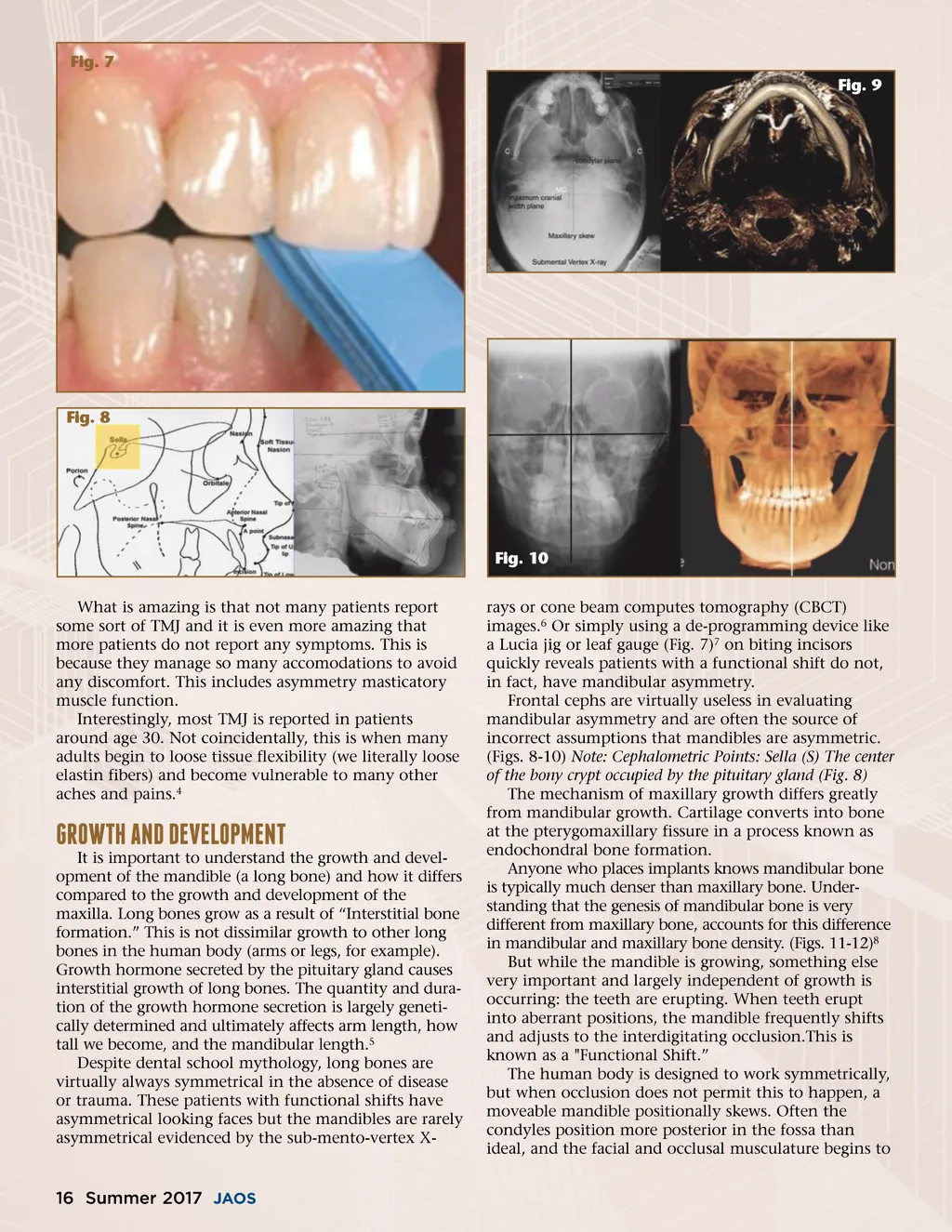
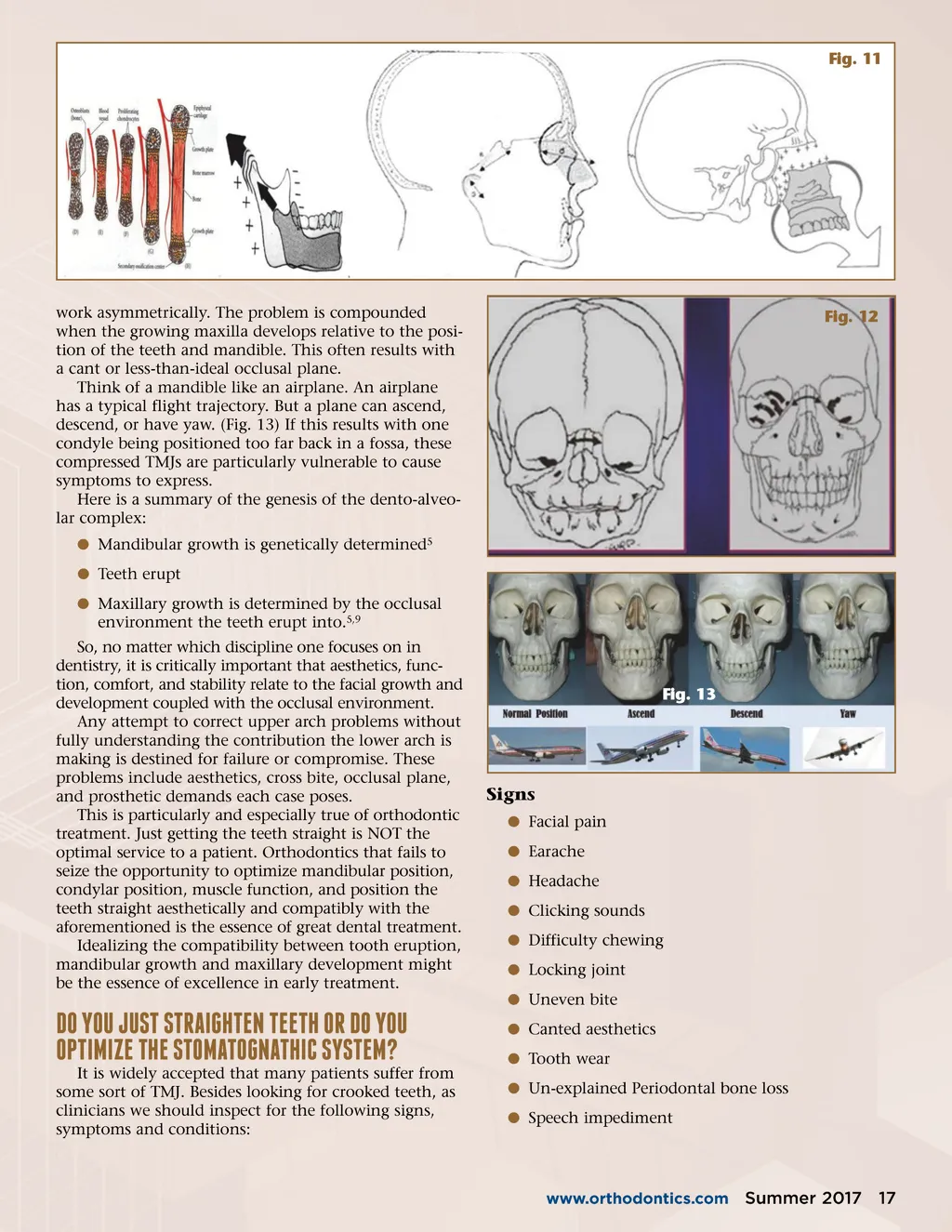
Fig. 11 work asymmetrically. The problem is compounded when the growing maxilla develops relative to the posi-tion of the teeth and mandible. This often results with a cant or less-than-ideal occlusal plane. Think of a mandible like an airplane. An airplane has a typical flight trajectory. But a plane can ascend, descend, or have yaw. (Fig. 13) If this results with one condyle being positioned too far back in a fossa, these compressed TMJs are particularly vulnerable to cause symptoms to express. Here is a summary of the genesis of the dento-alveo-lar complex: b Mandibular growth is genetically determined 5 b Teeth erupt b Maxillary growth is determined by the occlusal environment the teeth erupt into. 5,9 So, no matter which discipline one focuses on in dentistry, it is critically important that aesthetics, func-tion, comfort, and stability relate to the facial growth and development coupled with the occlusal environment. Any attempt to correct upper arch problems without fully understanding the contribution the lower arch is making is destined for failure or compromise. These problems include aesthetics, cross bite, occlusal plane, and prosthetic demands each case poses. This is particularly and especially true of orthodontic treatment. Just getting the teeth straight is NOT the optimal service to a patient. Orthodontics that fails to seize the opportunity to optimize mandibular position, condylar position, muscle function, and position the teeth straight aesthetically and compatibly with the aforementioned is the essence of great dental treatment. Idealizing the compatibility between tooth eruption, mandibular growth and maxillary development might be the essence of excellence in early treatment. Fig. 12 Fig. 13 Signs b Facial pain b Earache b Headache b Clicking sounds b Difficulty chewing b Locking joint b Uneven bite b Canted aesthetics b Tooth wear b Un-explained Periodontal bone loss b Speech impediment Do you JusT sTRAighTEN TEETh oR Do you opTiMizE ThE sToMATogNAThic sysTEM? It is widely accepted that many patients suffer from some sort of TMJ. Besides looking for crooked teeth, as clinicians we should inspect for the following signs, symptoms and conditions: www.orthodontics.com Summer 2017 17
Journal of the American Orthodontic Society Summer 2017/Buyer's Guide: Page 17