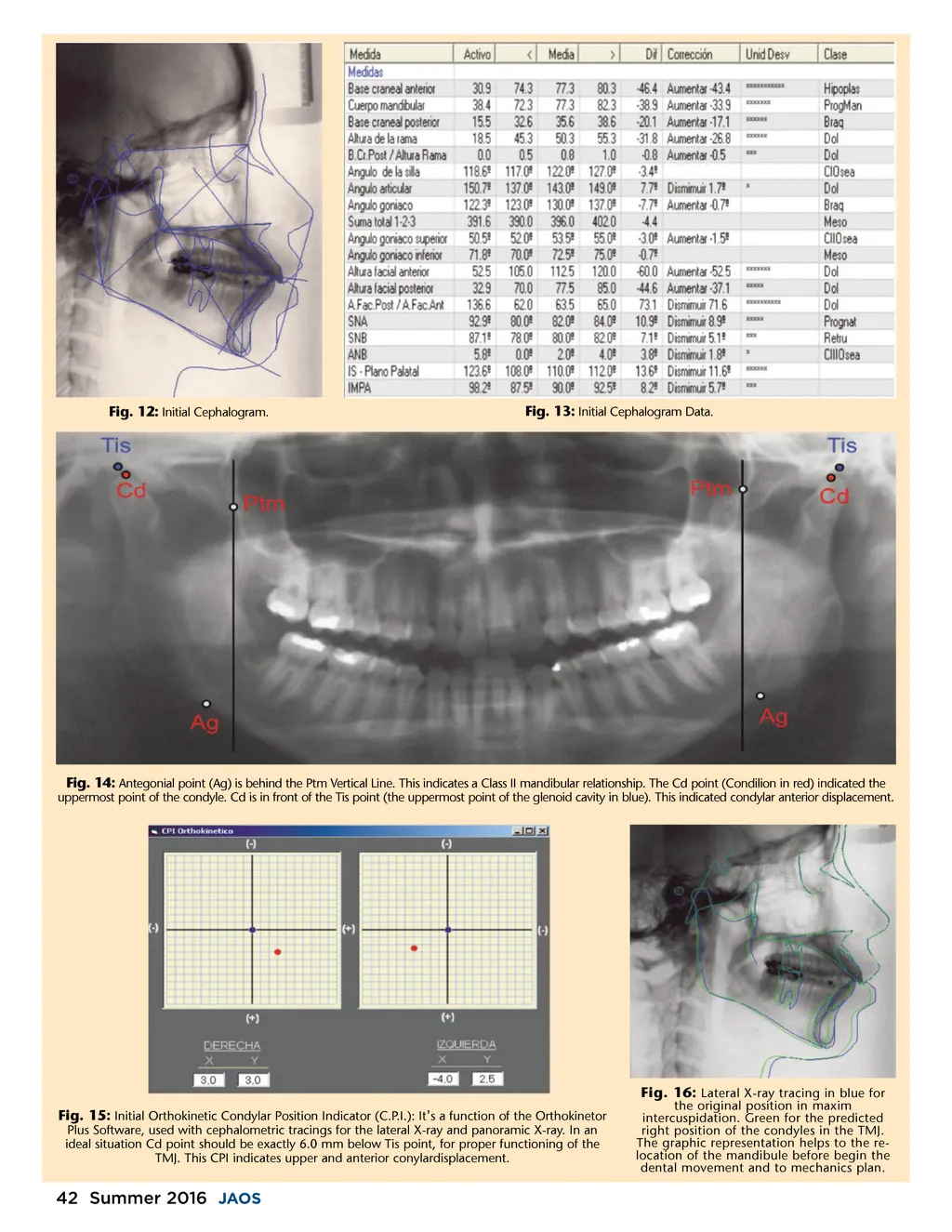
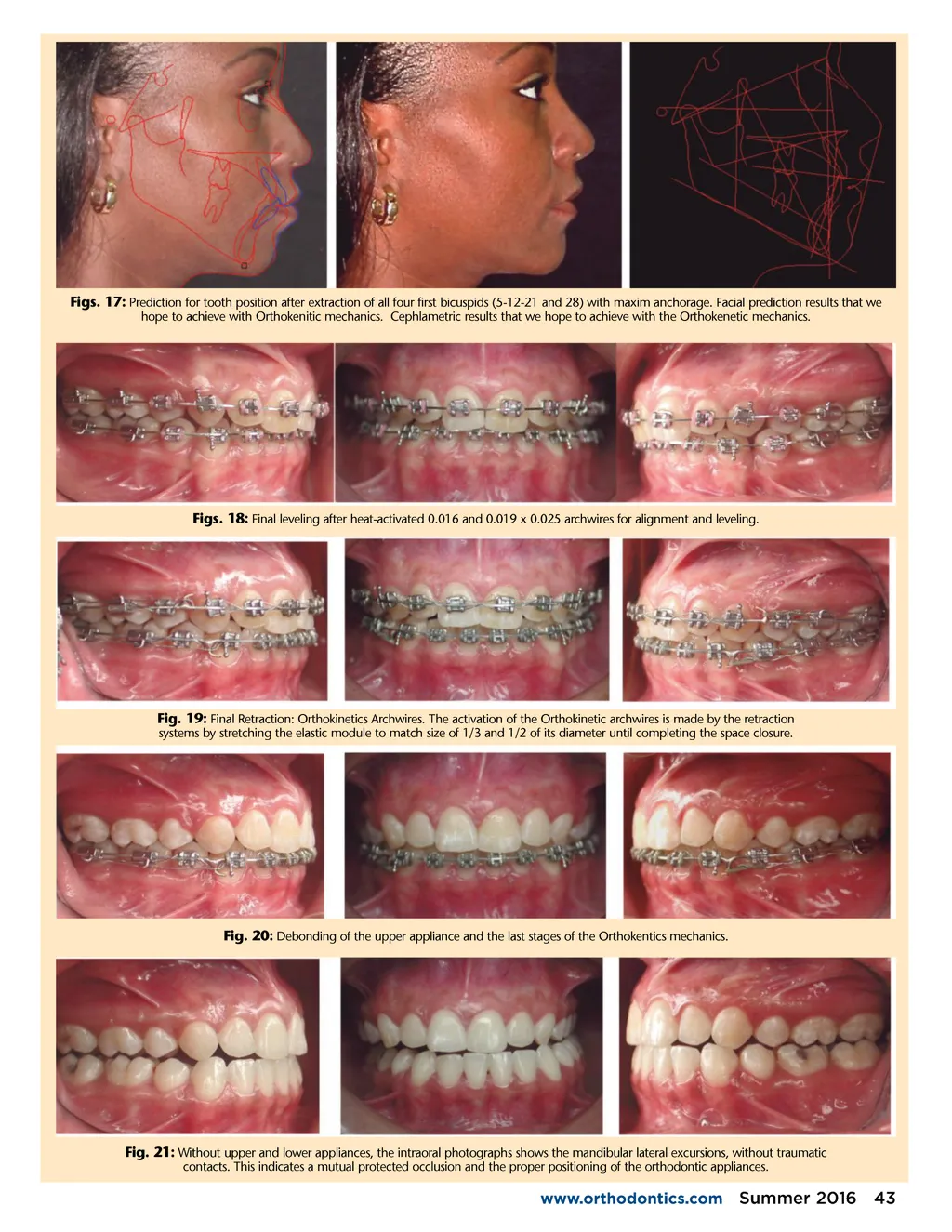
Figs. 17: Prediction for tooth position after extraction of all four first bicuspids (5-12-21 and 28) with maxim anchorage. Facial prediction results that we hope to achieve with Orthokenitic mechanics. Cephlametric results that we hope to achieve with the Orthokenetic mechanics. Figs. 18: Final leveling after heat-activated 0.016 and 0.019 x 0.025 archwires for alignment and leveling. Fig. 19: Final Retraction: Orthokinetics Archwires. The activation of the Orthokinetic archwires is made by the retraction systems by stretching the elastic module to match size of 1/3 and 1/2 of its diameter until completing the space closure. Fig. 20: Debonding of the upper appliance and the last stages of the Orthokentics mechanics. Fig. 21: Without upper and lower appliances, the intraoral photographs shows the mandibular lateral excursions, without traumatic contacts. This indicates a mutual protected occlusion and the proper positioning of the orthodontic appliances. www.orthodontics.com Summer 2016 43
Journal of the American Orthodontic Society Summer 2016 / Buyer's Guide: Page 43