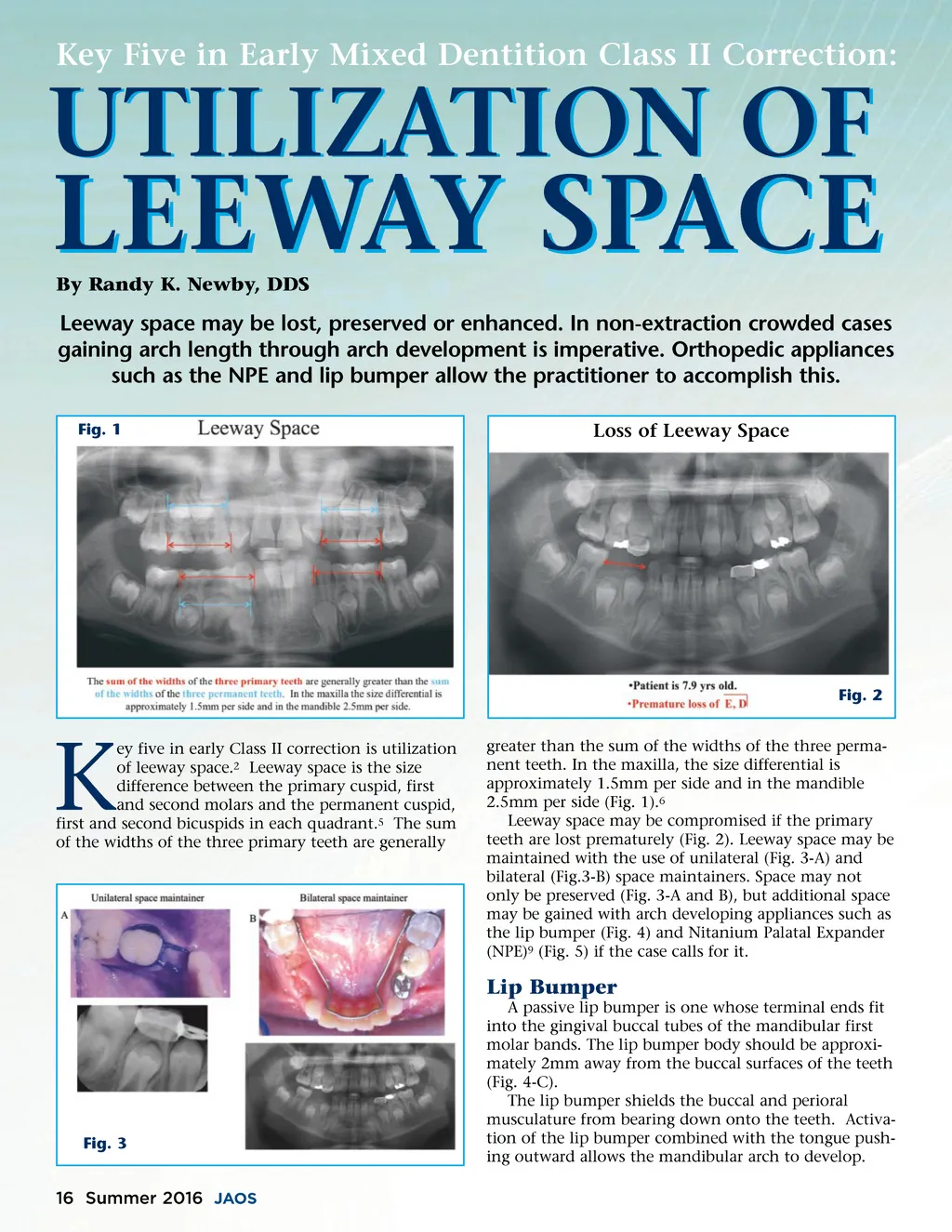
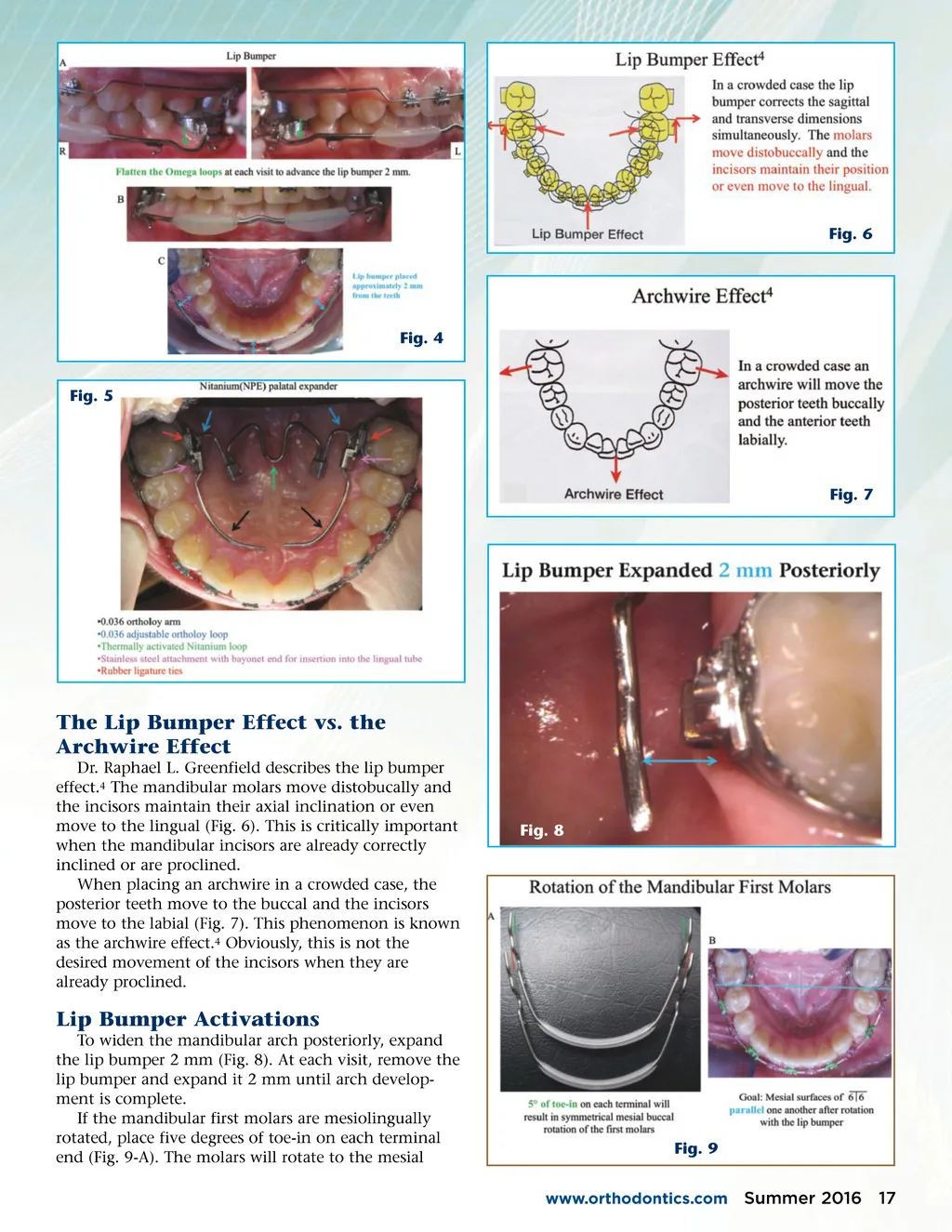
Fig. 6 Fig. 4 Fig. 5 Fig. 7 The Lip Bumper Effect vs. the Archwire Effect Dr. Raphael L. Greenfield describes the lip bumper effect. 4 The mandibular molars move distobucally and the incisors maintain their axial inclination or even move to the lingual (Fig. 6). This is critically important when the mandibular incisors are already correctly inclined or are proclined. When placing an archwire in a crowded case, the posterior teeth move to the buccal and the incisors move to the labial (Fig. 7). This phenomenon is known as the archwire effect. 4 Obviously, this is not the desired movement of the incisors when they are already proclined. Fig. 8 Lip Bumper Activations To widen the mandibular arch posteriorly, expand the lip bumper 2 mm (Fig. 8). At each visit, remove the lip bumper and expand it 2 mm until arch develop-ment is complete. If the mandibular first molars are mesiolingually rotated, place five degrees of toe-in on each terminal end (Fig. 9-A). The molars will rotate to the mesial Fig. 9 www.orthodontics.com Summer 2016 17
Journal of the American Orthodontic Society Summer 2016 / Buyer's Guide: Page 17