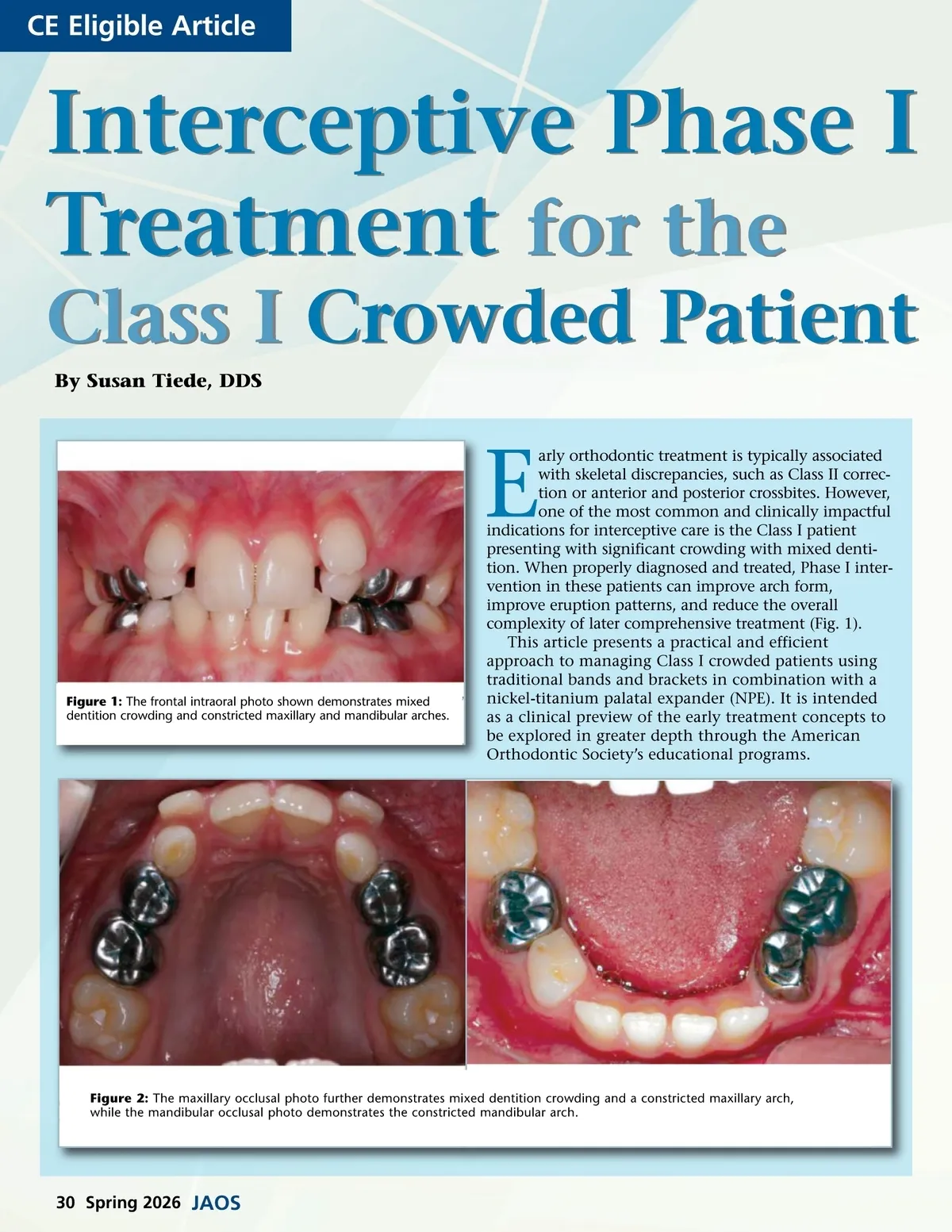
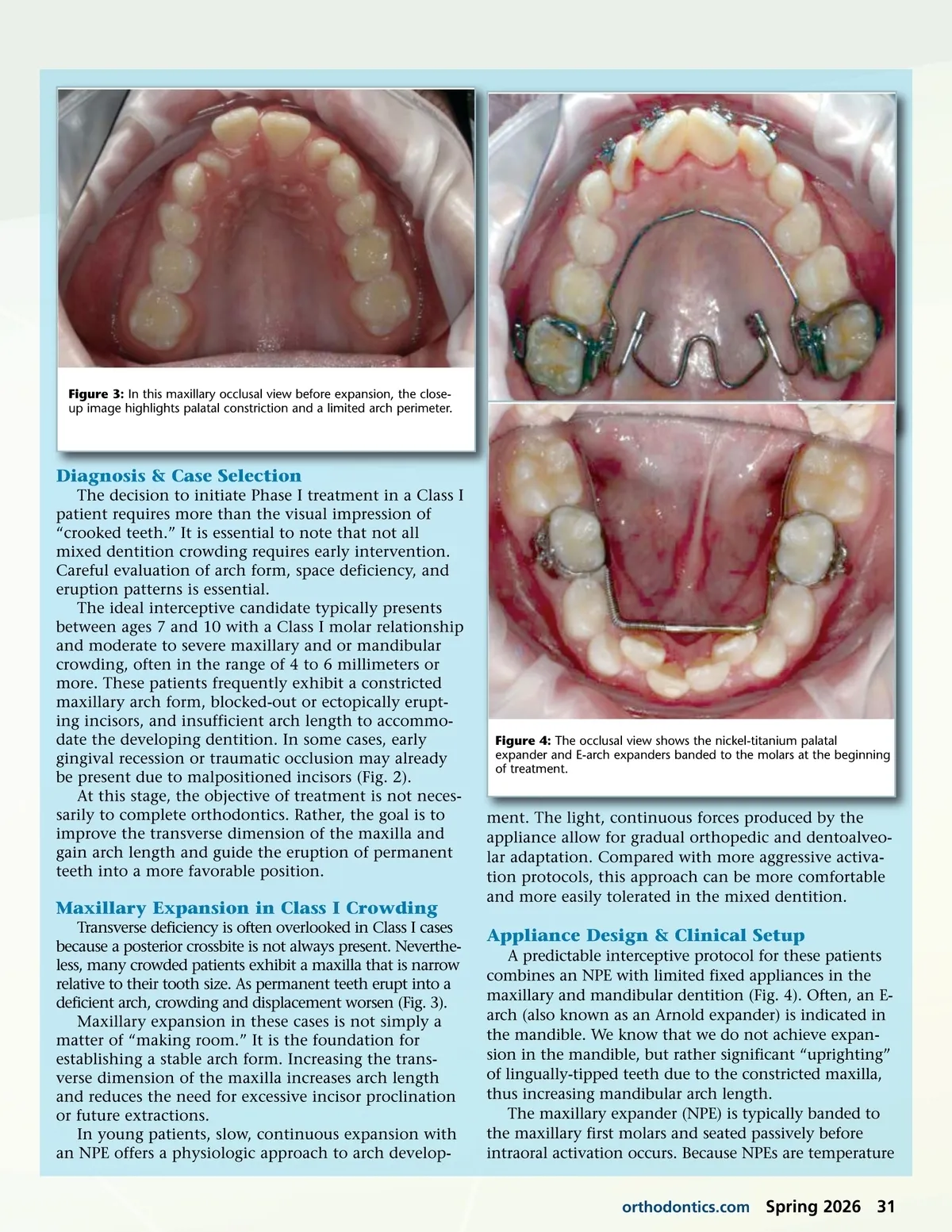
CE Eligible Article Interceptive Phase I Treatment for the Class I Crowded Patient By Susan Tiede, DDS E Figure 1: The frontal intraoral photo shown demonstrates mixed dentition crowding and constricted maxillary and mandibular arches. arly orthodontic treatment is typically associated with skeletal discrepancies, such as Class II correc-tion or anterior and posterior crossbites. However, one of the most common and clinically impactful indications for interceptive care is the Class I patient presenting with significant crowding with mixed denti-tion. When properly diagnosed and treated, Phase I inter-vention in these patients can improve arch form, improve eruption patterns, and reduce the overall complexity of later comprehensive treatment (Fig. 1). This article presents a practical and efficient approach to managing Class I crowded patients using traditional bands and brackets in combination with a nickel-titanium palatal expander (NPE). It is intended as a clinical preview of the early treatment concepts to be explored in greater depth through the American Orthodontic Society’s educational programs. Figure 2: The maxillary occlusal photo further demonstrates mixed dentition crowding and a constricted maxillary arch, while the mandibular occlusal photo demonstrates the constricted mandibular arch. 30 Spring 2026 JAOS
Journal of the American Orthodontic Society Spring 2026: Page 30