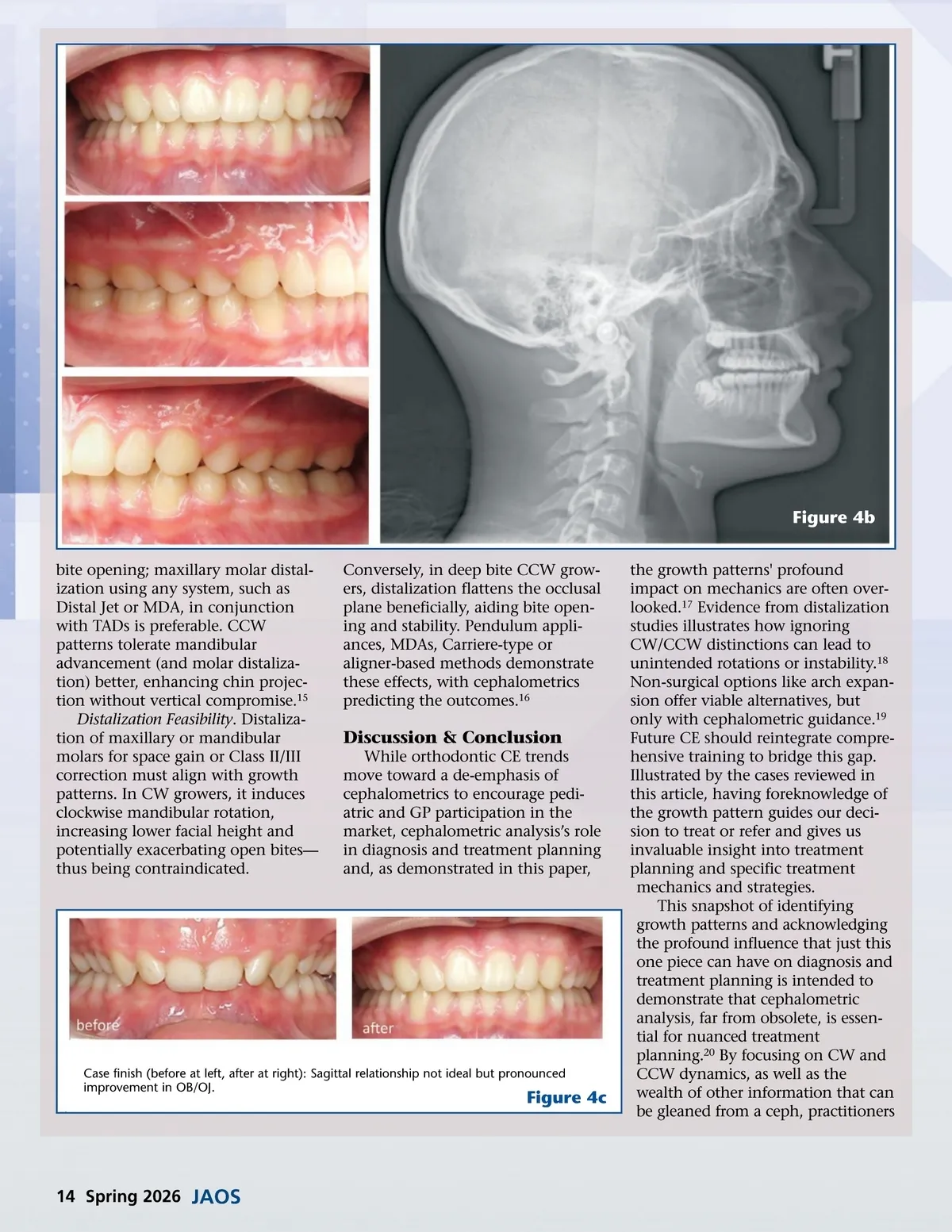
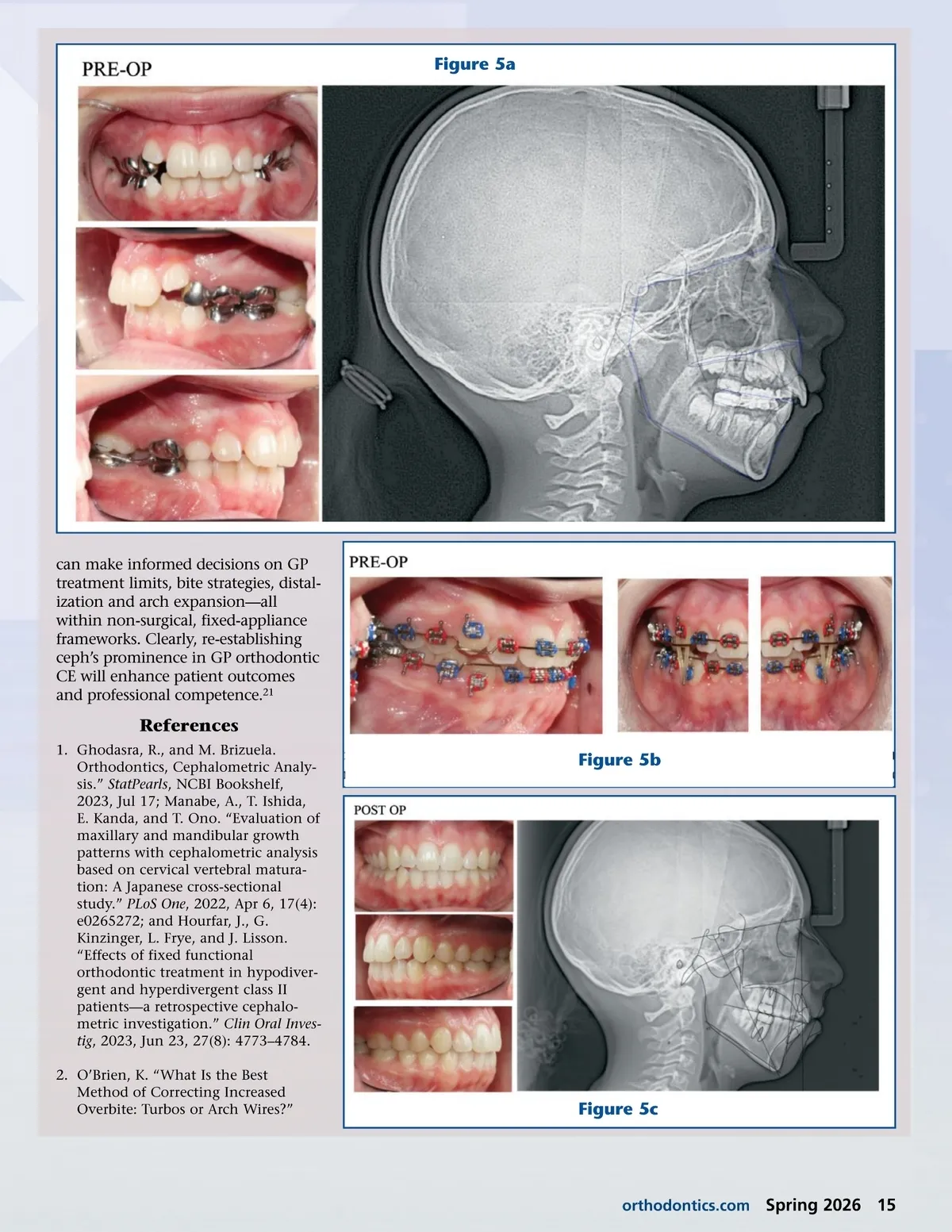
Figure 4b bite opening; maxillary molar distal-ization using any system, such as Distal Jet or MDA, in conjunction with TADs is preferable. CCW patterns tolerate mandibular advancement (and molar distaliza-tion) better, enhancing chin projec-tion without vertical compromise. 15 Distalization Feasibility . Distaliza-tion of maxillary or mandibular molars for space gain or Class II/III correction must align with growth patterns. In CW growers, it induces clockwise mandibular rotation, increasing lower facial height and potentially exacerbating open bites— thus being contraindicated. Conversely, in deep bite CCW grow-ers, distalization flattens the occlusal plane beneficially, aiding bite open-ing and stability. Pendulum appli-ances, MDAs, Carriere-type or aligner-based methods demonstrate these effects, with cephalometrics predicting the outcomes. 16 the growth patterns' profound impact on mechanics are often over-looked. 17 Evidence from distalization studies illustrates how ignoring CW/CCW distinctions can lead to unintended rotations or instability. 18 Non-surgical options like arch expan-sion offer viable alternatives, but only with cephalometric guidance. 19 Future CE should reintegrate compre-hensive training to bridge this gap. Illustrated by the cases reviewed in this article, having foreknowledge of the growth pattern guides our deci-sion to treat or refer and gives us invaluable insight into treatment planning and specific treatment mechanics and strategies. This snapshot of identifying growth patterns and acknowledging the profound influence that just this one piece can have on diagnosis and treatment planning is intended to demonstrate that cephalometric analysis, far from obsolete, is essen-tial for nuanced treatment planning. 20 By focusing on CW and CCW dynamics, as well as the wealth of other information that can be gleaned from a ceph, practitioners Discussion & Conclusion While orthodontic CE trends move toward a de-emphasis of cephalometrics to encourage pedi-atric and GP participation in the market, cephalometric analysis’s role in diagnosis and treatment planning and, as demonstrated in this paper, Case finish (before at left, after at right): Sagittal relationship not ideal but pronounced improvement in OB/OJ. Figure 4c 14 Spring 2026 JAOS
Journal of the American Orthodontic Society Spring 2026: Page 14