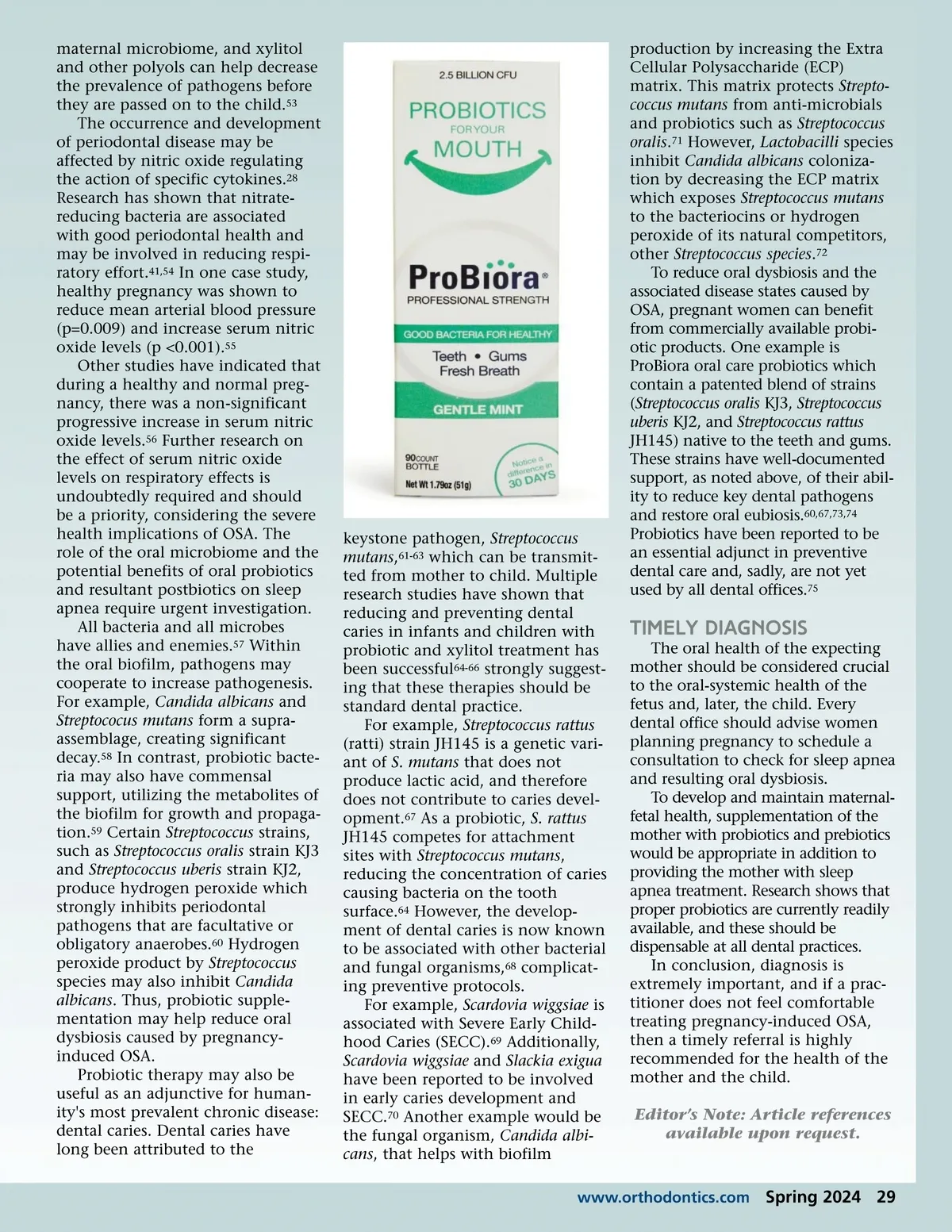
maternal microbiome, and xylitol and other polyols can help decrease the prevalence of pathogens before they are passed on to the child. 53 The occurrence and development of periodontal disease may be affected by nitric oxide regulating the action of specific cytokines. 28 Research has shown that nitrate-reducing bacteria are associated with good periodontal health and may be involved in reducing respi-ratory effort. 41,54 In one case study, healthy pregnancy was shown to reduce mean arterial blood pressure (p=0.009) and increase serum nitric oxide levels (p <0.001). 55 Other studies have indicated that during a healthy and normal preg-nancy, there was a non-significant progressive increase in serum nitric oxide levels. 56 Further research on the effect of serum nitric oxide levels on respiratory effects is undoubtedly required and should be a priority, considering the severe health implications of OSA. The role of the oral microbiome and the potential benefits of oral probiotics and resultant postbiotics on sleep apnea require urgent investigation. All bacteria and all microbes have allies and enemies. 57 Within the oral biofilm, pathogens may cooperate to increase pathogenesis. For example, Candida albicans and Streptococus mutans form a supra-assemblage, creating significant decay. 58 In contrast, probiotic bacte-ria may also have commensal support, utilizing the metabolites of the biofilm for growth and propaga-tion. 59 Certain Streptococcus strains, such as Streptococcus oralis strain KJ3 and Streptococcus uberis strain KJ2, produce hydrogen peroxide which strongly inhibits periodontal pathogens that are facultative or obligatory anaerobes. 60 Hydrogen peroxide product by Streptococcus species may also inhibit Candida albicans . Thus, probiotic supple-mentation may help reduce oral dysbiosis caused by pregnancy-induced OSA. Probiotic therapy may also be useful as an adjunctive for human-ity's most prevalent chronic disease: dental caries. Dental caries have long been attributed to the keystone pathogen, Streptococcus mutans , 61-63 which can be transmit-ted from mother to child. Multiple research studies have shown that reducing and preventing dental caries in infants and children with probiotic and xylitol treatment has been successful 64-66 strongly suggest-ing that these therapies should be standard dental practice. For example, Streptococcus rattus (ratti) strain JH145 is a genetic vari-ant of S. mutans that does not produce lactic acid, and therefore does not contribute to caries devel-opment. 67 As a probiotic, S. rattus JH145 competes for attachment sites with Streptococcus mutans , reducing the concentration of caries causing bacteria on the tooth surface. 64 However, the develop-ment of dental caries is now known to be associated with other bacterial and fungal organisms, 68 complicat-ing preventive protocols. For example, Scardovia wiggsiae is associated with Severe Early Child-hood Caries (SECC). 69 Additionally, Scardovia wiggsiae and Slackia exigua have been reported to be involved in early caries development and SECC. 70 Another example would be the fungal organism, Candida albi-cans , that helps with biofilm production by increasing the Extra Cellular Polysaccharide (ECP) matrix. This matrix protects Strepto-coccus mutans from anti-microbials and probiotics such as Streptococcus oralis . 71 However, Lactobacilli species inhibit Candida albicans coloniza-tion by decreasing the ECP matrix which exposes Streptococcus mutans to the bacteriocins or hydrogen peroxide of its natural competitors, other Streptococcus species . 72 To reduce oral dysbiosis and the associated disease states caused by OSA, pregnant women can benefit from commercially available probi-otic products. One example is ProBiora oral care probiotics which contain a patented blend of strains ( Streptococcus oralis KJ3, Streptococcus uberis KJ2, and Streptococcus rattus JH145) native to the teeth and gums. These strains have well-documented support, as noted above, of their abil-ity to reduce key dental pathogens and restore oral eubiosis. 60,67,73,74 Probiotics have been reported to be an essential adjunct in preventive dental care and, sadly, are not yet used by all dental offices. 75 Timely Diagnosis The oral health of the expecting mother should be considered crucial to the oral-systemic health of the fetus and, later, the child. Every dental office should advise women planning pregnancy to schedule a consultation to check for sleep apnea and resulting oral dysbiosis. To develop and maintain maternal-fetal health, supplementation of the mother with probiotics and prebiotics would be appropriate in addition to providing the mother with sleep apnea treatment. Research shows that proper probiotics are currently readily available, and these should be dispensable at all dental practices. In conclusion, diagnosis is extremely important, and if a prac-titioner does not feel comfortable treating pregnancy-induced OSA, then a timely referral is highly recommended for the health of the mother and the child. Editor’s Note: Article references available upon request. www.orthodontics.com Spring 2024 29
Journal of the American Orthodontic Society Spring 2024: Page 29