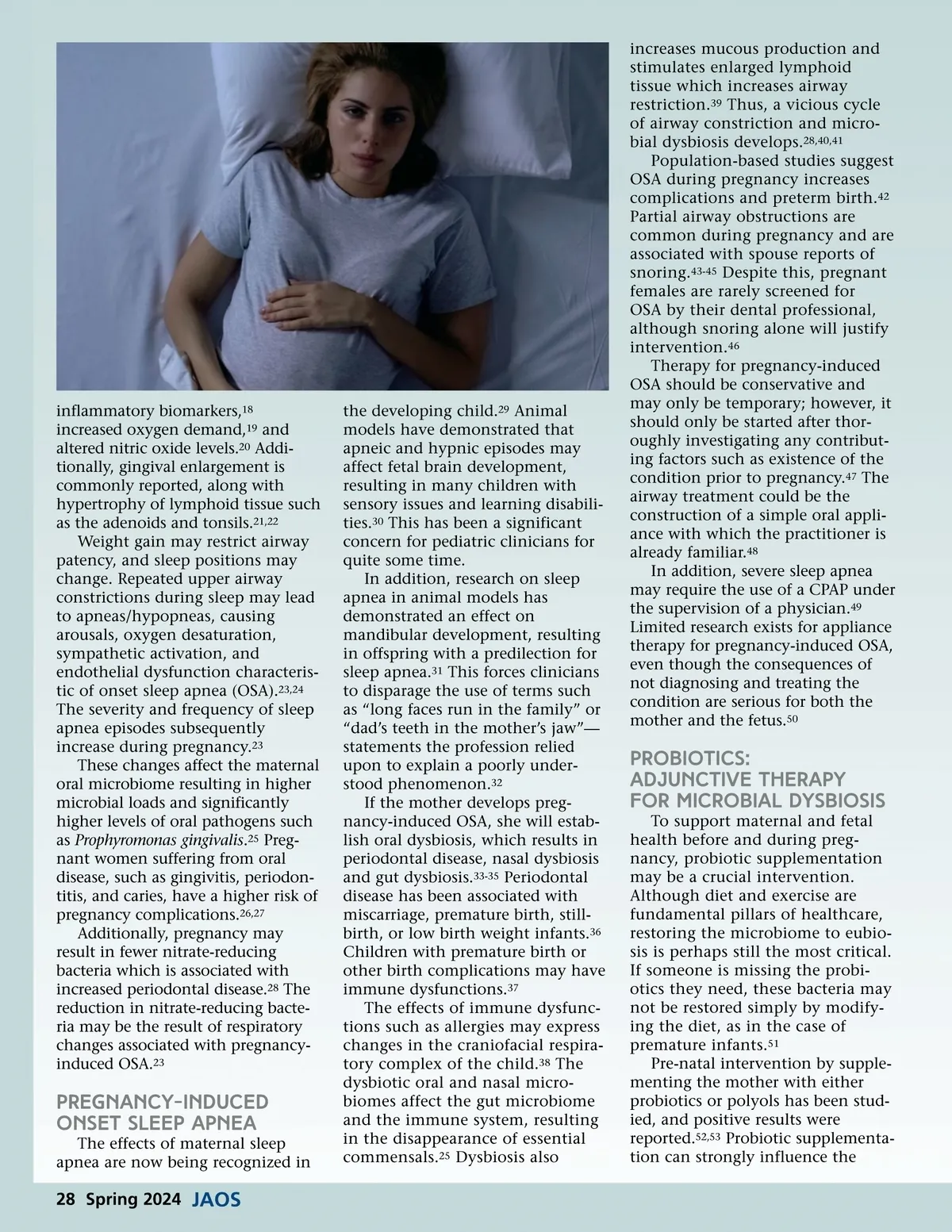
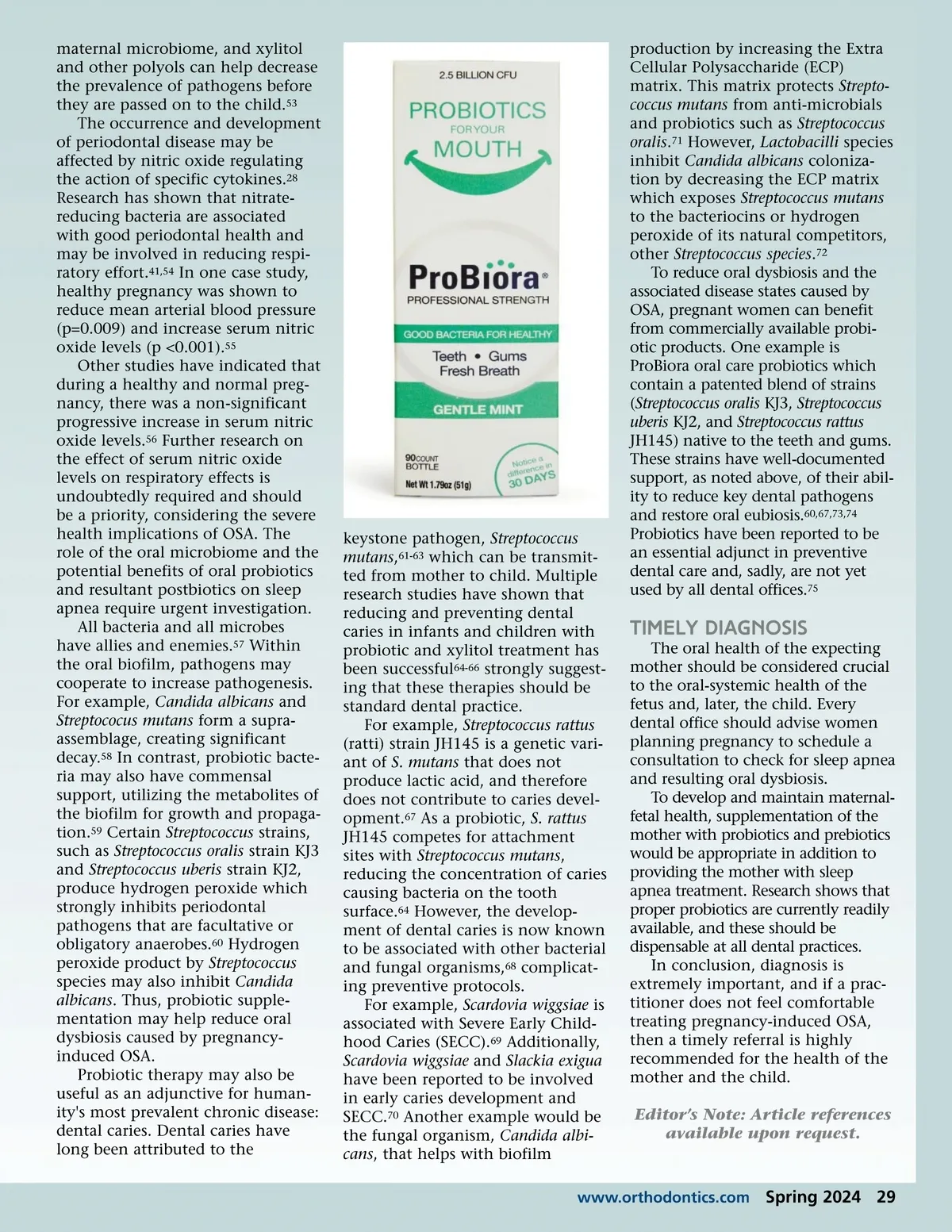
inflammatory biomarkers, 18 increased oxygen demand, 19 and altered nitric oxide levels. 20 Addi-tionally, gingival enlargement is commonly reported, along with hypertrophy of lymphoid tissue such as the adenoids and tonsils. 21,22 Weight gain may restrict airway patency, and sleep positions may change. Repeated upper airway constrictions during sleep may lead to apneas/hypopneas, causing arousals, oxygen desaturation, sympathetic activation, and endothelial dysfunction characteris-tic of onset sleep apnea (OSA). 23,24 The severity and frequency of sleep apnea episodes subsequently increase during pregnancy. 23 These changes affect the maternal oral microbiome resulting in higher microbial loads and significantly higher levels of oral pathogens such as Prophyromonas gingivalis . 25 Preg-nant women suffering from oral disease, such as gingivitis, periodon-titis, and caries, have a higher risk of pregnancy complications. 26,27 Additionally, pregnancy may result in fewer nitrate-reducing bacteria which is associated with increased periodontal disease. 28 The reduction in nitrate-reducing bacte-ria may be the result of respiratory changes associated with pregnancy-induced OSA. 23 Pregnancy-Induced Onset Sleep Apnea The effects of maternal sleep apnea are now being recognized in the developing child. 29 Animal models have demonstrated that apneic and hypnic episodes may affect fetal brain development, resulting in many children with sensory issues and learning disabili-ties. 30 This has been a significant concern for pediatric clinicians for quite some time. In addition, research on sleep apnea in animal models has demonstrated an effect on mandibular development, resulting in offspring with a predilection for sleep apnea. 31 This forces clinicians to disparage the use of terms such as “long faces run in the family” or “dad’s teeth in the mother’s jaw”— statements the profession relied upon to explain a poorly under-stood phenomenon. 32 If the mother develops preg-nancy-induced OSA, she will estab-lish oral dysbiosis, which results in periodontal disease, nasal dysbiosis and gut dysbiosis. 33-35 Periodontal disease has been associated with miscarriage, premature birth, still-birth, or low birth weight infants. 36 Children with premature birth or other birth complications may have immune dysfunctions. 37 The effects of immune dysfunc-tions such as allergies may express changes in the craniofacial respira-tory complex of the child. 38 The dysbiotic oral and nasal micro-biomes affect the gut microbiome and the immune system, resulting in the disappearance of essential commensals. 25 Dysbiosis also increases mucous production and stimulates enlarged lymphoid tissue which increases airway restriction. 39 Thus, a vicious cycle of airway constriction and micro-bial dysbiosis develops. 28,40,41 Population-based studies suggest OSA during pregnancy increases complications and preterm birth. 42 Partial airway obstructions are common during pregnancy and are associated with spouse reports of snoring. 43-45 Despite this, pregnant females are rarely screened for OSA by their dental professional, although snoring alone will justify intervention. 46 Therapy for pregnancy-induced OSA should be conservative and may only be temporary; however, it should only be started after thor-oughly investigating any contribut-ing factors such as existence of the condition prior to pregnancy. 47 The airway treatment could be the construction of a simple oral appli-ance with which the practitioner is already familiar. 48 In addition, severe sleep apnea may require the use of a CPAP under the supervision of a physician. 49 Limited research exists for appliance therapy for pregnancy-induced OSA, even though the consequences of not diagnosing and treating the condition are serious for both the mother and the fetus. 50 Probiotics : Adjunctive Therapy for Microbial Dysbiosis To support maternal and fetal health before and during preg-nancy, probiotic supplementation may be a crucial intervention. Although diet and exercise are fundamental pillars of healthcare, restoring the microbiome to eubio-sis is perhaps still the most critical. If someone is missing the probi-otics they need, these bacteria may not be restored simply by modify-ing the diet, as in the case of premature infants. 51 Pre-natal intervention by supple-menting the mother with either probiotics or polyols has been stud-ied, and positive results were reported. 52,53 Probiotic supplementa-tion can strongly influence the 28 Spring 2024 JAOS
Journal of the American Orthodontic Society Spring 2024: Page 28