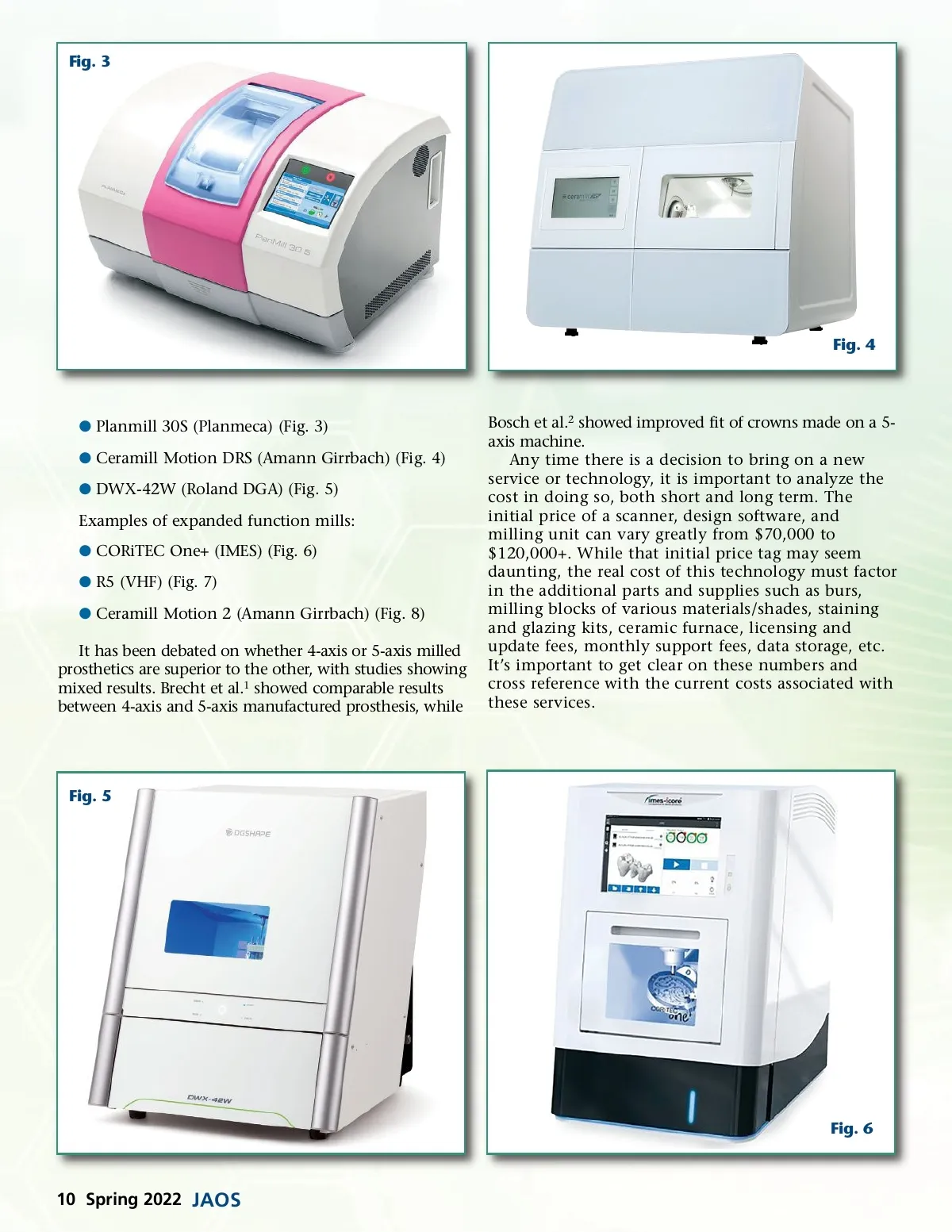
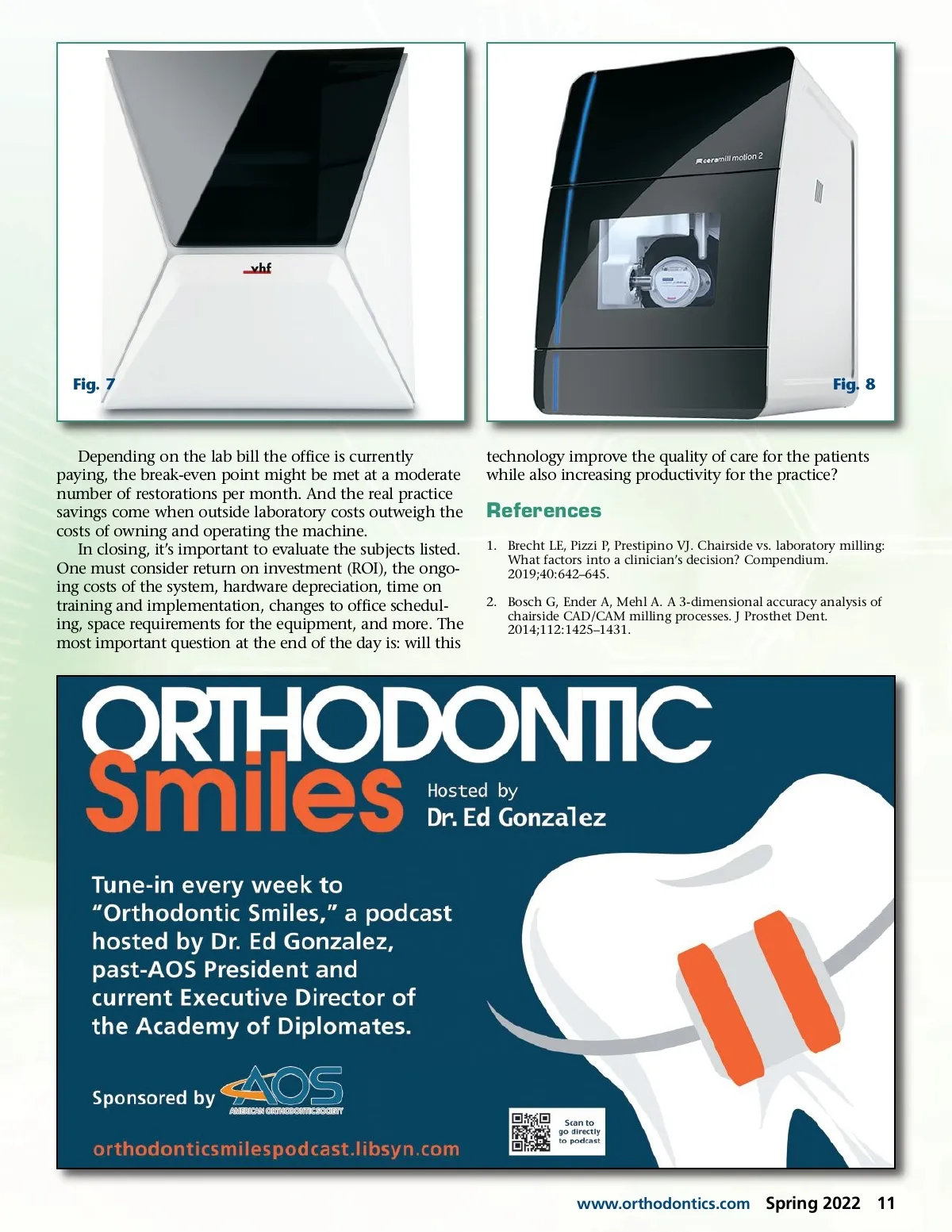
Fig. 3 Fig. 4 b Planmill 30S (Planmeca) (Fig. 3) b Ceramill Motion DRS (Amann Girrbach) (Fig. 4) b DWX-42W (Roland DGA) (Fig. 5) Examples of expanded function mills: b CORiTEC One+ (IMES) (Fig. 6) b R5 (VHF) (Fig. 7) b Ceramill Motion 2 (Amann Girrbach) (Fig. 8) It has been debated on whether 4-axis or 5-axis milled prosthetics are superior to the other, with studies showing mixed results. Brecht et al. 1 showed comparable results between 4-axis and 5-axis manufactured prosthesis, while Bosch et al. 2 showed improved fit of crowns made on a 5-axis machine. Any time there is a decision to bring on a new service or technology, it is important to analyze the cost in doing so, both short and long term. The initial price of a scanner, design software, and milling unit can vary greatly from $70,000 to $120,000+. While that initial price tag may seem daunting, the real cost of this technology must factor in the additional parts and supplies such as burs, milling blocks of various materials/shades, staining and glazing kits, ceramic furnace, licensing and update fees, monthly support fees, data storage, etc. It’s important to get clear on these numbers and cross reference with the current costs associated with these services. Fig. 5 Fig. 6 10 Spring 2022 JAOS
Journal of the American Orthodontic Society Spring 2022: Page 10