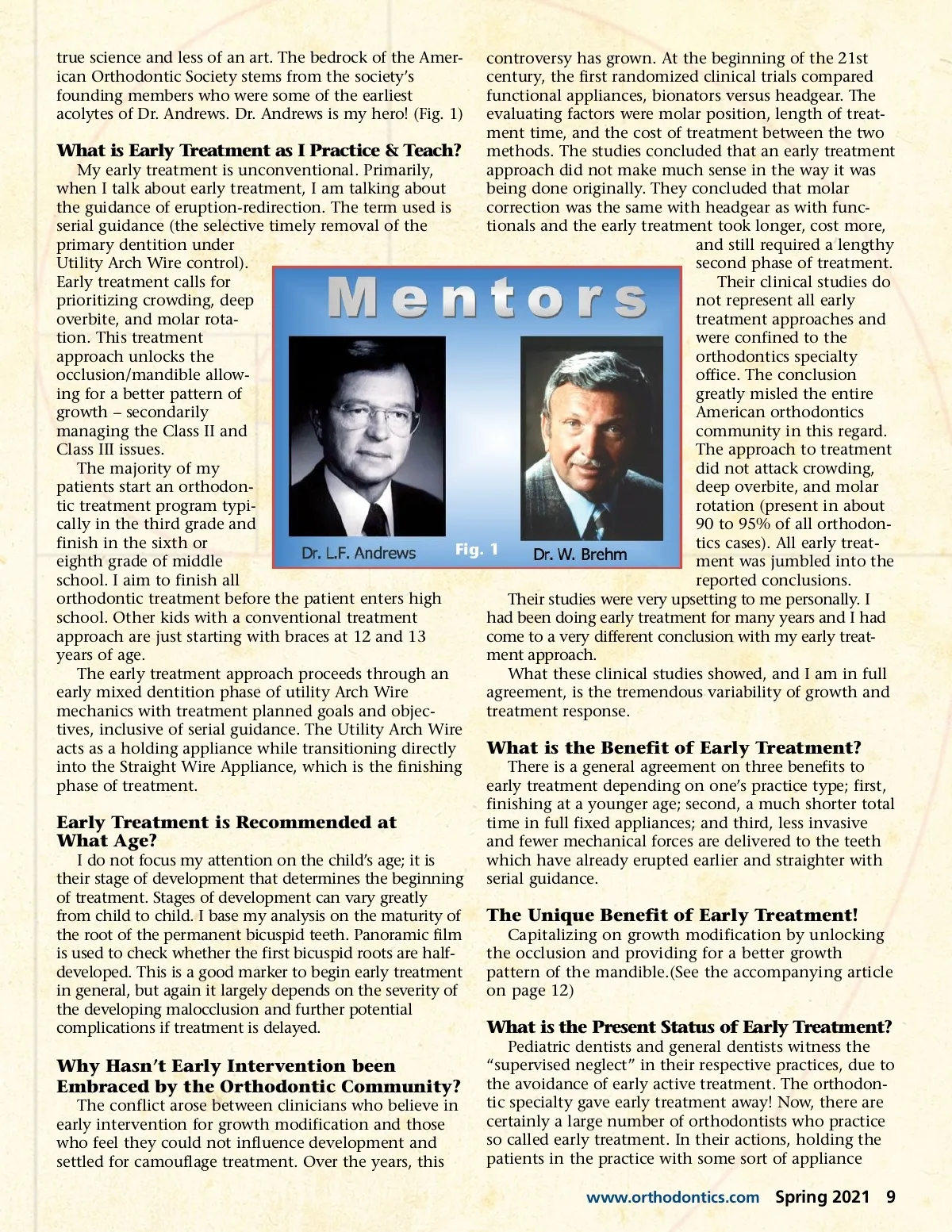
controversy has grown. At the beginning of the 21st century, the first randomized clinical trials compared functional appliances, bionators versus headgear. The evaluating factors were molar position, length of treat-ment time, and the cost of treatment between the two What is Early Treatment as I Practice & Teach? methods. The studies concluded that an early treatment My early treatment is unconventional. Primarily, approach did not make much sense in the way it was when I talk about early treatment, I am talking about being done originally. They concluded that molar the guidance of eruption-redirection. The term used is correction was the same with headgear as with func-serial guidance (the selective timely removal of the tionals and the early treatment took longer, cost more, primary dentition under and still required a lengthy Utility Arch Wire control). second phase of treatment. Early treatment calls for Their clinical studies do prioritizing crowding, deep not represent all early overbite, and molar rota-treatment approaches and tion. This treatment were confined to the approach unlocks the orthodontics specialty occlusion/mandible allow-office. The conclusion ing for a better pattern of greatly misled the entire growth – secondarily American orthodontics managing the Class II and community in this regard. Class III issues. The approach to treatment The majority of my did not attack crowding, patients start an orthodon-deep overbite, and molar tic treatment program typi-rotation (present in about cally in the third grade and 90 to 95% of all orthodon-finish in the sixth or tics cases). All early treat-Fig. 1 eighth grade of middle ment was jumbled into the school. I aim to finish all reported conclusions. orthodontic treatment before the patient enters high Their studies were very upsetting to me personally. I school. Other kids with a conventional treatment had been doing early treatment for many years and I had approach are just starting with braces at 12 and 13 come to a very different conclusion with my early treat-years of age. ment approach. The early treatment approach proceeds through an What these clinical studies showed, and I am in full early mixed dentition phase of utility Arch Wire agreement, is the tremendous variability of growth and mechanics with treatment planned goals and objec-treatment response. tives, inclusive of serial guidance. The Utility Arch Wire What is the Benefit of Early Treatment? acts as a holding appliance while transitioning directly There is a general agreement on three benefits to into the Straight Wire Appliance, which is the finishing early treatment depending on one’s practice type; first, phase of treatment. finishing at a younger age; second, a much shorter total Early Treatment is Recommended at time in full fixed appliances; and third, less invasive What Age? and fewer mechanical forces are delivered to the teeth I do not focus my attention on the child’s age; it is which have already erupted earlier and straighter with their stage of development that determines the beginning serial guidance. of treatment. Stages of development can vary greatly from child to child. I base my analysis on the maturity of The Unique Benefit of Early Treatment! the root of the permanent bicuspid teeth. Panoramic film Capitalizing on growth modification by unlocking is used to check whether the first bicuspid roots are half-the occlusion and providing for a better growth developed. This is a good marker to begin early treatment pattern of the mandible.(See the accompanying article in general, but again it largely depends on the severity of on page 12) the developing malocclusion and further potential complications if treatment is delayed. What is the Present Status of Early Treatment? Pediatric dentists and general dentists witness the “supervised neglect” in their respective practices, due to Why Hasn’t Early Intervention been Embraced by the Orthodontic Community? the avoidance of early active treatment. The orthodon-tic specialty gave early treatment away! Now, there are The conflict arose between clinicians who believe in certainly a large number of orthodontists who practice early intervention for growth modification and those so called early treatment. In their actions, holding the who feel they could not influence development and patients in the practice with some sort of appliance settled for camouflage treatment. Over the years, this www.orthodontics.com true science and less of an art. The bedrock of the Amer-ican Orthodontic Society stems from the society’s founding members who were some of the earliest acolytes of Dr. Andrews. Dr. Andrews is my hero! (Fig. 1) Spring 2021 9
Journal of the American Orthodontic Society Spring 2021: Page 9