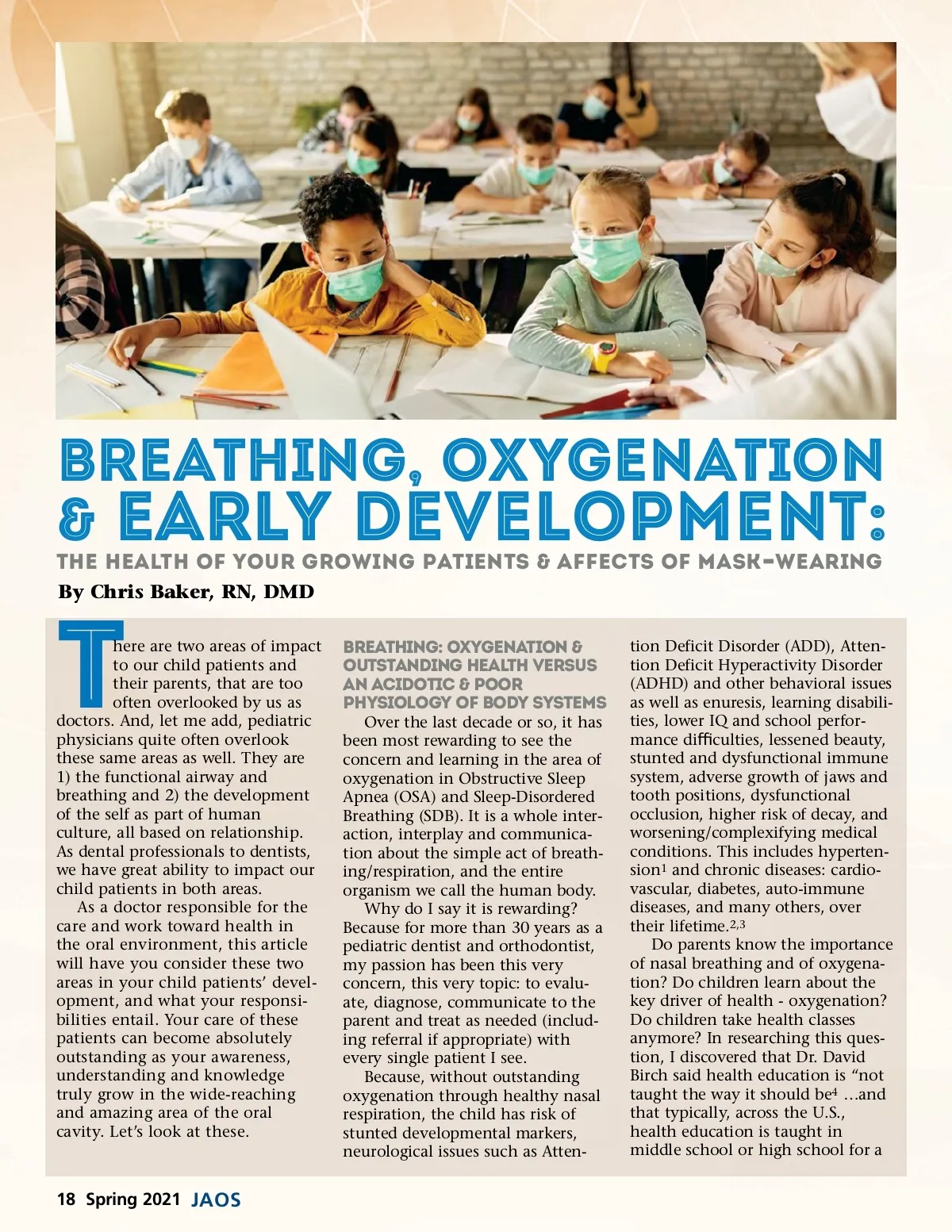
single semester, which is indicative of the lack of quality health educa-tion in classrooms. It should be taught throughout a child’s school life,” Birch said. Current topics teach safe alcohol habits, drug and sex education, but not well-rounded and age-concern-appropriate topics, including healthy breathing. This education of the child (who also will likely become a parent) should be elemental: how to breathe, how to eat, etc. Health is such a precious thing! Breathing easily and well is the foundation, without which health is compro-mised, and the importance of great nutrition is a close second. Health education should be taught throughout a child’s school life, and should include how to breathe and how to eat. It becomes apparent, as we look through the lens of the poor body physiology, the absolute lack of stability of any part of the body, ubiquitous breakdown of all systems in so many folks, slow but sure, that we as a culture do not understand the importance of excel-lent respiratory intake and exchange of oxygen. We must understand and teach to our patients and their parents about the effects on the body, including the oral environment (periontium, dentition), the development and possible adverse development of the infant, child and adolescent, with-out outstanding oxygenation which creates a strong physiology, immune system, microbiota and total body and physiologic stability. The microbiome, bacterial and viral cells, which number more than human cells in our body, is dependent on a healthy oral environment free of inflammatory diseases including gingivitis, periodontitis and decayed teeth. And, the human immune system and immune responses are dependent on the healthy oral envi-ronment and negatively impacted by inflammatory & infectious disease in the mouth. 5 These inter-relationships are critical to health. Excellent sleep also fortifies the immune system through oxygena-tion. 6 Relatedly, melatonin, synthe-sized in the pineal gland particu-“We must understand and teach to our patients and their parents about the effects on the body, including the oral environment (periontium, dentition), the development and possible adverse development of the infant, child and adolescent, without outstanding oxygenation which creates a strong physiology, immune system, microbiota and total body and physiologic stability.” larly, and particularly with good sleep, boosts immune function. 7 We work in and have medical responsibility for a critical area of the human body’s health-regulating functions and can only help our patients if we understand, live it and respond to our patients with information, referrals (as needed) and therapeutics --such as address-ing inflammatory and infectious oral diseases, habits and therapeutic expansion of the maxilla. Now for a whole new look at this concept of oxygenosis. In 2020, the situation and atmosphere concern-ing the COVID-19 virus and its related masking of the population, gave us opportunity to study inter-esting links in the acidotic (hypo-oxygenated) body. Though we wear masks off and on all day, the ubiquitous and inef-fective use of masks during the virus fear caused a new and unusual level of acidosis --masks worn all day and perhaps for many days -microbe-laden with moisture, no real breaks in the wear timing except (hopefully) at night. How does this affect body physiology and acidosis? A mask reduces oxygenation in surgeons. 8 Mask-wearing causes “CO2 build up in the mask over time. [hypercapnea]. However, the level of CO2 likely to build up in the mask is mostly tolerable to people exposed to it. You might get a headache but you most likely [would] not suffer the symptoms observed at much higher levels of CO2.” 9 “Masks, by way of the lungs, not only harm the brain (hypoxia), and the heart (tachycar-dia) and the immune system (acid favors viral replication), but also the kidneys.” 10 So, regarding our growing, devel-oping children and their brains, hearts, immune systems and renal systems -if they are symptomatic -think about what that can tell us about their ability to develop normal, healthy physiology. As to chronic mask use in devel-oping children, the first and only discovered study to date was reported from the University of Witten/Herdecke, Germany. A registry had been used by 20,353 people by October 2020. Early reports of impairments caused by wearing the mask were reported by 68% of parents. The average wearing time of the mask by the child was 270 minutes per day, which is only 4.5 hours. These impairments included shortness of breath (26.4%), irritability (60%), headache (53%), di ffi culty concen-trating (50%), dizziness, accelerated breathing, tightness in chest, weak-ness and short-term impairment of consciousness, less happiness (49%), reluctance to go to school, even kindergarten (44%), malaise (42%), impaired learning (38%) and drowsiness or fatigue (37%). 11 None of those reports are surprising, as the pO2 levels decrease, CO2 levels increase. The resultant health in chronic mask use is inhibited and diminished. Additionally, as studies have also reported, masks aggregate virus on the outside and become a biohaz-ard for the wearer, others within 30 feet, and the environment. 12 In summary, let us take the opportunity to give the parent enough information that they may www.orthodontics.com Spring 2021 19
Journal of the American Orthodontic Society Spring 2021: Page 19