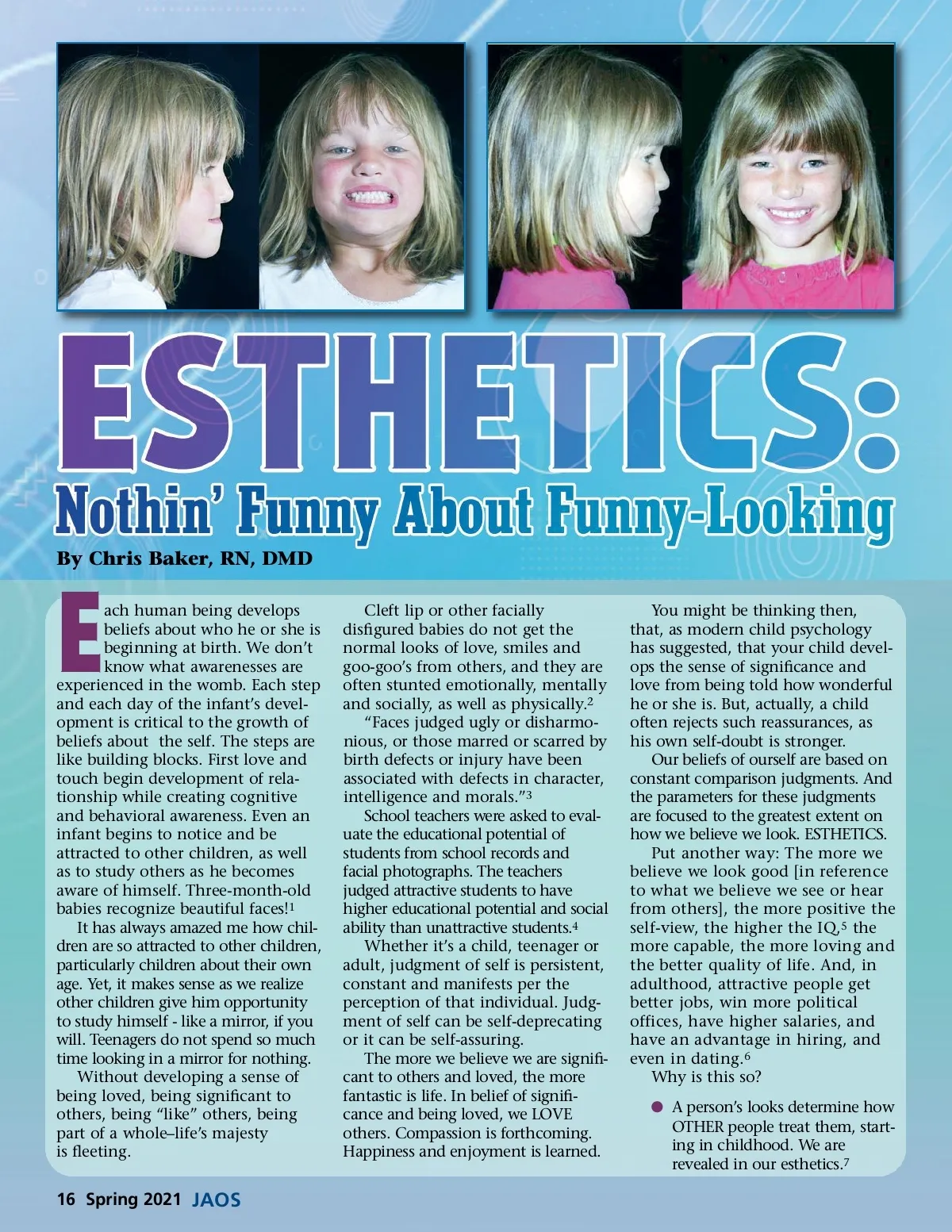
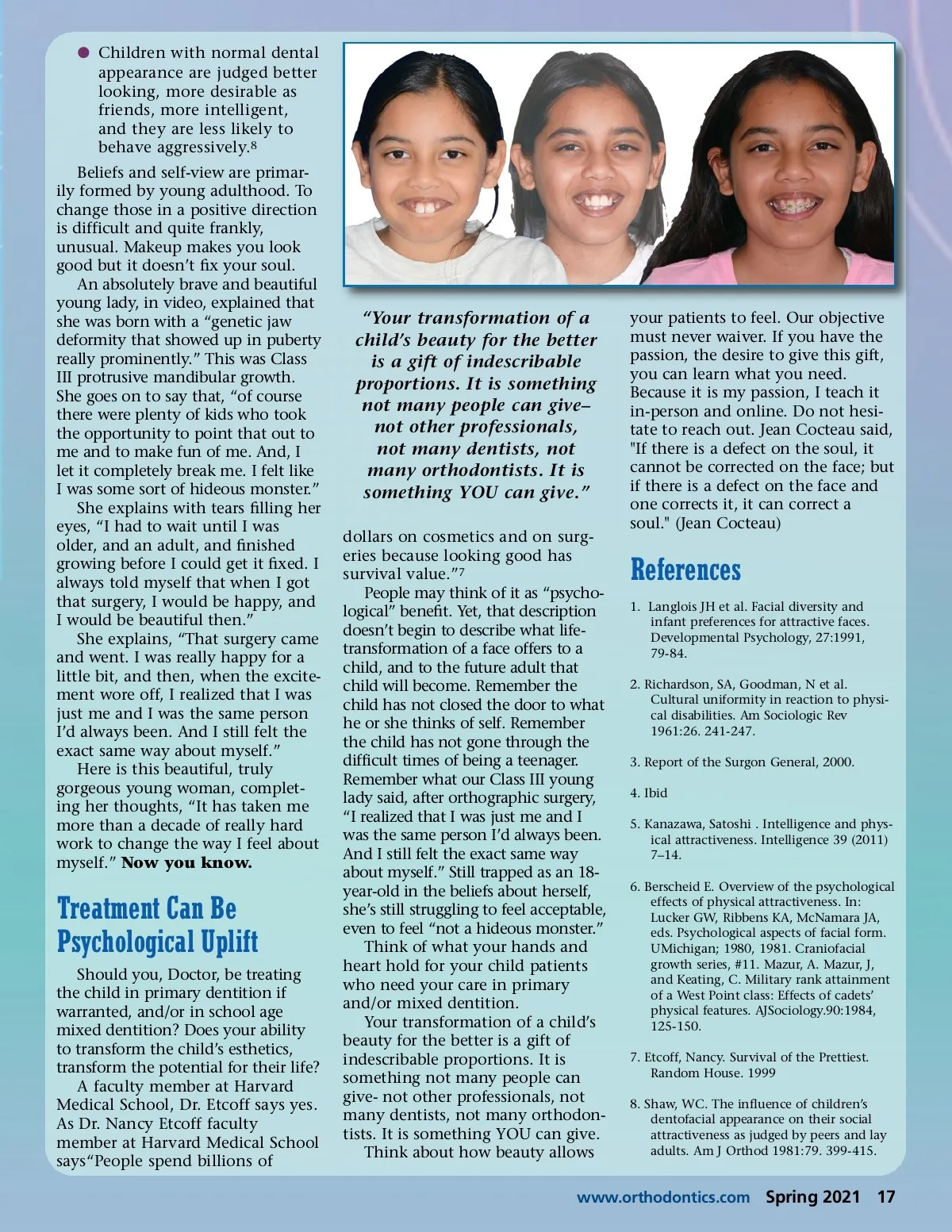
By Chris Baker, RN, DMD E ach human being develops beliefs about who he or she is beginning at birth. We don’t know what awarenesses are experienced in the womb. Each step and each day of the infant’s devel-opment is critical to the growth of beliefs about the self. The steps are like building blocks. First love and touch begin development of rela-tionship while creating cognitive and behavioral awareness. Even an infant begins to notice and be attracted to other children, as well as to study others as he becomes aware of himself. Three-month-old babies recognize beautiful faces! 1 It has always amazed me how chil-dren are so attracted to other children, particularly children about their own age. Yet, it makes sense as we realize other children give him opportunity to study himself -like a mirror, if you will. Teenagers do not spend so much time looking in a mirror for nothing. Without developing a sense of being loved, being significant to others, being “like” others, being part of a whole–life’s majesty is fleeting. Cleft lip or other facially disfigured babies do not get the normal looks of love, smiles and goo-goo’s from others, and they are often stunted emotionally, mentally and socially, as well as physically. 2 “Faces judged ugly or disharmo-nious, or those marred or scarred by birth defects or injury have been associated with defects in character, intelligence and morals.” 3 School teachers were asked to eval-uate the educational potential of students from school records and facial photographs. The teachers judged attractive students to have higher educational potential and social ability than unattractive students. 4 Whether it’s a child, teenager or adult, judgment of self is persistent, constant and manifests per the perception of that individual. Judg-ment of self can be self-deprecating or it can be self-assuring. The more we believe we are signifi-cant to others and loved, the more fantastic is life. In belief of signifi-cance and being loved, we LOVE others. Compassion is forthcoming. Happiness and enjoyment is learned. You might be thinking then, that, as modern child psychology has suggested, that your child devel-ops the sense of significance and love from being told how wonderful he or she is. But, actually, a child often rejects such reassurances, as his own self-doubt is stronger. Our beliefs of ourself are based on constant comparison judgments. And the parameters for these judgments are focused to the greatest extent on how we believe we look. ESTHETICS. Put another way: The more we believe we look good [in reference to what we believe we see or hear from others], the more positive the self-view, the higher the IQ, 5 the more capable, the more loving and the better quality of life. And, in adulthood, attractive people get better jobs, win more political offices, have higher salaries, and have an advantage in hiring, and even in dating. 6 Why is this so? b A person’s looks determine how OTHER people treat them, start-ing in childhood. We are revealed in our esthetics. 7 16 Spring 2021 JAOS
Journal of the American Orthodontic Society Spring 2021: Page 16