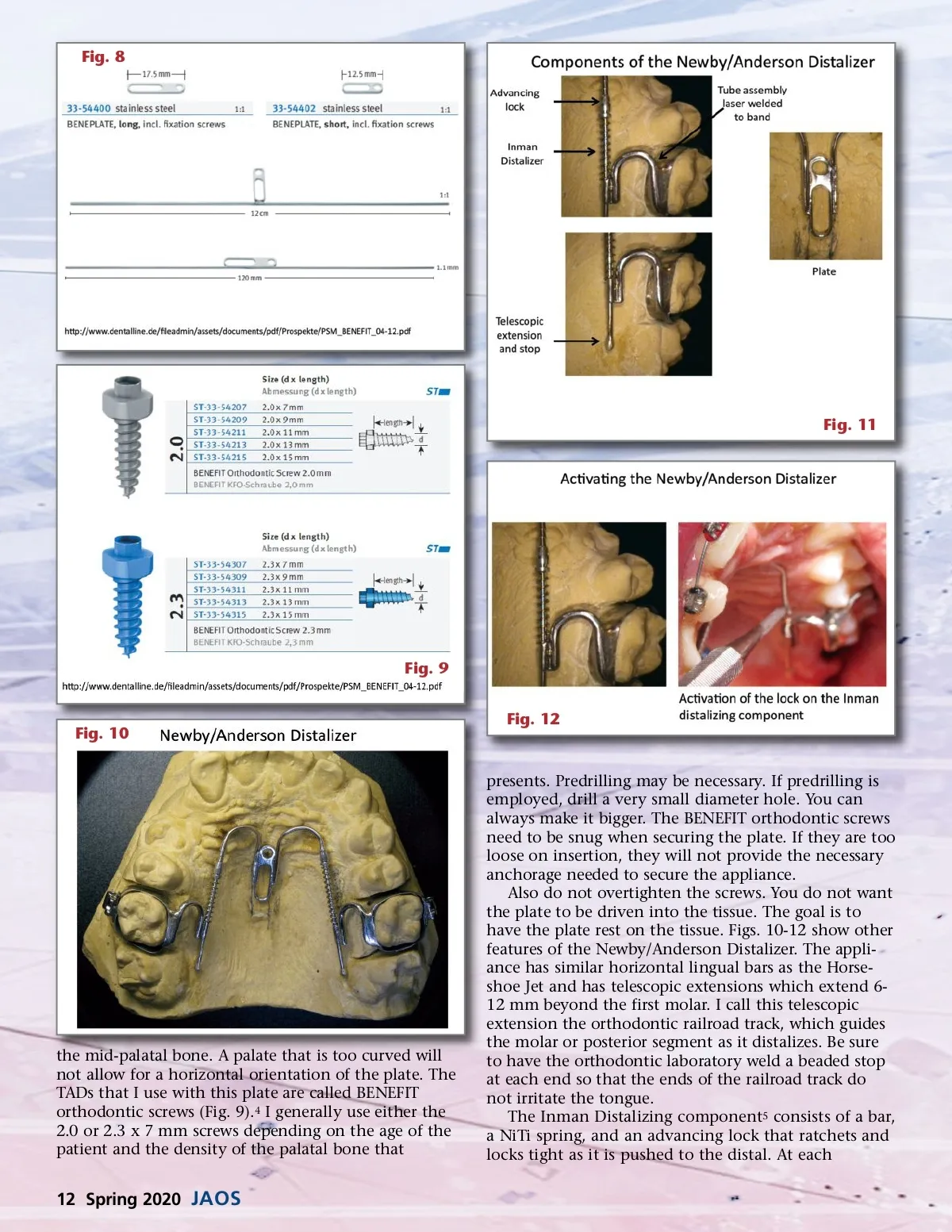
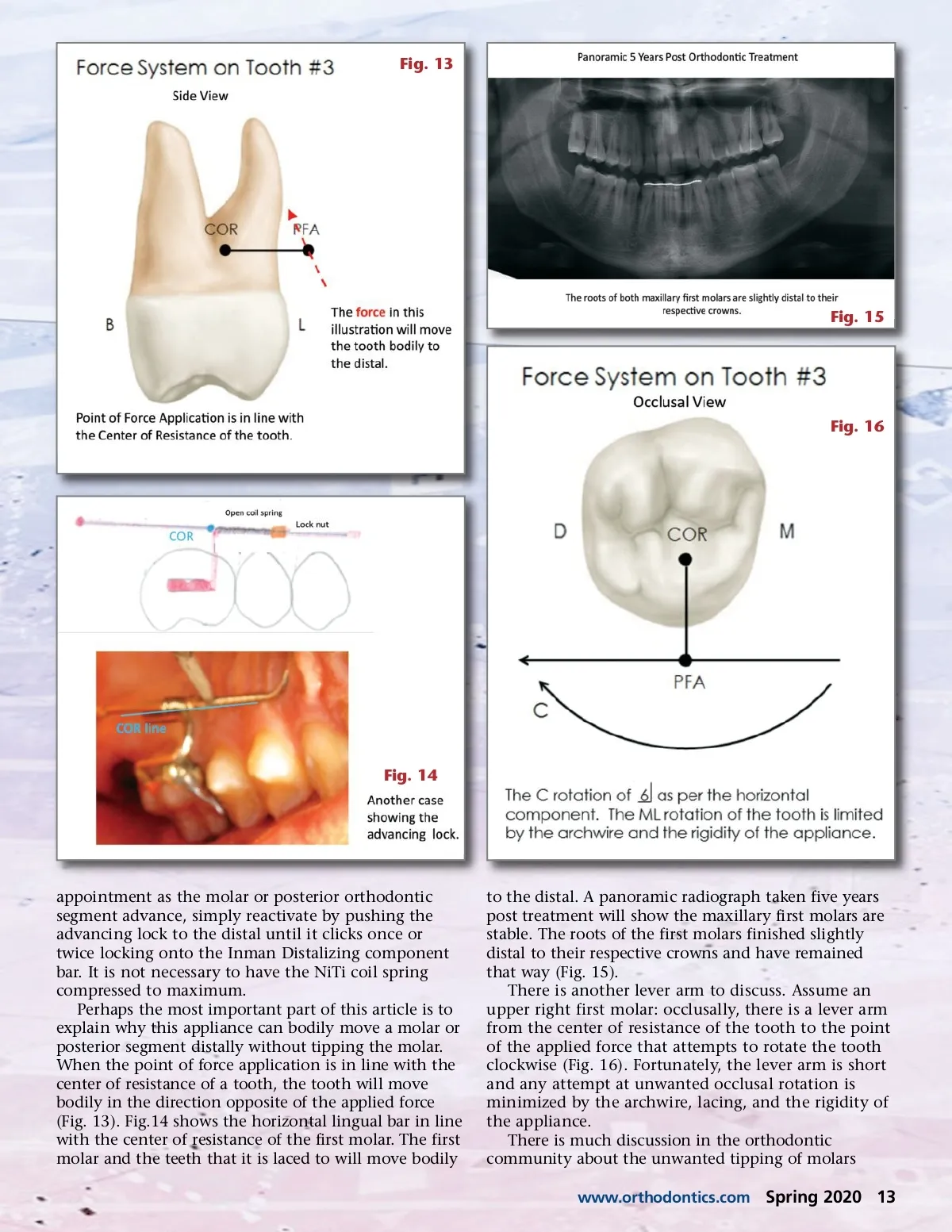
Fig. 13 Fig. 15 Fig. 16 Fig. 14 appointment as the molar or posterior orthodontic segment advance, simply reactivate by pushing the advancing lock to the distal until it clicks once or twice locking onto the Inman Distalizing component bar. It is not necessary to have the NiTi coil spring compressed to maximum. Perhaps the most important part of this article is to explain why this appliance can bodily move a molar or posterior segment distally without tipping the molar. When the point of force application is in line with the center of resistance of a tooth, the tooth will move bodily in the direction opposite of the applied force (Fig. 13). Fig.14 shows the horizontal lingual bar in line with the center of resistance of the first molar. The first molar and the teeth that it is laced to will move bodily to the distal. A panoramic radiograph taken five years post treatment will show the maxillary first molars are stable. The roots of the first molars finished slightly distal to their respective crowns and have remained that way (Fig. 15). There is another lever arm to discuss. Assume an upper right first molar: occlusally, there is a lever arm from the center of resistance of the tooth to the point of the applied force that attempts to rotate the tooth clockwise (Fig. 16). Fortunately, the lever arm is short and any attempt at unwanted occlusal rotation is minimized by the archwire, lacing, and the rigidity of the appliance. There is much discussion in the orthodontic community about the unwanted tipping of molars www.orthodontics.com Spring 2020 13
Journal of the American Orthodontic Society Spring 2020: Page 13