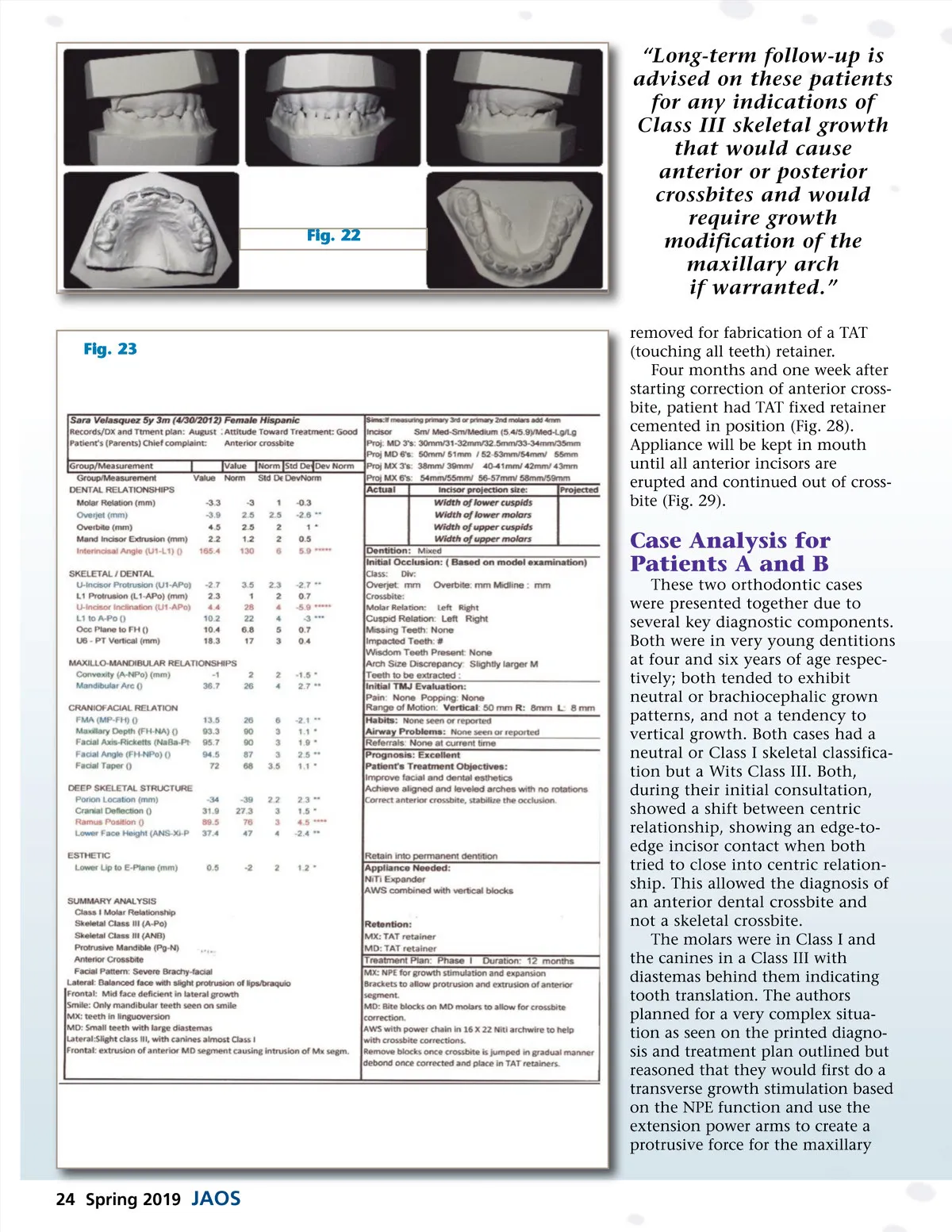
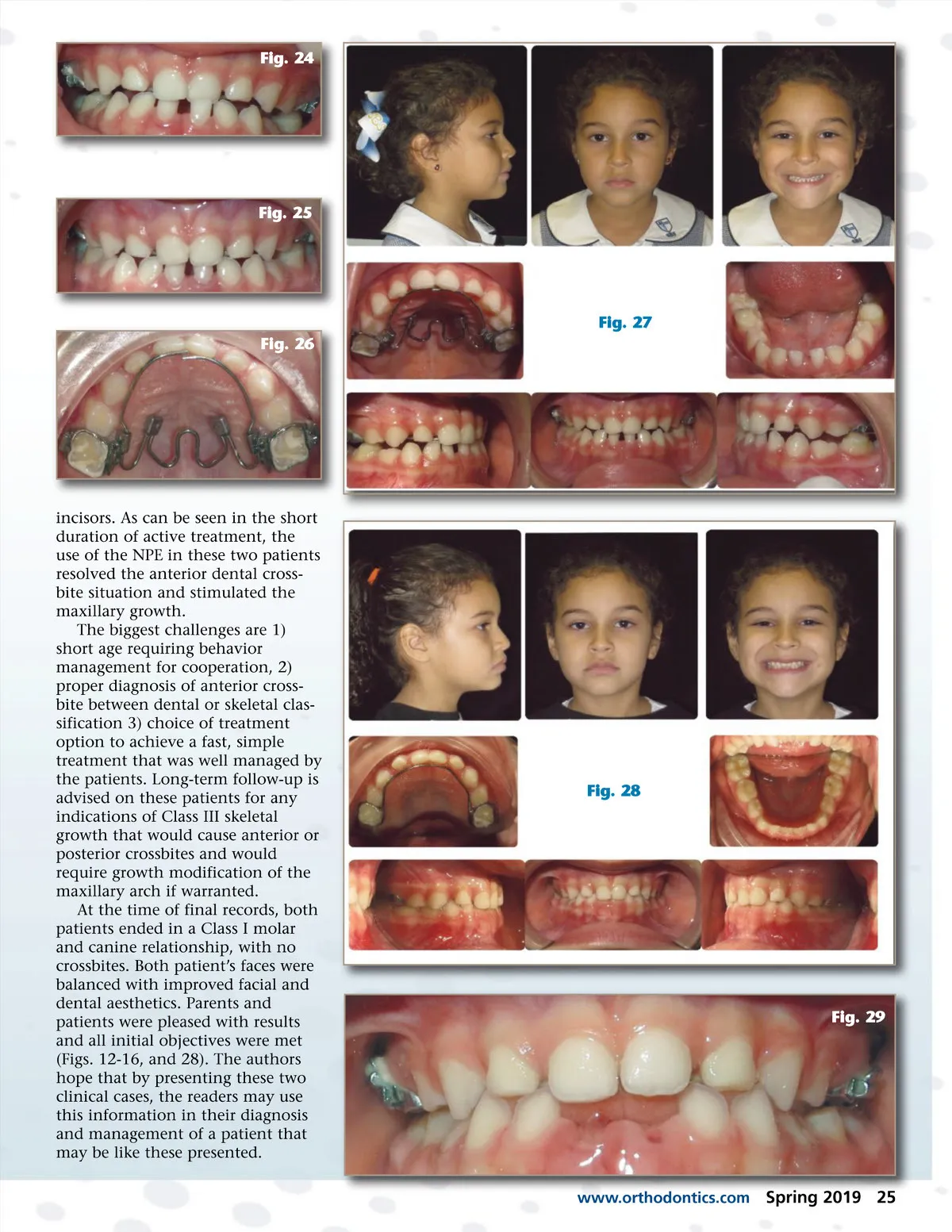
Fig. 24 Fig. 25 Fig. 27 Fig. 26 incisors. As can be seen in the short duration of active treatment, the use of the NPE in these two patients resolved the anterior dental cross-bite situation and stimulated the maxillary growth. The biggest challenges are 1) short age requiring behavior management for cooperation, 2) proper diagnosis of anterior cross-bite between dental or skeletal clas-sification 3) choice of treatment option to achieve a fast, simple treatment that was well managed by the patients. Long-term follow-up is advised on these patients for any indications of Class III skeletal growth that would cause anterior or posterior crossbites and would require growth modification of the maxillary arch if warranted. At the time of final records, both patients ended in a Class I molar and canine relationship, with no crossbites. Both patient’s faces were balanced with improved facial and dental aesthetics. Parents and patients were pleased with results and all initial objectives were met (Figs. 12-16, and 28). The authors hope that by presenting these two clinical cases, the readers may use this information in their diagnosis and management of a patient that may be like these presented. Fig. 28 Fig. 29 www.orthodontics.com Spring 2019 25
Journal of the American Orthodontic Society Spring 2019: Page 25