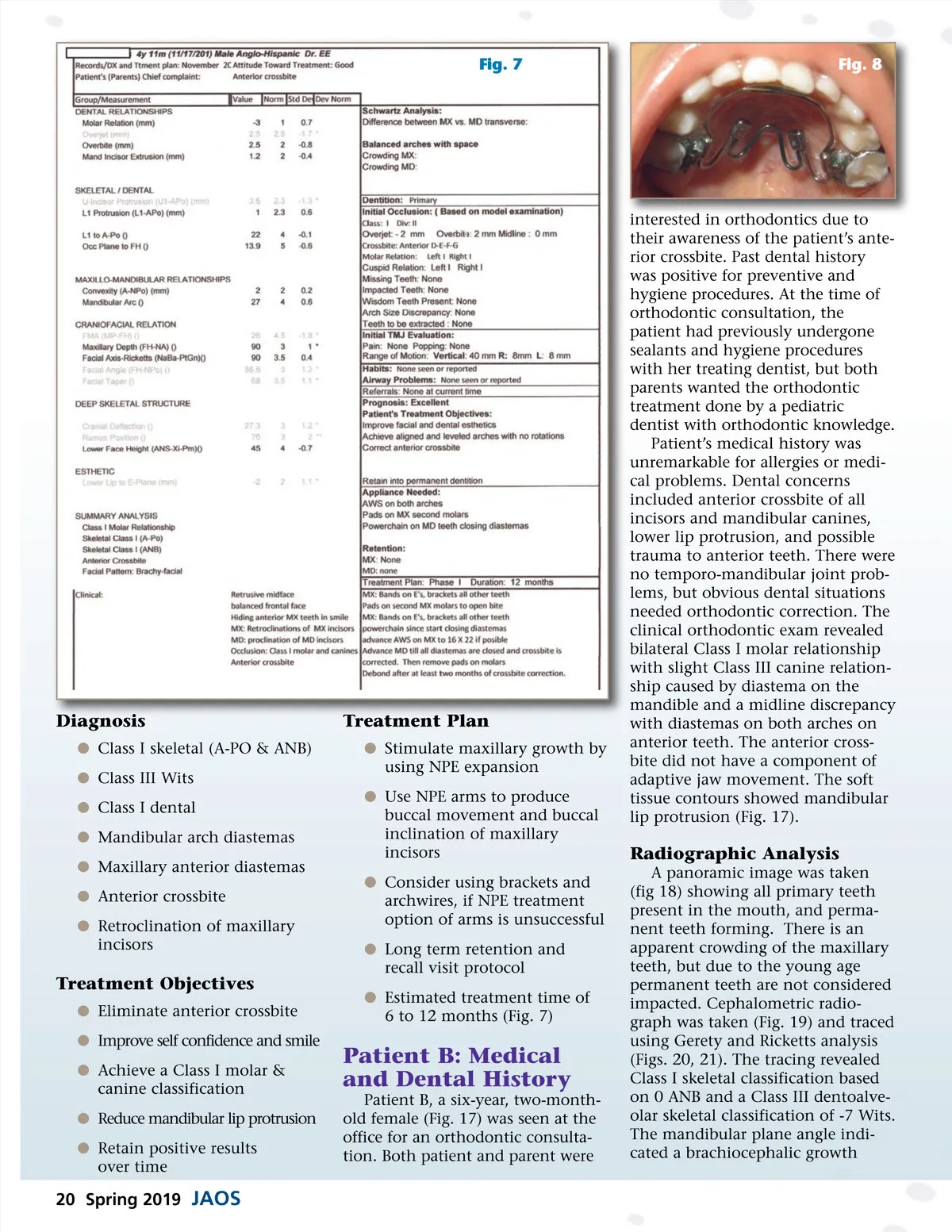
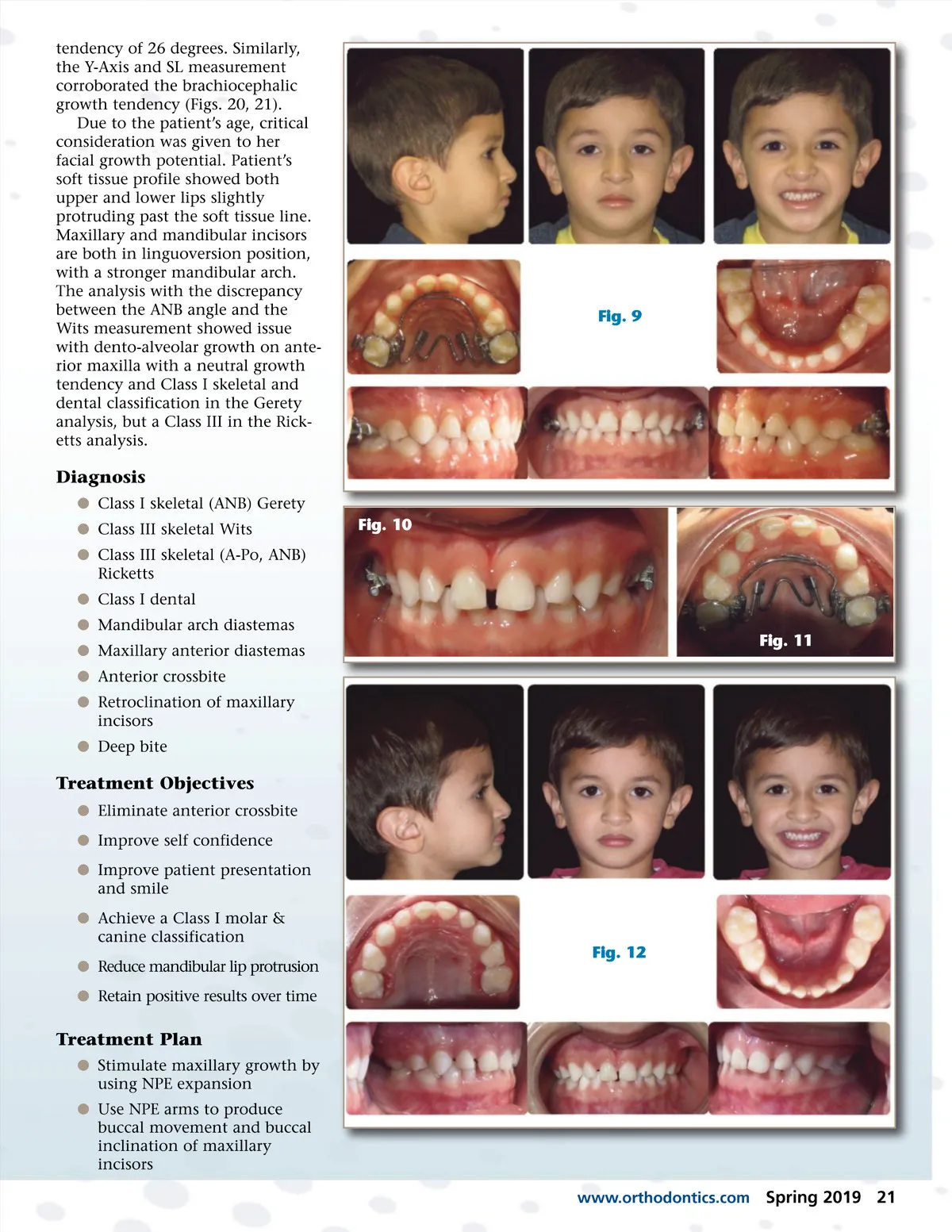
tendency of 26 degrees. Similarly, the Y-Axis and SL measurement corroborated the brachiocephalic growth tendency (Figs. 20, 21). Due to the patient’s age, critical consideration was given to her facial growth potential. Patient’s soft tissue profile showed both upper and lower lips slightly protruding past the soft tissue line. Maxillary and mandibular incisors are both in linguoversion position, with a stronger mandibular arch. The analysis with the discrepancy between the ANB angle and the Wits measurement showed issue with dento-alveolar growth on ante-rior maxilla with a neutral growth tendency and Class I skeletal and dental classification in the Gerety analysis, but a Class III in the Rick-etts analysis. Fig. 9 Diagnosis b Class I skeletal (ANB) Gerety b Class III skeletal Wits b Class III skeletal (A-Po, ANB) Ricketts b Class I dental b Mandibular arch diastemas b Maxillary anterior diastemas b Anterior crossbite b Retroclination of maxillary incisors b Deep bite Fig. 11 Fig. 10 Treatment Objectives b Eliminate anterior crossbite b Improve self confidence b Improve patient presentation and smile b Achieve a Class I molar & canine classification b Reduce mandibular lip protrusion b Retain positive results over time Fig. 12 Treatment Plan b Stimulate maxillary growth by using NPE expansion b Use NPE arms to produce buccal movement and buccal inclination of maxillary incisors www.orthodontics.com Spring 2019 21
Journal of the American Orthodontic Society Spring 2019: Page 21