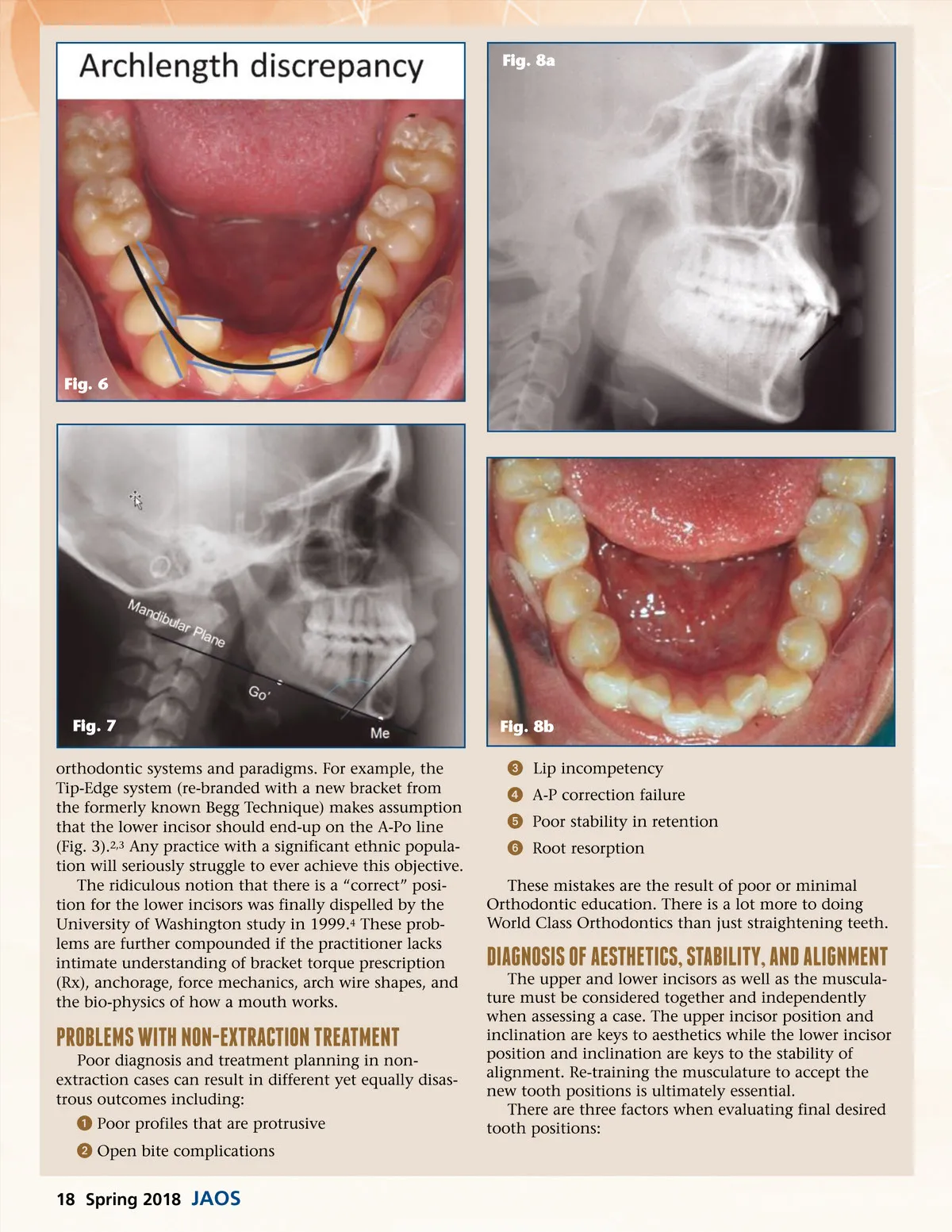
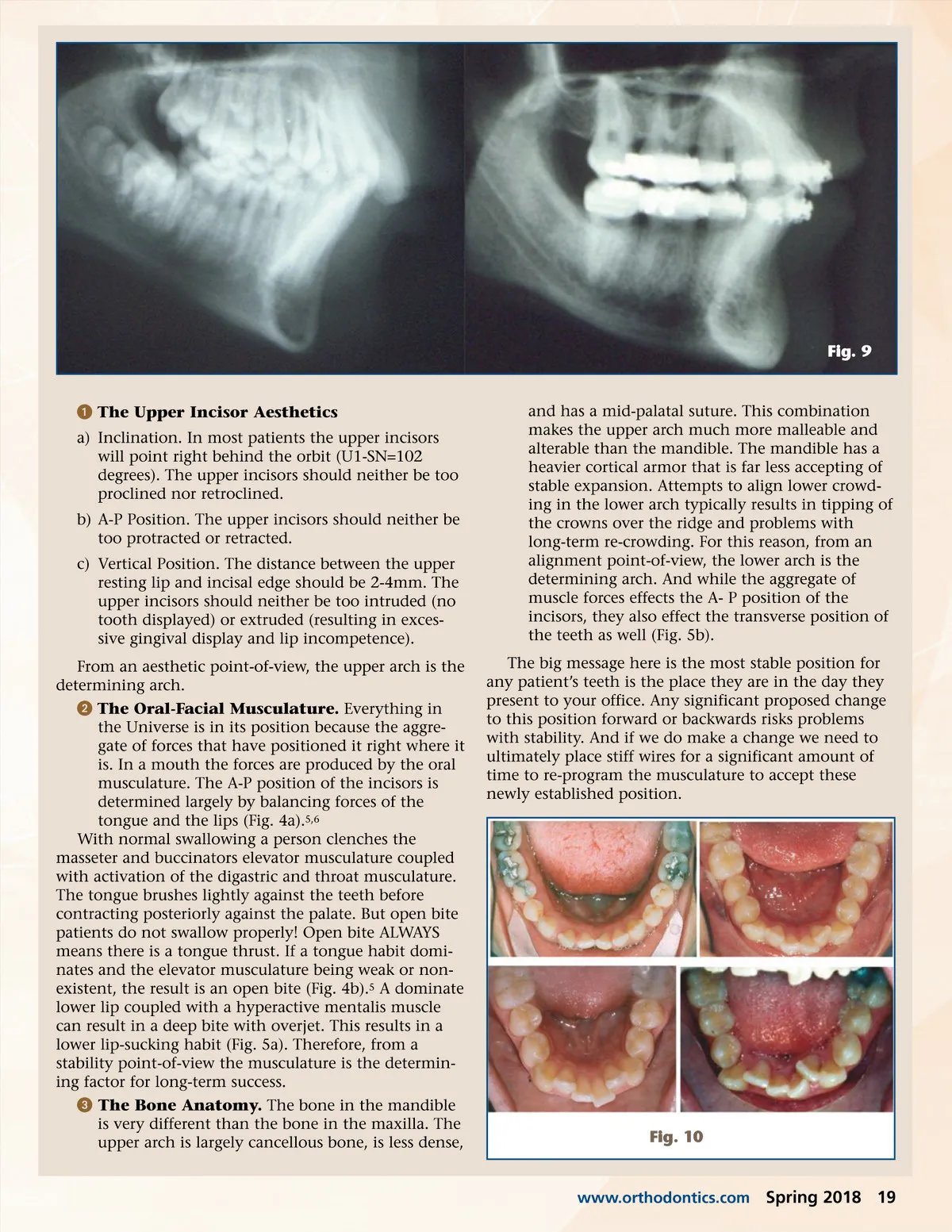
Fig. 8a Fig. 6 Fig. 7 orthodontic systems and paradigms. For example, the Tip-Edge system (re-branded with a new bracket from the formerly known Begg Technique) makes assumption that the lower incisor should end-up on the A-Po line (Fig. 3). 2,3 Any practice with a significant ethnic popula-tion will seriously struggle to ever achieve this objective. The ridiculous notion that there is a “correct” posi-tion for the lower incisors was finally dispelled by the University of Washington study in 1999. 4 These prob-lems are further compounded if the practitioner lacks intimate understanding of bracket torque prescription (Rx), anchorage, force mechanics, arch wire shapes, and the bio-physics of how a mouth works. Fig. 8b ᕣ Lip incompetency ᕤ A-P correction failure ᕥ Poor stability in retention ᕦ Root resorption These mistakes are the result of poor or minimal Orthodontic education. There is a lot more to doing World Class Orthodontics than just straightening teeth. DiAgnoSiS of AESThETiCS, STABiliTY, AnD AlignMEnT The upper and lower incisors as well as the muscula-ture must be considered together and independently when assessing a case. The upper incisor position and inclination are keys to aesthetics while the lower incisor position and inclination are keys to the stability of alignment. Re-training the musculature to accept the new tooth positions is ultimately essential. There are three factors when evaluating final desired tooth positions: PRoBlEMS wiTh non-EXTRACTion TREATMEnT Poor diagnosis and treatment planning in non-extraction cases can result in different yet equally disas-trous outcomes including: ᕡ Poor profiles that are protrusive ᕢ Open bite complications 18 Spring 2018 JAOS
Journal of the American Orthodontic Society Spring 2018: Page 18