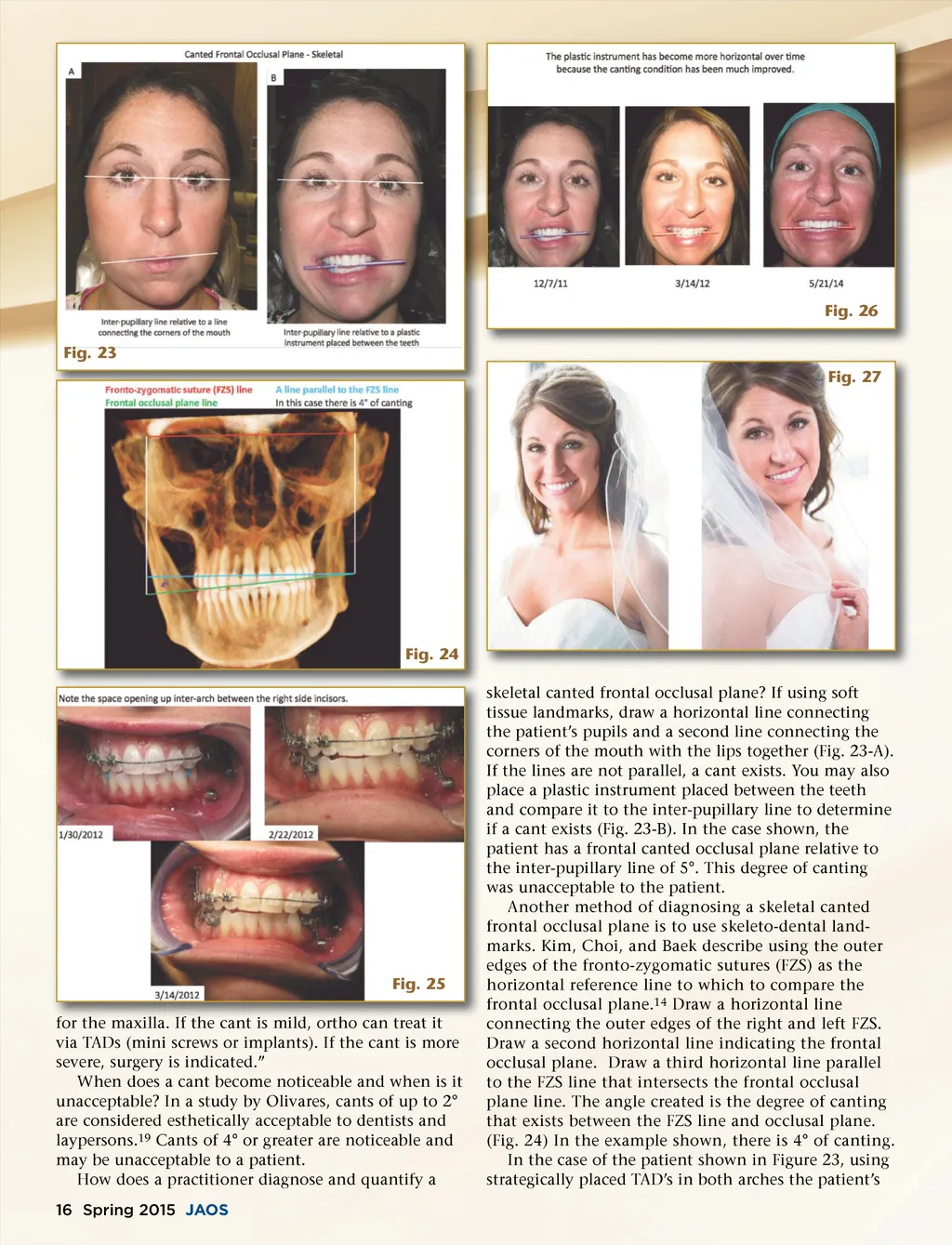
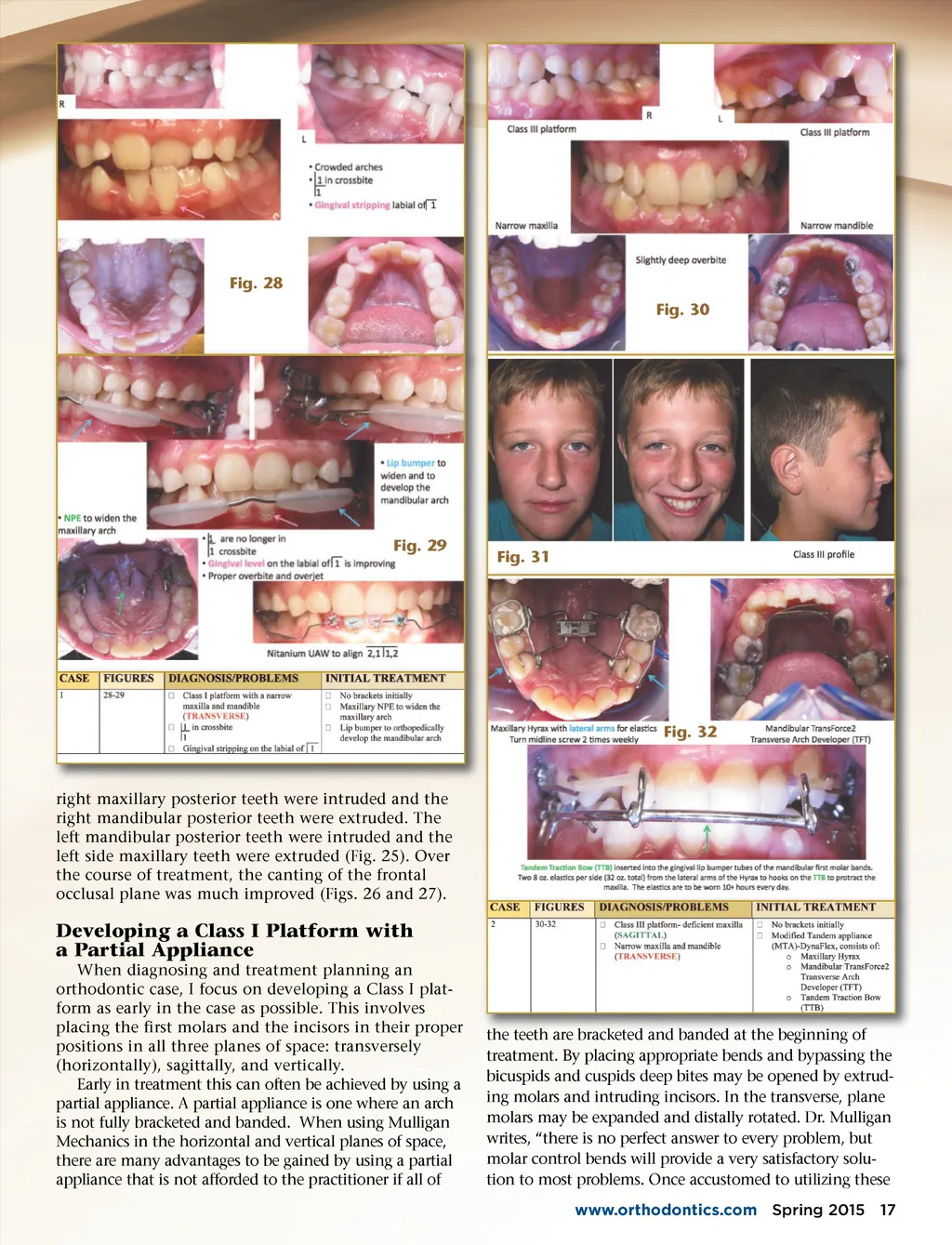
Fig. 28 Fig. 30 Fig. 29 Fig. 31 Fig. 32 right maxillary posterior teeth were intruded and the right mandibular posterior teeth were extruded. The left mandibular posterior teeth were intruded and the left side maxillary teeth were extruded (Fig. 25). Over the course of treatment, the canting of the frontal occlusal plane was much improved (Figs. 26 and 27). Developing a Class I Platform with a Partial Appliance When diagnosing and treatment planning an orthodontic case, I focus on developing a Class I plat-form as early in the case as possible. This involves placing the first molars and the incisors in their proper positions in all three planes of space: transversely (horizontally), sagittally, and vertically. Early in treatment this can often be achieved by using a partial appliance. A partial appliance is one where an arch is not fully bracketed and banded. When using Mulligan Mechanics in the horizontal and vertical planes of space, there are many advantages to be gained by using a partial appliance that is not afforded to the practitioner if all of the teeth are bracketed and banded at the beginning of treatment. By placing appropriate bends and bypassing the bicuspids and cuspids deep bites may be opened by extrud-ing molars and intruding incisors. In the transverse, plane molars may be expanded and distally rotated. Dr. Mulligan writes, “there is no perfect answer to every problem, but molar control bends will provide a very satisfactory solu-tion to most problems. Once accustomed to utilizing these www.orthodontics.com Spring 2015 17
Journal of the American Orthodontic Society Spring 2015: Page 17