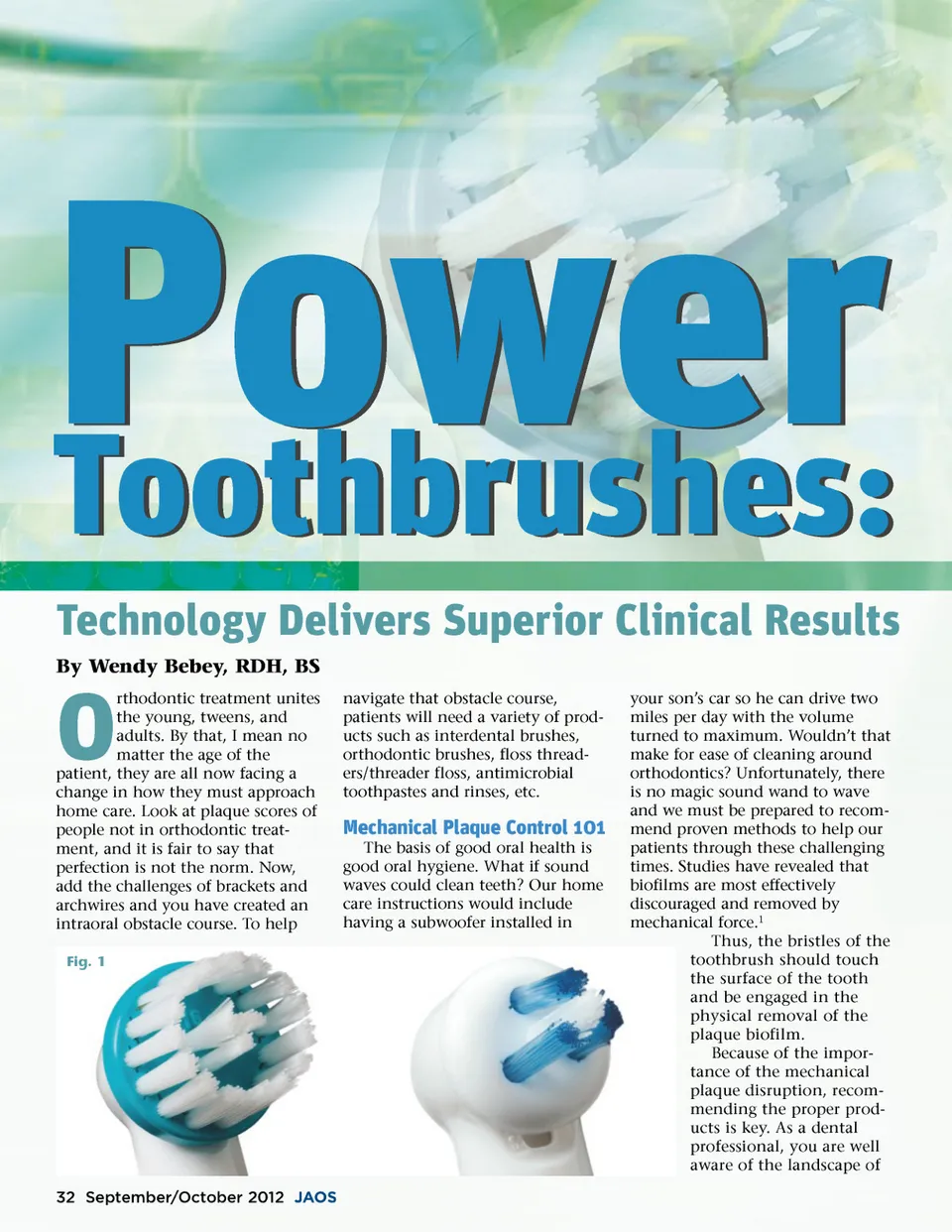
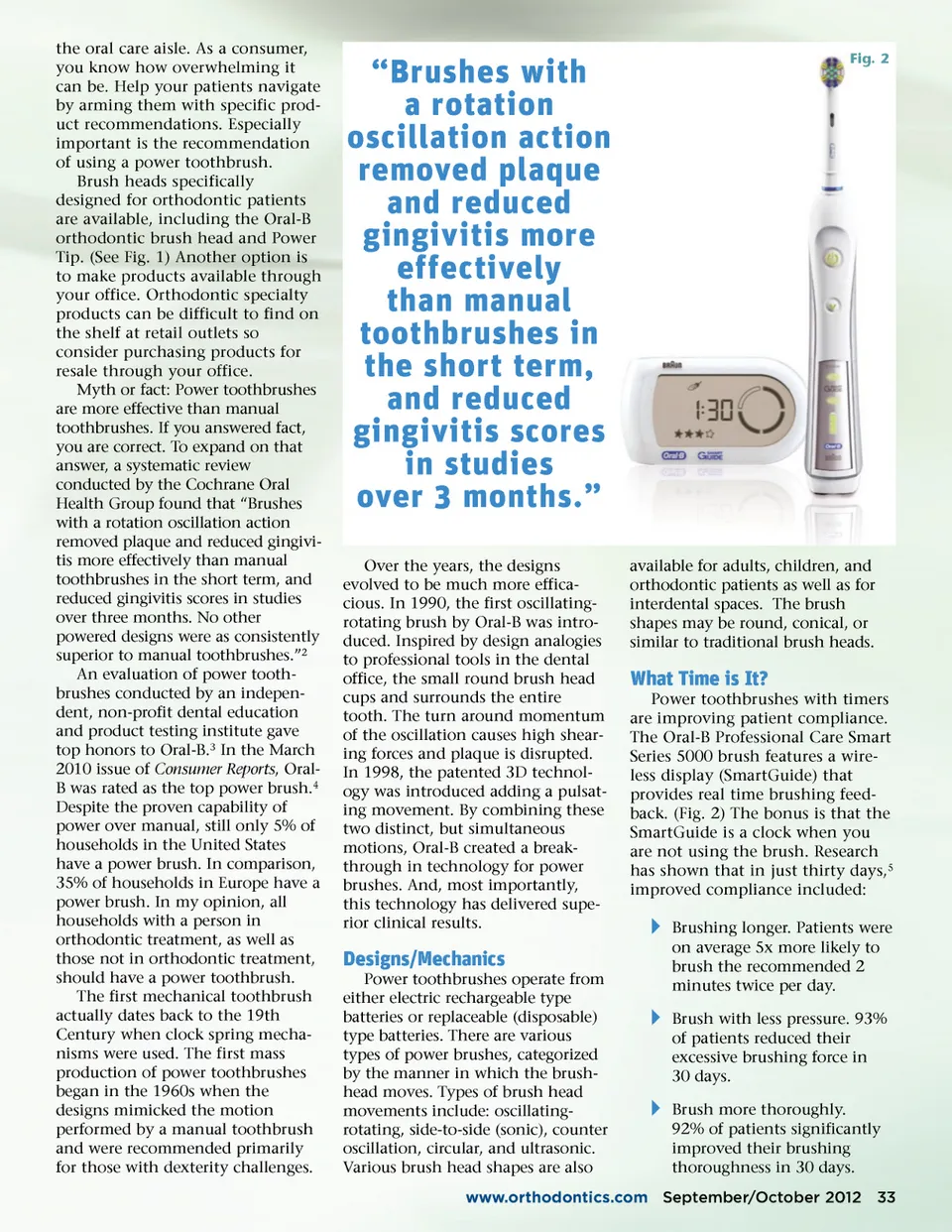
Power Toothbrushes: Technology Delivers Superior Clinical Results By Wendy Bebey, RDH, BS rthodontic treatment unites the young, tweens, and adults. By that, I mean no matter the age of the patient, they are all now facing a change in how they must approach home care. Look at plaque scores of people not in orthodontic treat-ment, and it is fair to say that perfection is not the norm. Now, add the challenges of brackets and archwires and you have created an intraoral obstacle course. To help O Fig. 1 navigate that obstacle course, patients will need a variety of prod-ucts such as interdental brushes, orthodontic brushes, floss thread-ers/threader floss, antimicrobial toothpastes and rinses, etc. Mechanical Plaque Control 101 The basis of good oral health is good oral hygiene. What if sound waves could clean teeth? Our home care instructions would include having a subwoofer installed in your son’s car so he can drive two miles per day with the volume turned to maximum. Wouldn’t that make for ease of cleaning around orthodontics? Unfortunately, there is no magic sound wand to wave and we must be prepared to recom-mend proven methods to help our patients through these challenging times. Studies have revealed that biofilms are most effectively discouraged and removed by mechanical force. 1 Thus, the bristles of the toothbrush should touch the surface of the tooth and be engaged in the physical removal of the plaque biofilm. Because of the impor-tance of the mechanical plaque disruption, recom-mending the proper prod-ucts is key. As a dental professional, you are well aware of the landscape of 32 September/October 2012 JAOS
Journal of the American Orthodontic Society September-October 2012: Page 32