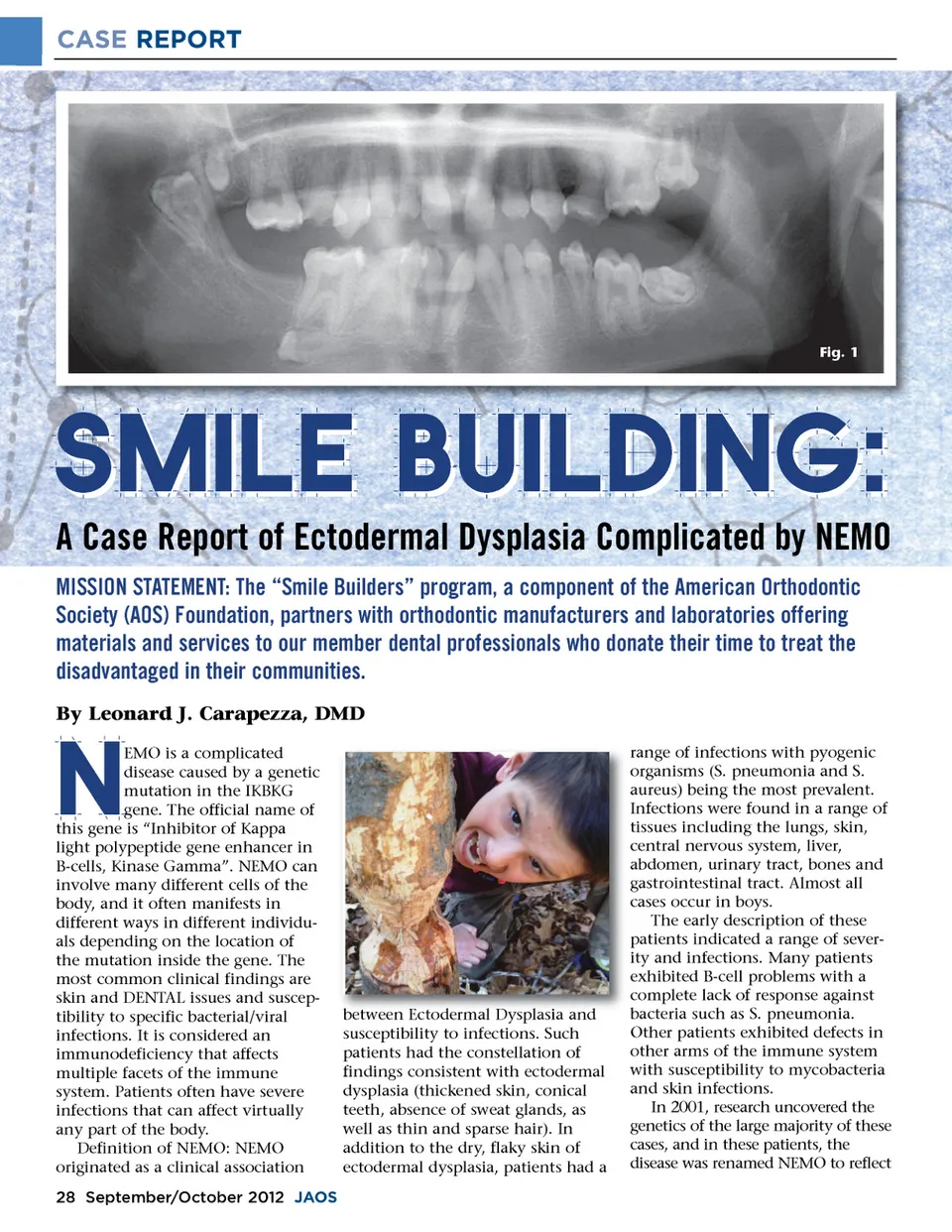
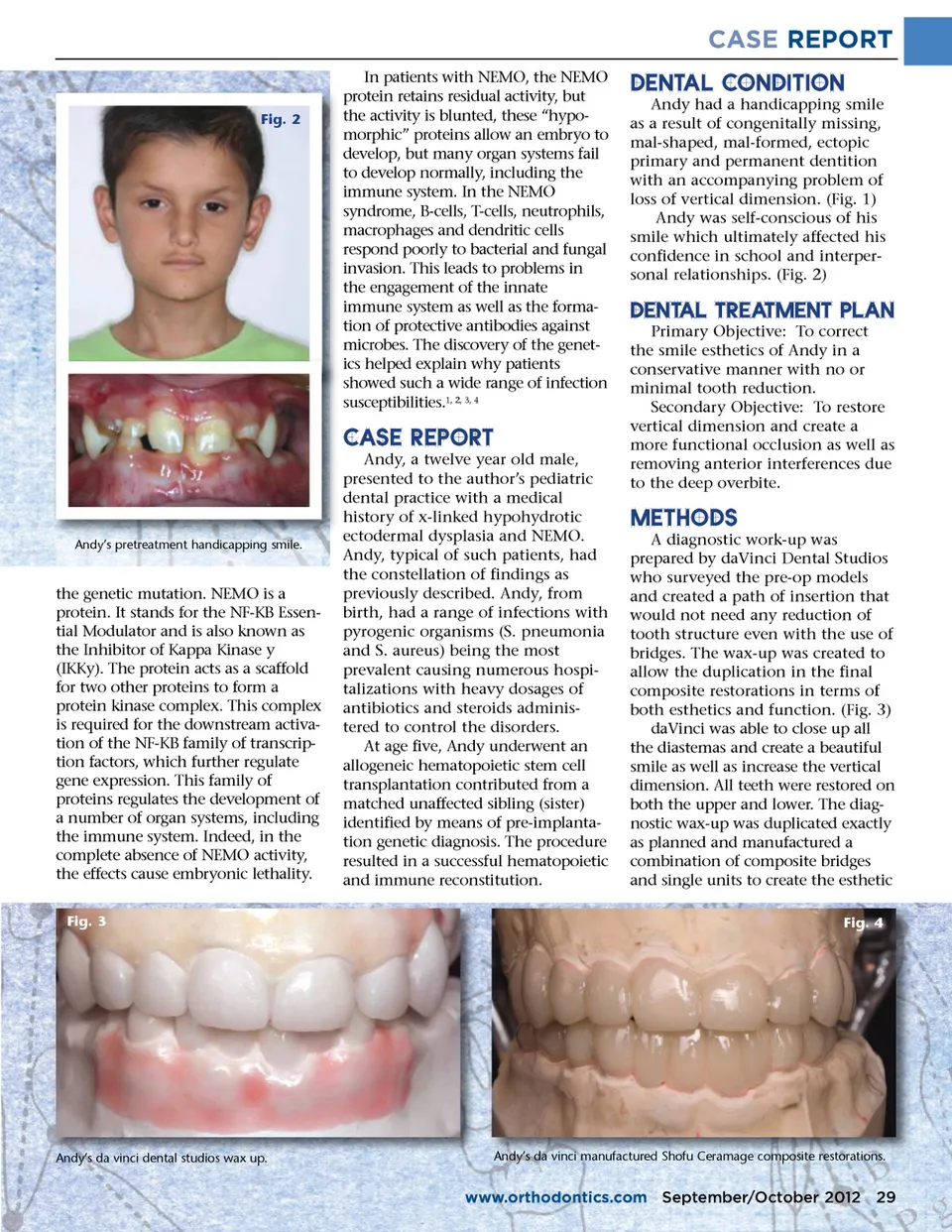
CASE REPORT Fig. 1 SMILE BUILDING: A Case Report of Ectodermal Dysplasia Complicated by NEMO MISSION STATEMENT: The “Smile Builders” program, a component of the American Orthodontic Society (AOS) Foundation, partners with orthodontic manufacturers and laboratories offering materials and services to our member dental professionals who donate their time to treat the disadvantaged in their communities. N By Leonard J. Carapezza, DMD EMO is a complicated disease caused by a genetic mutation in the IKBKG gene. The official name of this gene is “Inhibitor of Kappa light polypeptide gene enhancer in B-cells, Kinase Gamma”. NEMO can involve many different cells of the body, and it often manifests in different ways in different individu-als depending on the location of the mutation inside the gene. The most common clinical findings are skin and DENTAL issues and suscep-tibility to specific bacterial/viral infections. It is considered an immunodeficiency that affects multiple facets of the immune system. Patients often have severe infections that can affect virtually any part of the body. Definition of NEMO: NEMO originated as a clinical association range of infections with pyogenic organisms (S. pneumonia and S. aureus) being the most prevalent. Infections were found in a range of tissues including the lungs, skin, central nervous system, liver, abdomen, urinary tract, bones and gastrointestinal tract. Almost all cases occur in boys. The early description of these patients indicated a range of sever-ity and infections. Many patients exhibited B-cell problems with a complete lack of response against bacteria such as S. pneumonia. Other patients exhibited defects in other arms of the immune system with susceptibility to mycobacteria and skin infections. In 2001, research uncovered the genetics of the large majority of these cases, and in these patients, the disease was renamed NEMO to reflect between Ectodermal Dysplasia and susceptibility to infections. Such patients had the constellation of findings consistent with ectodermal dysplasia (thickened skin, conical teeth, absence of sweat glands, as well as thin and sparse hair). In addition to the dry, flaky skin of ectodermal dysplasia, patients had a 28 September/October 2012 JAOS
Journal of the American Orthodontic Society September-October 2012: Page 28