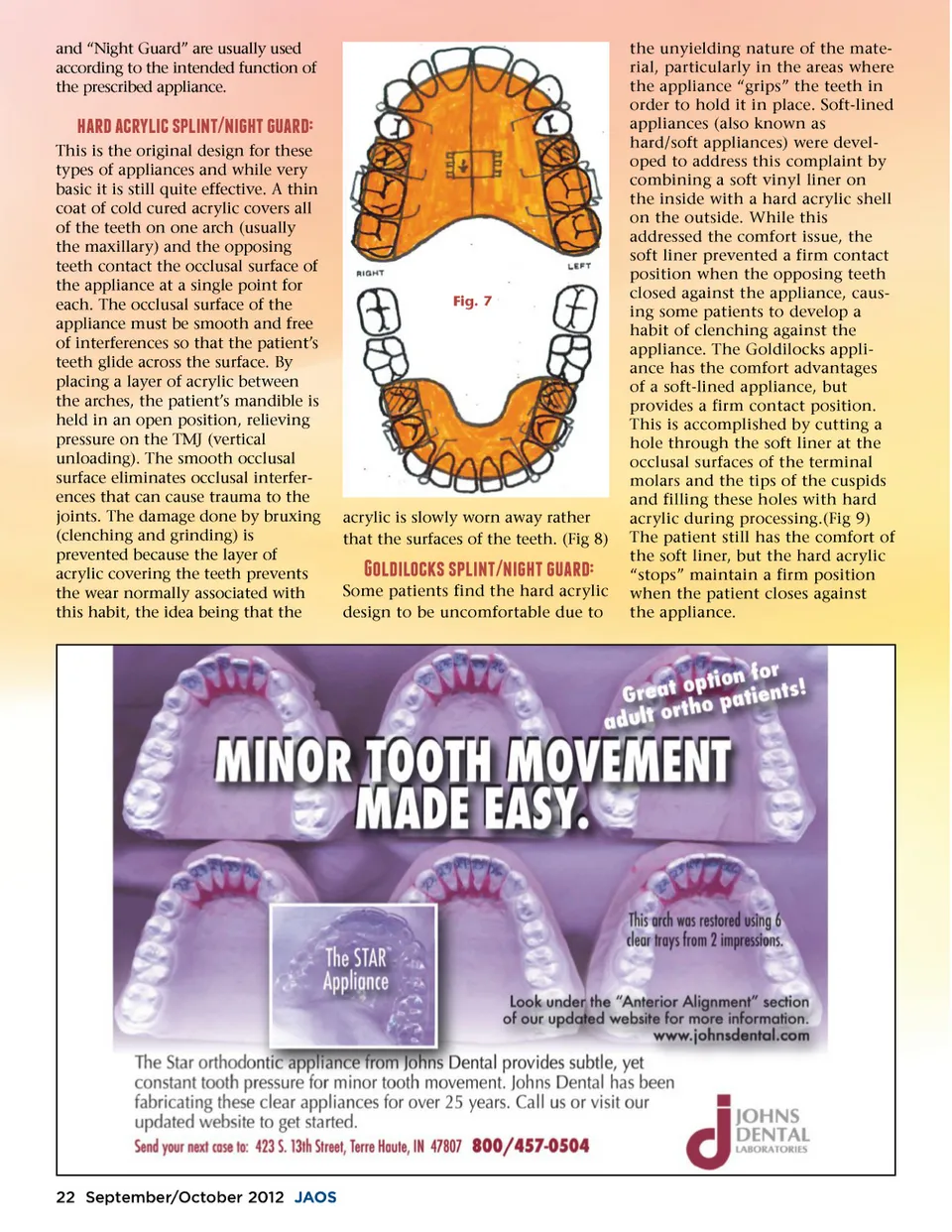
and “Night Guard” are usually used according to the intended function of the prescribed appliance. hard acrylic splint/night guard: This is the original design for these types of appliances and while very basic it is still quite effective. A thin coat of cold cured acrylic covers all of the teeth on one arch (usually the maxillary) and the opposing teeth contact the occlusal surface of the appliance at a single point for each. The occlusal surface of the appliance must be smooth and free of interferences so that the patient’s teeth glide across the surface. By placing a layer of acrylic between the arches, the patient’s mandible is held in an open position, relieving pressure on the TMJ (vertical unloading). The smooth occlusal surface eliminates occlusal interfer-ences that can cause trauma to the joints. The damage done by bruxing (clenching and grinding) is prevented because the layer of acrylic covering the teeth prevents the wear normally associated with this habit, the idea being that the Fig. 7 acrylic is slowly worn away rather that the surfaces of the teeth. (Fig 8) Goldilocks splint/night guard: Some patients find the hard acrylic design to be uncomfortable due to the unyielding nature of the mate-rial, particularly in the areas where the appliance “grips” the teeth in order to hold it in place. Soft-lined appliances (also known as hard/soft appliances) were devel-oped to address this complaint by combining a soft vinyl liner on the inside with a hard acrylic shell on the outside. While this addressed the comfort issue, the soft liner prevented a firm contact position when the opposing teeth closed against the appliance, caus-ing some patients to develop a habit of clenching against the appliance. The Goldilocks appli-ance has the comfort advantages of a soft-lined appliance, but provides a firm contact position. This is accomplished by cutting a hole through the soft liner at the occlusal surfaces of the terminal molars and the tips of the cuspids and filling these holes with hard acrylic during processing.(Fig 9) The patient still has the comfort of the soft liner, but the hard acrylic “stops” maintain a firm position when the patient closes against the appliance. 22 September/October 2012 JAOS
Journal of the American Orthodontic Society September-October 2012: Page 22