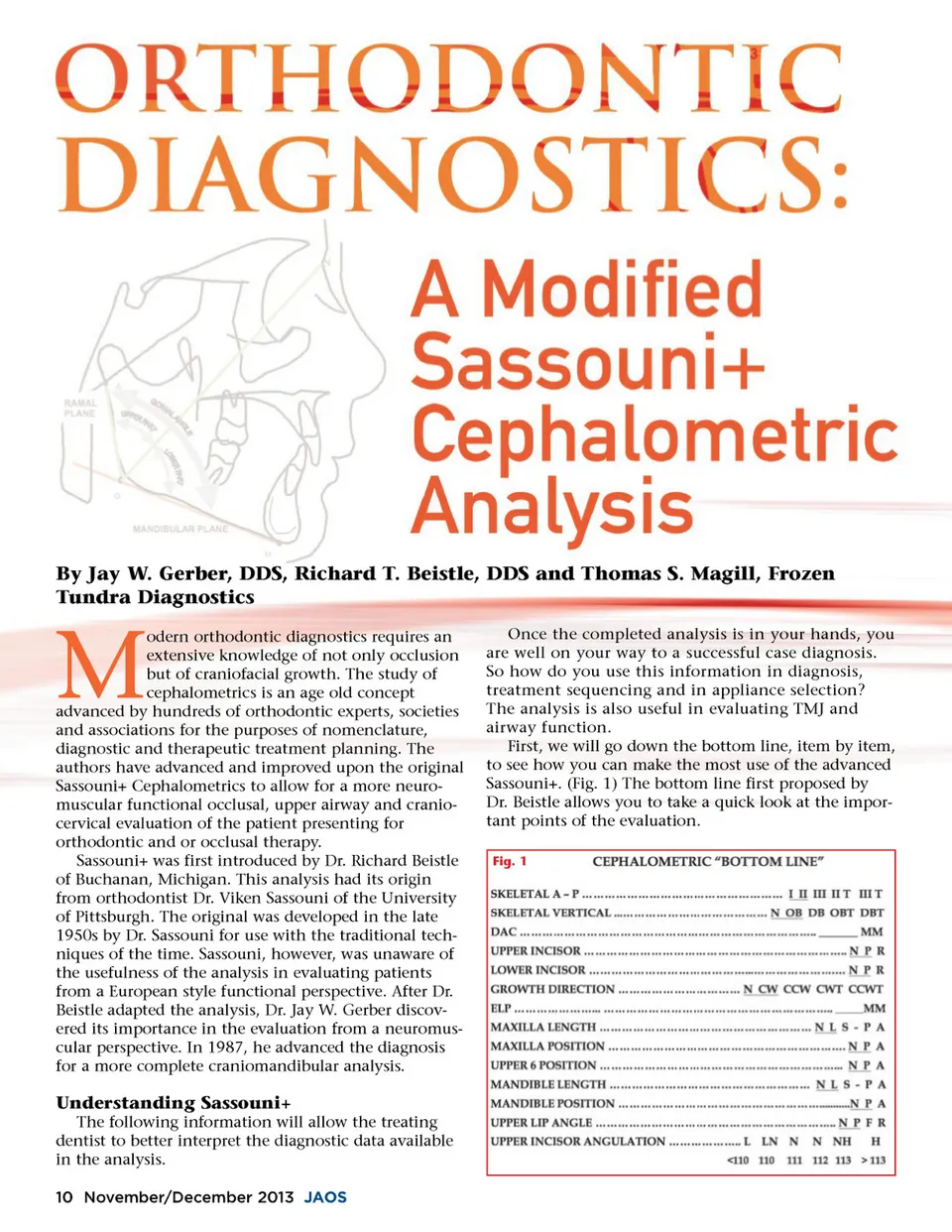
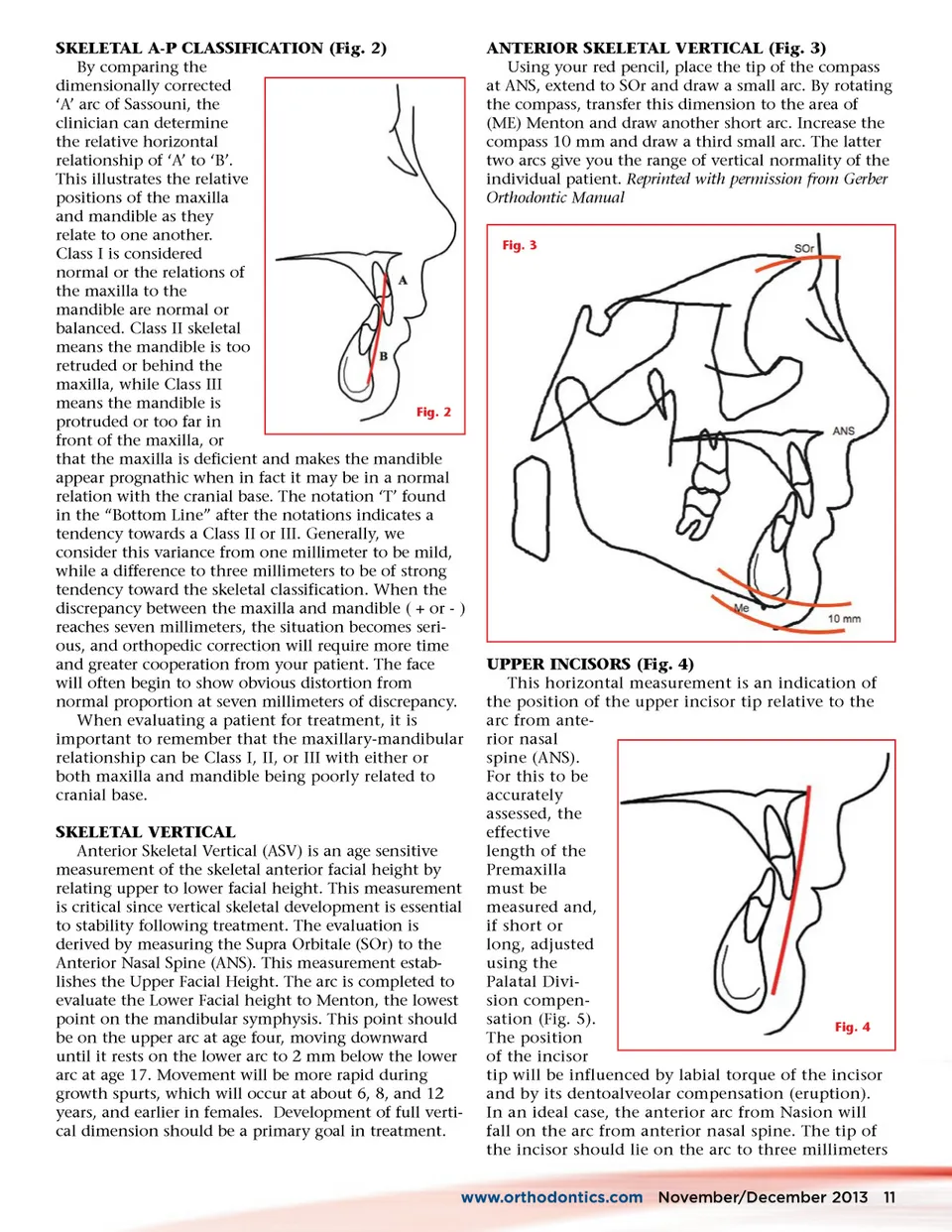
By Jay W. Gerber, DDS, Richard T. Beistle, DDS and Thomas S. Magill, Frozen Tundra Diagnostics M odern orthodontic diagnostics requires an extensive knowledge of not only occlusion but of craniofacial growth. The study of cephalometrics is an age old concept advanced by hundreds of orthodontic experts, societies and associations for the purposes of nomenclature, diagnostic and therapeutic treatment planning. The authors have advanced and improved upon the original Sassouni+ Cephalometrics to allow for a more neuro-muscular functional occlusal, upper airway and cranio-cervical evaluation of the patient presenting for orthodontic and or occlusal therapy. Sassouni+ was first introduced by Dr. Richard Beistle of Buchanan, Michigan. This analysis had its origin from orthodontist Dr. Viken Sassouni of the University of Pittsburgh. The original was developed in the late 1950s by Dr. Sassouni for use with the traditional tech-niques of the time. Sassouni, however, was unaware of the usefulness of the analysis in evaluating patients from a European style functional perspective. After Dr. Beistle adapted the analysis, Dr. Jay W. Gerber discov-ered its importance in the evaluation from a neuromus-cular perspective. In 1987, he advanced the diagnosis for a more complete craniomandibular analysis. Once the completed analysis is in your hands, you are well on your way to a successful case diagnosis. So how do you use this information in diagnosis, treatment sequencing and in appliance selection? The analysis is also useful in evaluating TMJ and airway function. First, we will go down the bottom line, item by item, to see how you can make the most use of the advanced Sassouni+. (Fig. 1) The bottom line first proposed by Dr. Beistle allows you to take a quick look at the impor-tant points of the evaluation. Fig. 1 Understanding Sassouni+ The following information will allow the treating dentist to better interpret the diagnostic data available in the analysis. 10 November/December 2013 JAOS
Journal of the American Orthodontic Society November-December 2013: Page 10