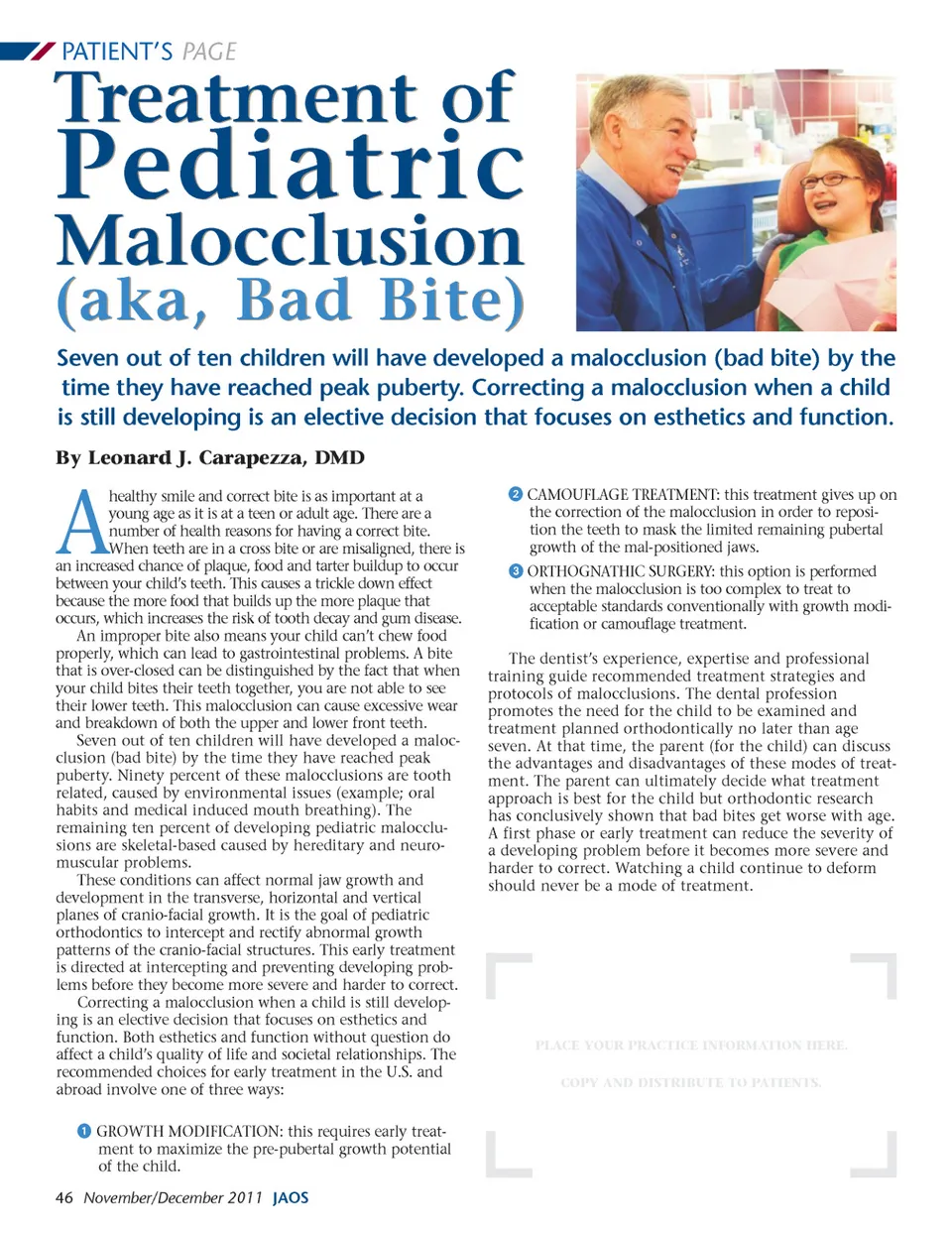
PATIENT’S PAGE Treatment of Pediatric By Leonard J. Carapezza, DMD Malocclusion (aka, Bad Bite) Seven out of ten children will have developed a malocclusion (bad bite) by the time they have reached peak puberty. Correcting a malocclusion when a child is still developing is an elective decision that focuses on esthetics and function. ᕢ CAMOUFLAGE TREATMENT: this treatment gives up on the correction of the malocclusion in order to reposi-tion the teeth to mask the limited remaining pubertal growth of the mal-positioned jaws. ᕣ ORTHOGNATHIC SURGERY: this option is performed when the malocclusion is too complex to treat to acceptable standards conventionally with growth modi-fication or camouflage treatment. The dentist’s experience, expertise and professional training guide recommended treatment strategies and protocols of malocclusions. The dental profession promotes the need for the child to be examined and treatment planned orthodontically no later than age seven. At that time, the parent (for the child) can discuss the advantages and disadvantages of these modes of treat-ment. The parent can ultimately decide what treatment approach is best for the child but orthodontic research has conclusively shown that bad bites get worse with age. A first phase or early treatment can reduce the severity of a developing problem before it becomes more severe and harder to correct. Watching a child continue to deform should never be a mode of treatment. A healthy smile and correct bite is as important at a young age as it is at a teen or adult age. There are a number of health reasons for having a correct bite. When teeth are in a cross bite or are misaligned, there is an increased chance of plaque, food and tarter buildup to occur between your child’s teeth. This causes a trickle down effect because the more food that builds up the more plaque that occurs, which increases the risk of tooth decay and gum disease. An improper bite also means your child can’t chew food properly, which can lead to gastrointestinal problems. A bite that is over-closed can be distinguished by the fact that when your child bites their teeth together, you are not able to see their lower teeth. This malocclusion can cause excessive wear and breakdown of both the upper and lower front teeth. Seven out of ten children will have developed a maloc-clusion (bad bite) by the time they have reached peak puberty. Ninety percent of these malocclusions are tooth related, caused by environmental issues (example; oral habits and medical induced mouth breathing). The remaining ten percent of developing pediatric malocclu-sions are skeletal-based caused by hereditary and neuro-muscular problems. These conditions can affect normal jaw growth and development in the transverse, horizontal and vertical planes of cranio-facial growth. It is the goal of pediatric orthodontics to intercept and rectify abnormal growth patterns of the cranio-facial structures. This early treatment is directed at intercepting and preventing developing prob-lems before they become more severe and harder to correct. Correcting a malocclusion when a child is still develop-ing is an elective decision that focuses on esthetics and function. Both esthetics and function without question do affect a child’s quality of life and societal relationships. The recommended choices for early treatment in the U.S. and abroad involve one of three ways: ᕡ GROWTH MODIFICATION: this requires early treat-ment to maximize the pre-pubertal growth potential of the child. PLACE YOUR PRACTICE INFORMATION HERE. COPY AND DISTRIBUTE TO PATIENTS. 46 November/December 2011 JAOS
Journal of the American Orthodontic Society November-December 2011: Page 46