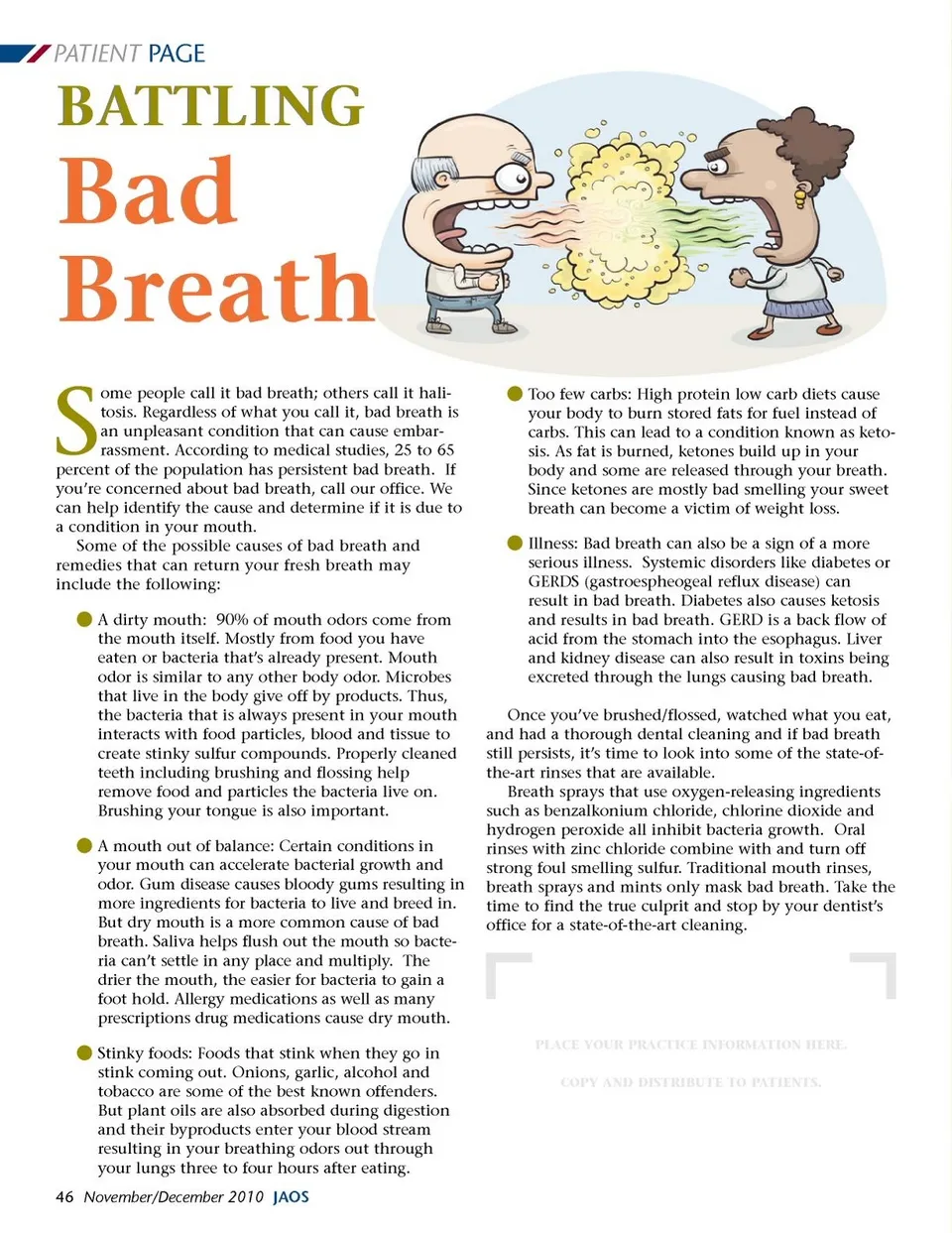
PATIENT PAGE BATTLING Bad Breath S ome people call it bad breath; others call it hali-tosis. Regardless of what you call it, bad breath is an unpleasant condition that can cause embar-rassment. According to medical studies, 25 to 65 percent of the population has persistent bad breath. If you’re concerned about bad breath, call our office. We can help identify the cause and determine if it is due to a condition in your mouth. Some of the possible causes of bad breath and remedies that can return your fresh breath may include the following: © A dirty mouth: 90% of mouth odors come from the mouth itself. Mostly from food you have eaten or bacteria that’s already present. Mouth odor is similar to any other body odor. Microbes that live in the body give off by products. Thus, the bacteria that is always present in your mouth interacts with food particles, blood and tissue to create stinky sulfur compounds. Properly cleaned teeth including brushing and flossing help remove food and particles the bacteria live on. Brushing your tongue is also important. © A mouth out of balance: Certain conditions in your mouth can accelerate bacterial growth and odor. Gum disease causes bloody gums resulting in more ingredients for bacteria to live and breed in. But dry mouth is a more common cause of bad breath. Saliva helps flush out the mouth so bacte-ria can’t settle in any place and multiply. The drier the mouth, the easier for bacteria to gain a foot hold. Allergy medications as well as many prescriptions drug medications cause dry mouth. © Stinky foods: Foods that stink when they go in stink coming out. Onions, garlic, alcohol and tobacco are some of the best known offenders. But plant oils are also absorbed during digestion and their byproducts enter your blood stream resulting in your breathing odors out through your lungs three to four hours after eating. 46 November/December 2010 JAOS © Too few carbs: High protein low carb diets cause your body to burn stored fats for fuel instead of carbs. This can lead to a condition known as keto-sis. As fat is burned, ketones build up in your body and some are released through your breath. Since ketones are mostly bad smelling your sweet breath can become a victim of weight loss. © Illness: Bad breath can also be a sign of a more serious illness. Systemic disorders like diabetes or GERDS (gastroespheogeal reflux disease) can result in bad breath. Diabetes also causes ketosis and results in bad breath. GERD is a back flow of acid from the stomach into the esophagus. Liver and kidney disease can also result in toxins being excreted through the lungs causing bad breath. Once you’ve brushed/flossed, watched what you eat, and had a thorough dental cleaning and if bad breath still persists, it’s time to look into some of the state-of-the-art rinses that are available. Breath sprays that use oxygen-releasing ingredients such as benzalkonium chloride, chlorine dioxide and hydrogen peroxide all inhibit bacteria growth. Oral rinses with zinc chloride combine with and turn off strong foul smelling sulfur. Traditional mouth rinses, breath sprays and mints only mask bad breath. Take the time to find the true culprit and stop by your dentist’s office for a state-of-the-art cleaning. PLACE YOUR PRACTICE INFORMATION HERE. COPY AND DISTRIBUTE TO PATIENTS.
Journal of the American Orthodontic Society November-December 2010: Page 46