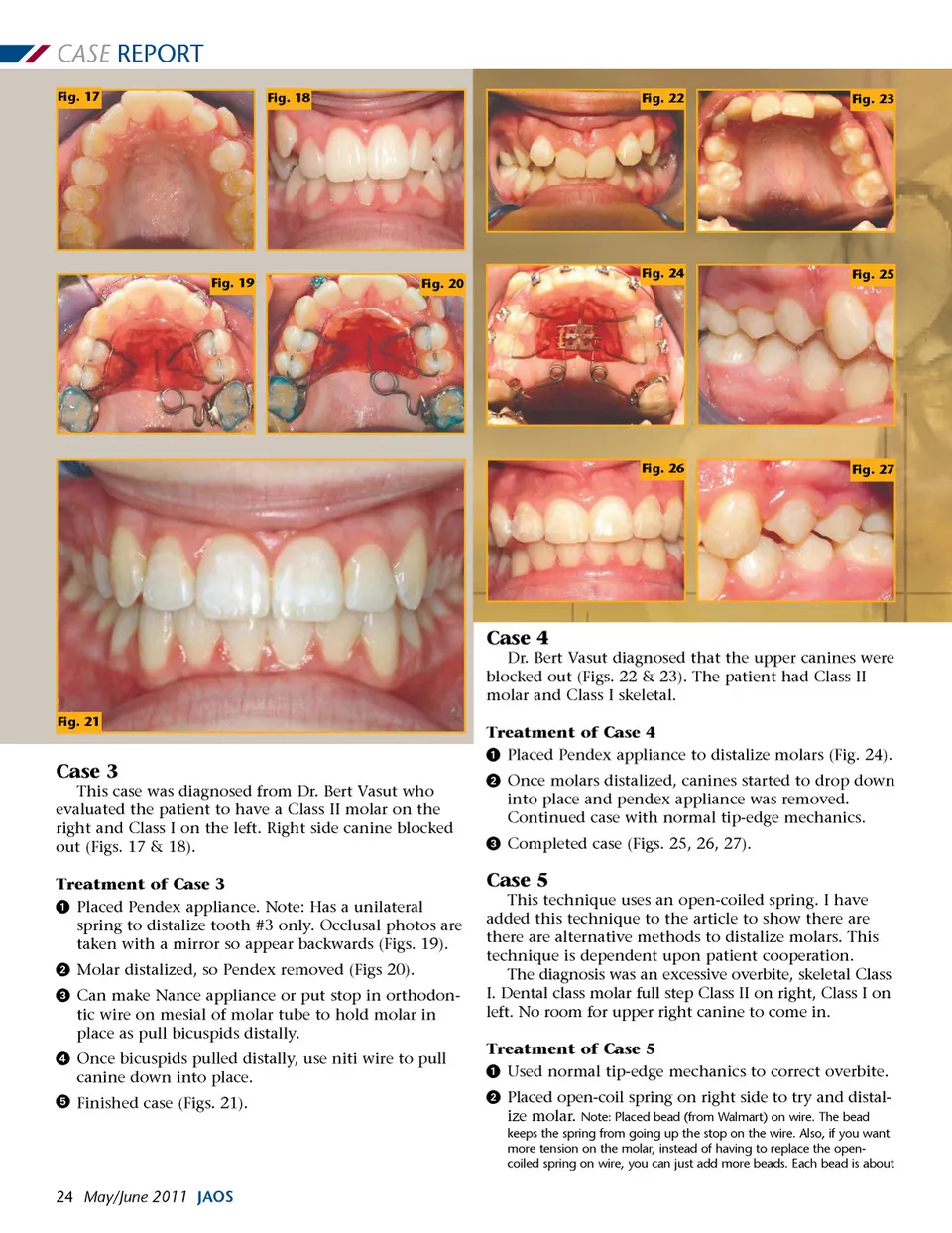
1 mm wide, so if want to increase tension by 2 mm, just add two beads. (This is a technique that Dr. Ron Austin taught me, Fig. 31). CASE REPORT Fig. 28 Fig. 29 ᕣ Patient is instructed to wear 2 once, Class II elas-tics on the left. On the right, the patient wears 6 once elastics for two weeks, then 4 once for two weeks, then 2 once for two weeks. This technique keeps the upper anterior teeth from proclining. Every six weeks, we add 1-2 beads to the wire until the molar is distalized. ᕤ After created space, the canine started to come in. Fig. 30 Fig. 31 We bracketed the tooth and pulled into place with a .016 NiTi wire (Fig. 32). ᕥ Continued with normal stage III tip-edge mechanics (Fig. 33). The use of Pendex type appliances can be very beneficial for the dentist practicing comprehensive orthodontics. One of the great benefits of this tech-nique is it is not dependent on patient cooperation. Less dependence on patient cooperation should lead to more predictable results. The appliance uses the palate as the anchor instead of the teeth so the patient does not have to wear heavy elastics. So far, we have had great success in using these appliances. Fig. 32 Fig. 33 If you want more information on distilization appliances, refer to “Contemporary Orthodontics” 4th edition textbook by William Profit. Molar distilization is covered on pages 488-489. www.orthodontics.com May/June 2011 25
Journal of the American Orthodontic Society May-June 2011: Page 25