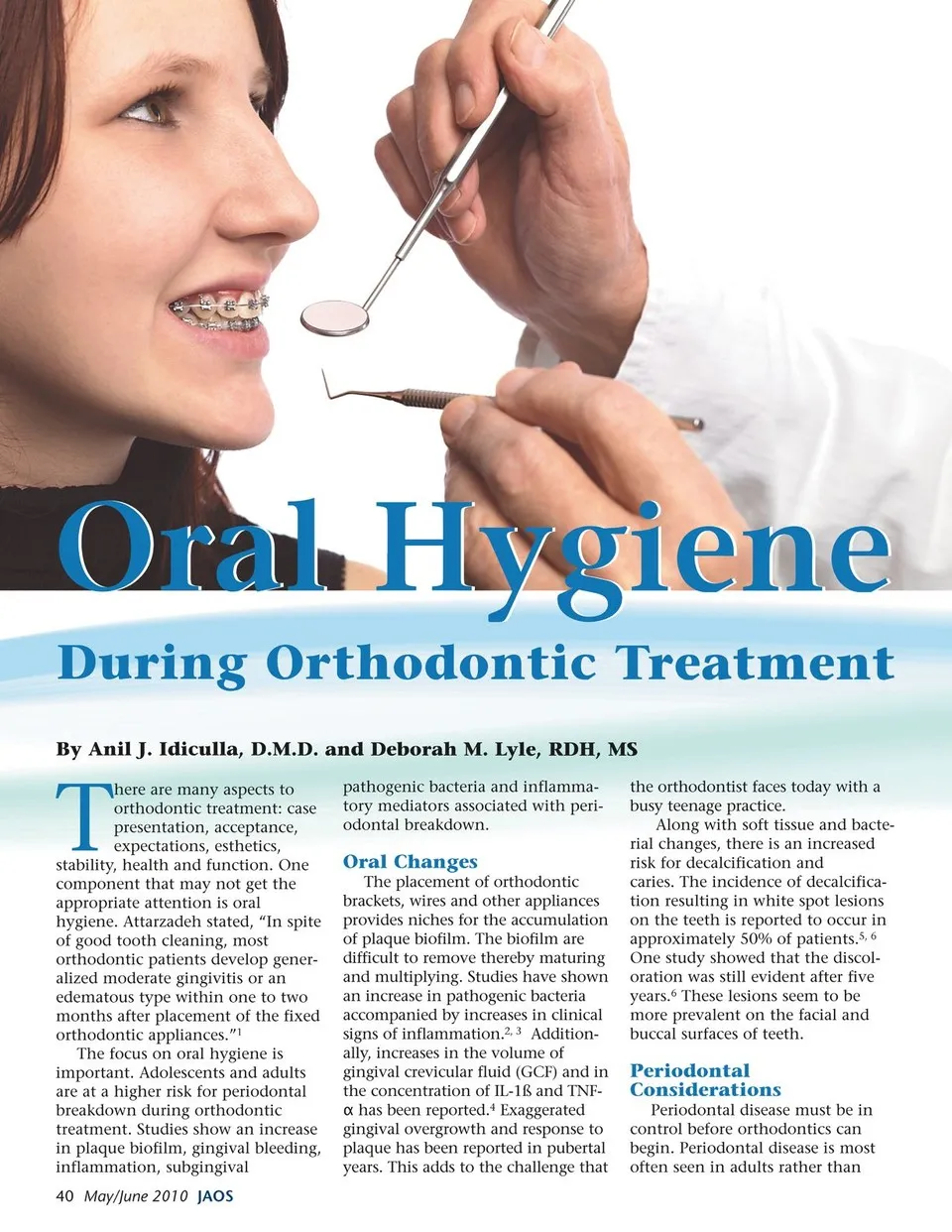
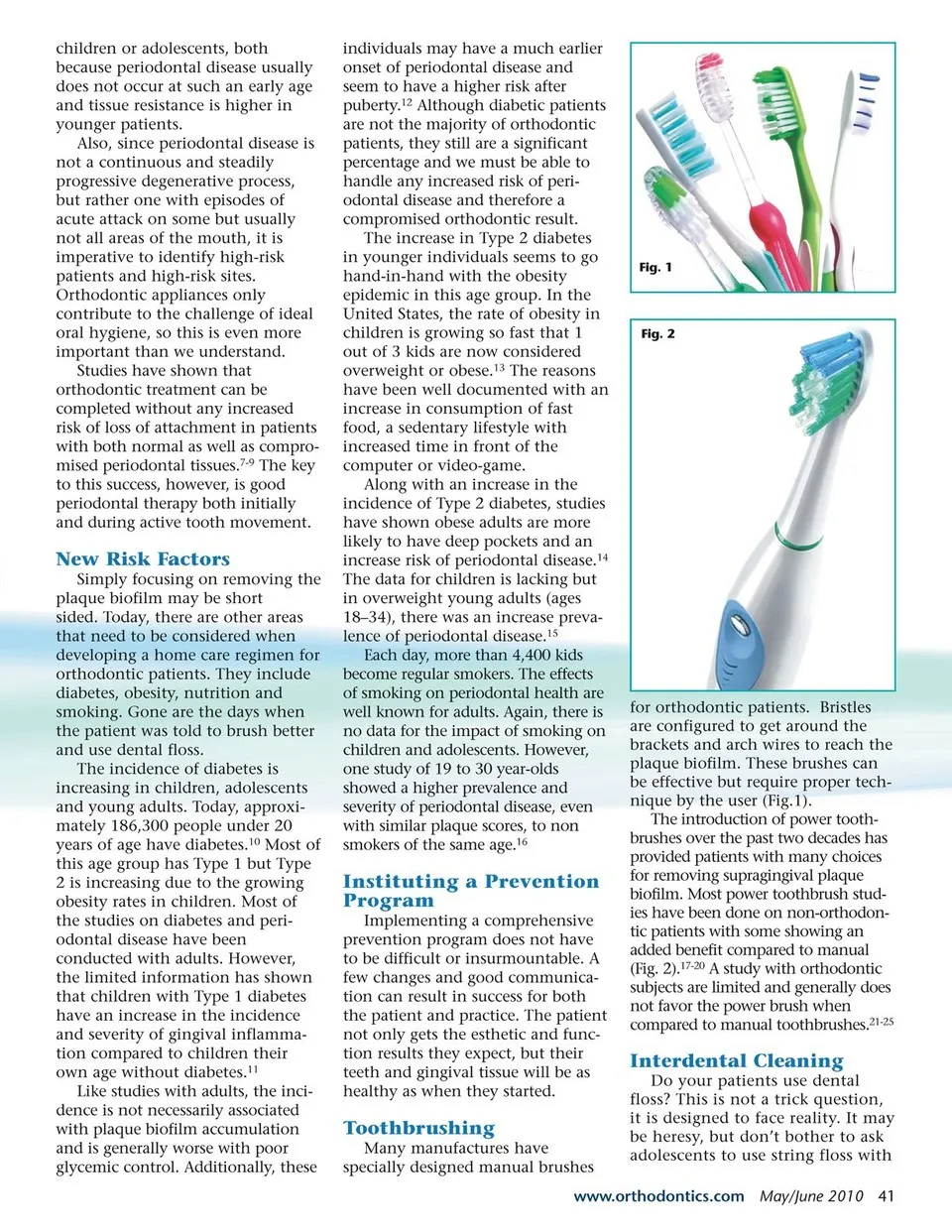
By Anil J. Idiculla, D.M.D. and Deborah M. Lyle, RDH, MS here are many aspects to orthodontic treatment: case presentation, acceptance, expectations, esthetics, pathogenic bacteria and inflamma- tory mediators associated with peri- odontal breakdown. stability, health and function. One component that may not get the appropriate attention is oral hygiene. Attarzadeh stated, “In spite of good tooth cleaning, most orthodontic patients develop gener- alized moderate gingivitis or an edematous type within one to two months after placement of the fixed orthodontic appliances.”1 The focus on oral hygiene is important. Adolescents and adults are at a higher risk for periodontal breakdown during orthodontic treatment. Studies show an increase in plaque biofilm, gingival bleeding, inflammation, subgingival 40 May/June 2010 JAOS Oral Changes Oral Hygiene T During Orthodontic Treatment the orthodontist faces today with a busy teenage practice. The placement of orthodontic brackets, wires and other appliances provides niches for the accumulation of plaque biofilm. The biofilm are difficult to remove thereby maturing and multiplying. Studies have shown an increase in pathogenic bacteria accompanied by increases in clinical signs of inflammation.2, 3 Addition- ally, increases in the volume of gingival crevicular fluid (GCF) and in the concentration of IL-1ß and TNF- α has been reported.4 Exaggerated gingival overgrowth and response to plaque has been reported in pubertal years. This adds to the challenge that Along with soft tissue and bacte- rial changes, there is an increased risk for decalcification and caries. The incidence of decalcifica- tion resulting in white spot lesions on the teeth is reported to occur in approximately 50% of patients.5, 6 One study showed that the discol- oration was still evident after five years.6 These lesions seem to be more prevalent on the facial and buccal surfaces of teeth. Periodontal Considerations Periodontal disease must be in control before orthodontics can begin. Periodontal disease is most often seen in adults rather than
Journal of the American Orthodontic Society May-June 2010: Page 40