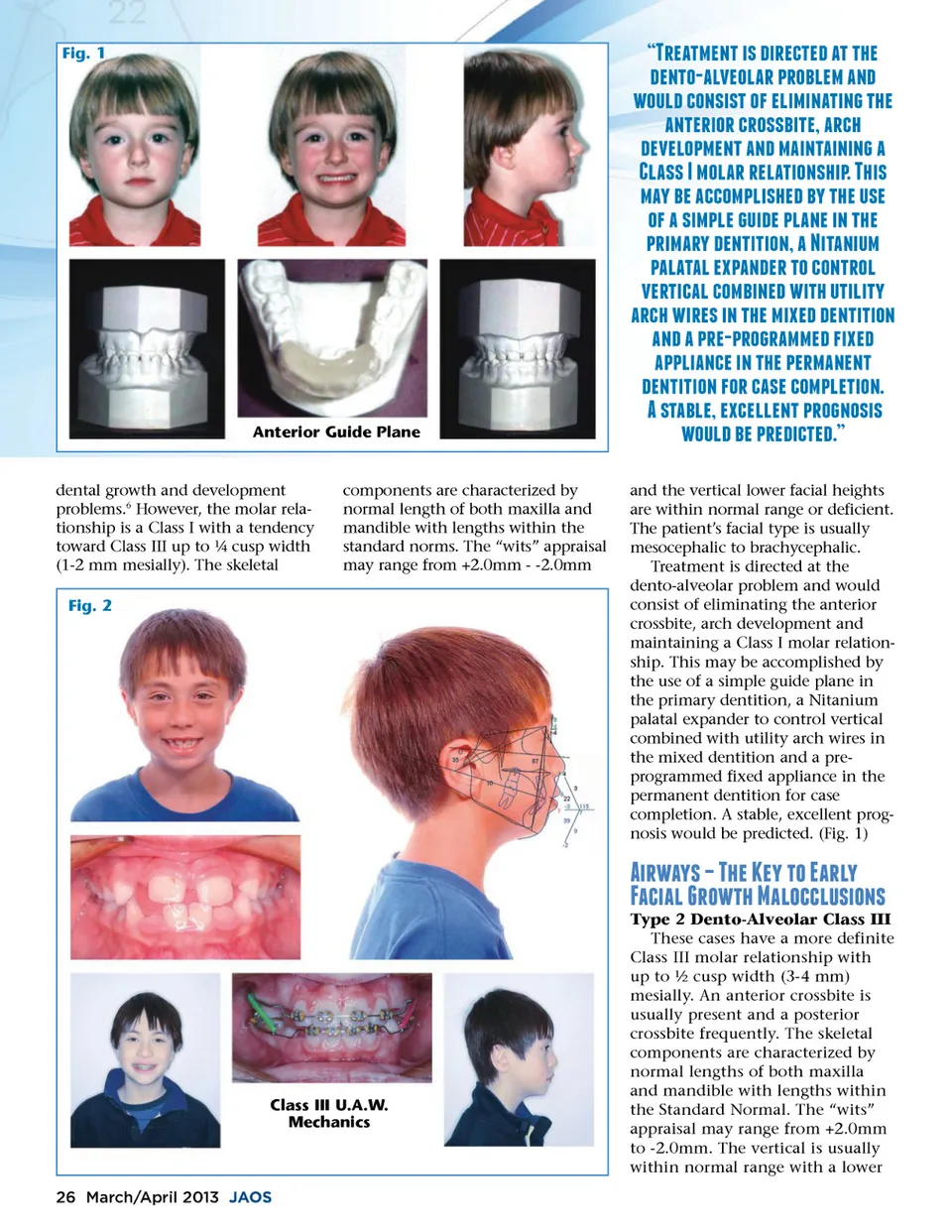
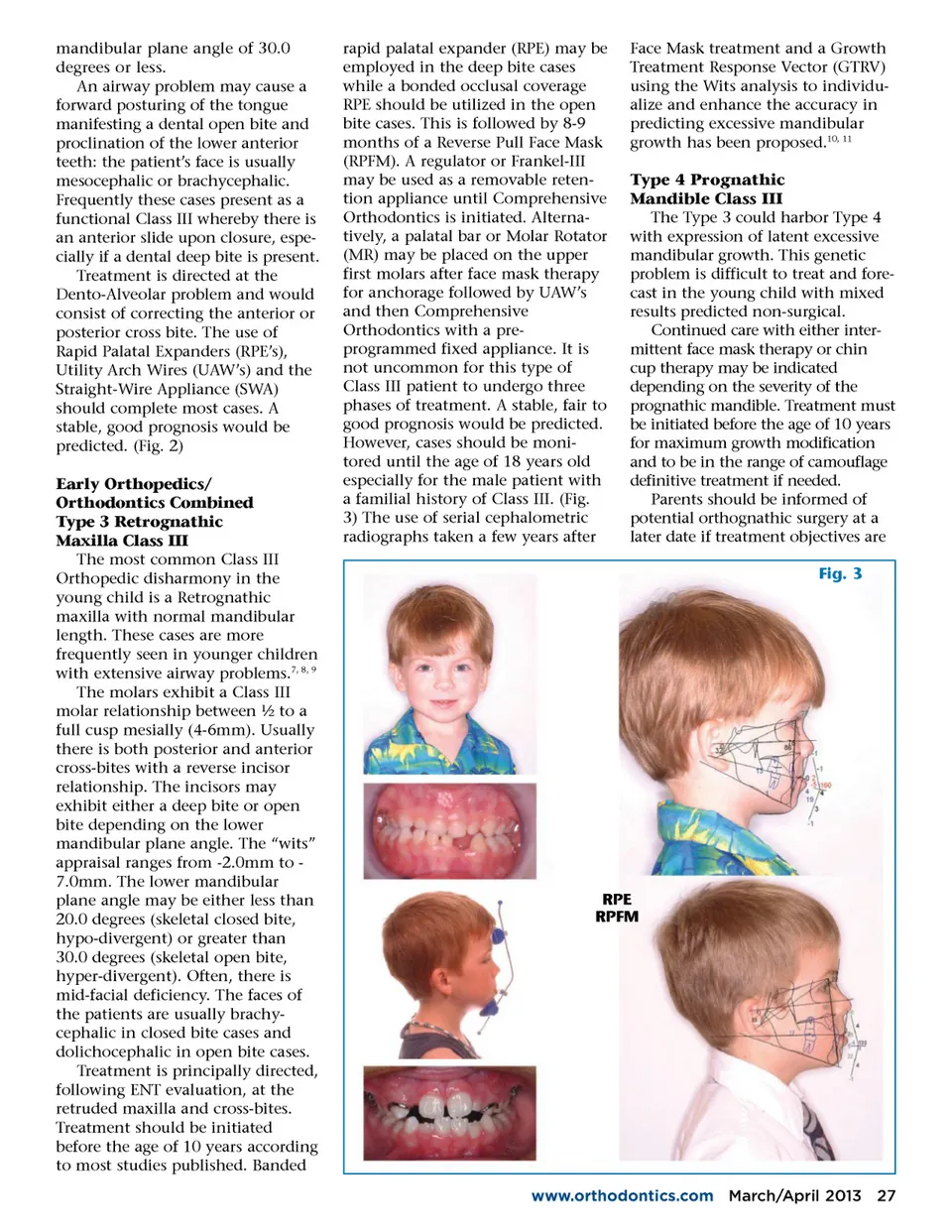
Fig. 1 Anterior Guide Plane !)1/.%1-.20*2(0)1'.1(2/.2.$1 (1-.,/+�c;1,+/)2&),c;+1%2/-( a;, +(2',-*0*.2,21+0%0-/.0-2.$1 /-.1)0,)2'),**c;0.1�b;2/)'$ (1�c;1+,&%1-.2/-(2%/0-./0-0-2/ e;+/**2d;2%,+/)2)1+/.0,-*$0&�a;2!$0* %/b;2c;12/'',%&+0*$1(2c;b;2.$12 *1 ,2/2*0%&+12 0(12&+/-120-2.$1 &)0%/)b;2(1-.0.0,-�b;2/20./-0 % &/+/./+21&/-(1)2.,2',-.),+ �c;1).0'/+2',%c;0-1(2a;0.$2 .0+0.b; /)'$2a;0)1*20-2.$12%01(2(1-.0.0,-/-(2/2&)1&),)/%%1(201( /&&+0/-'120-2.$12&1)%/-1-. (1-.0.0,-2,)2'/*12',%&+1.0,-�a; #2*./c;+1�b;21'1++1-.2&),-,*0* a;, +(2c;12&)1(0'.1(�a; and the vertical lower facial heights are within normal range or deficient. The patient’s facial type is usually mesocephalic to brachycephalic. Treatment is directed at the dento-alveolar problem and would consist of eliminating the anterior crossbite, arch development and maintaining a Class I molar relation-ship. This may be accomplished by the use of a simple guide plane in the primary dentition, a Nitanium palatal expander to control vertical combined with utility arch wires in the mixed dentition and a pre-programmed fixed appliance in the permanent dentition for case completion. A stable, excellent prog-nosis would be predicted. (Fig. 1) dental growth and development problems. 6 However, the molar rela-tionship is a Class I with a tendency toward Class III up to ¼ cusp width (1-2 mm mesially). The skeletal Fig. 2 components are characterized by normal length of both maxilla and mandible with lengths within the standard norms. The “wits” appraisal may range from +2.0mm --2.0mm #0)a;/b;*2 !$121b;2.,2"/)+b; /'0/+2�d;),a;.$2/+,''+ *0,-* Type 2 Dento-Alveolar Class III These cases have a more definite Class III molar relationship with up to ½ cusp width (3-4 mm) mesially. An anterior crossbite is usually present and a posterior crossbite frequently. The skeletal components are characterized by normal lengths of both maxilla and mandible with lengths within the Standard Normal. The “wits” appraisal may range from +2.0mm to -2.0mm. The vertical is usually within normal range with a lower Class III U.A.W. Mechanics 26 March/April 2013 JAOS
Journal of the American Orthodontic Society March-April 2013: Page 26