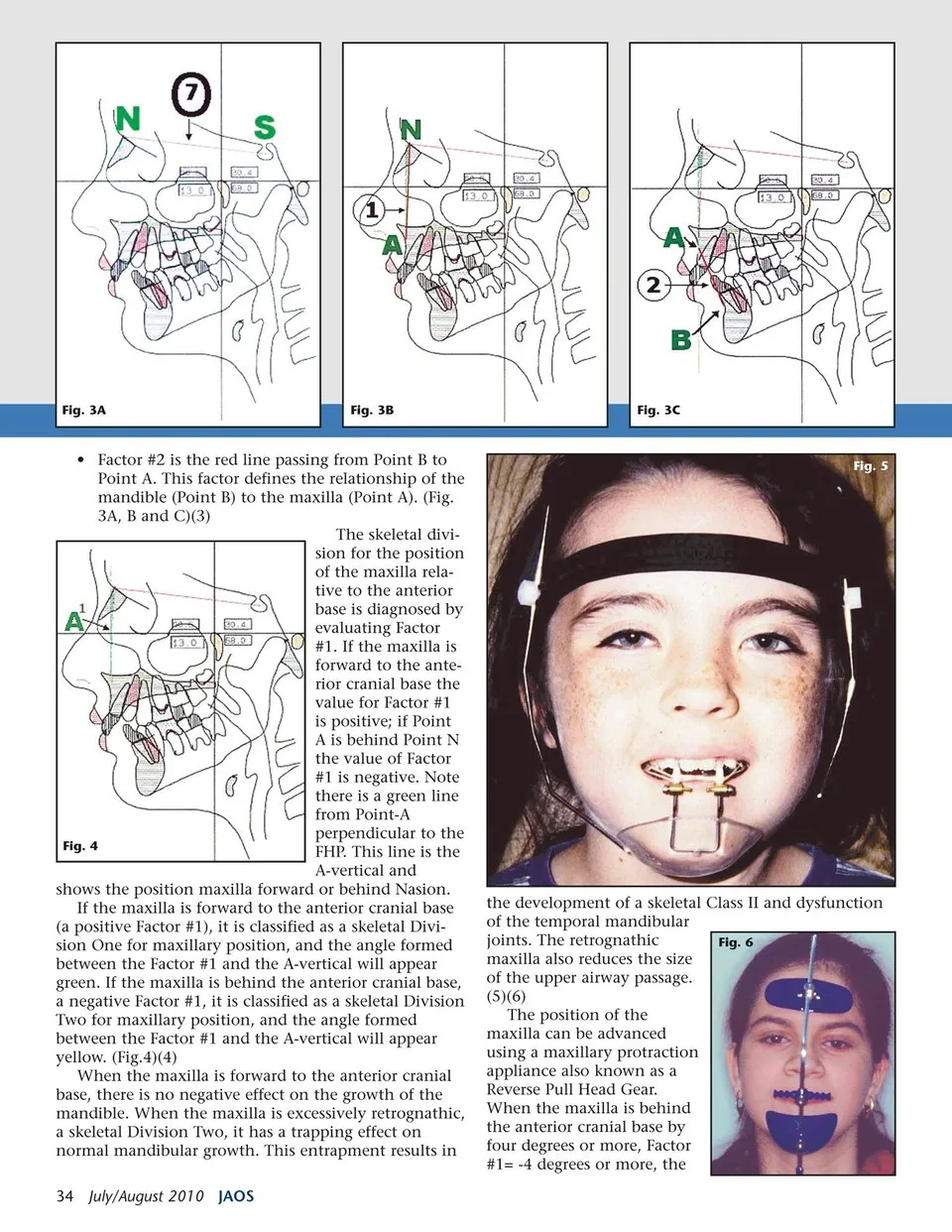
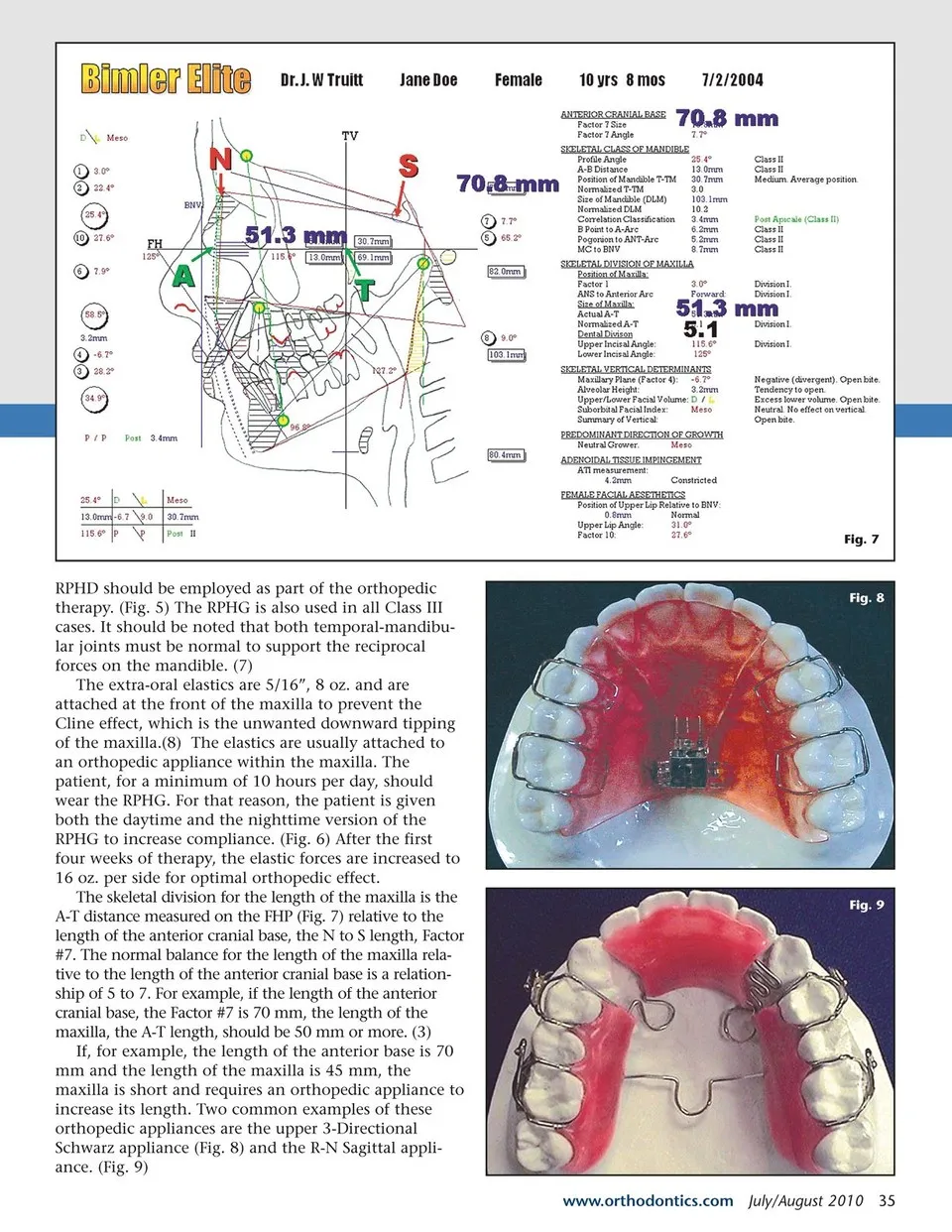
Fig. 3A Fig. 3B • Factor #2 is the red line passing from Point B to Point A. This factor defines the relationship of the mandible (Point B) to the maxilla (Point A). (Fig. 3A, B and C)(3) The skeletal divi-sion for the position of the maxilla rela-tive to the anterior base is diagnosed by evaluating Factor #1. If the maxilla is forward to the ante-rior cranial base the value for Factor #1 is positive; if Point A is behind Point N the value of Factor #1 is negative. Note there is a green line from Point-A Fig. 4 perpendicular to the FHP. This line is the A-vertical and shows the position maxilla forward or behind Nasion. If the maxilla is forward to the anterior cranial base (a positive Factor #1), it is classified as a skeletal Divi-sion One for maxillary position, and the angle formed between the Factor #1 and the A-vertical will appear green. If the maxilla is behind the anterior cranial base, a negative Factor #1, it is classified as a skeletal Division Two for maxillary position, and the angle formed between the Factor #1 and the A-vertical will appear yellow. (Fig.4)(4) When the maxilla is forward to the anterior cranial base, there is no negative effect on the growth of the mandible. When the maxilla is excessively retrognathic, a skeletal Division Two, it has a trapping effect on normal mandibular growth. This entrapment results in 34 July/August 2010 JAOS the development of a skeletal Class II and dysfunction of the temporal mandibular joints. The retrognathic maxilla also reduces the size of the upper airway passage. (5)(6) Fig. 6 The position of the maxilla can be advanced using a maxillary protraction appliance also known as a Reverse Pull Head Gear. When the maxilla is behind the anterior cranial base by four degrees or more, Factor #1= -4 degrees or more, the Fig. 3C Fig. 5
Journal of the American Orthodontic Society July-August 2010/Buyer's Guide: Page 34