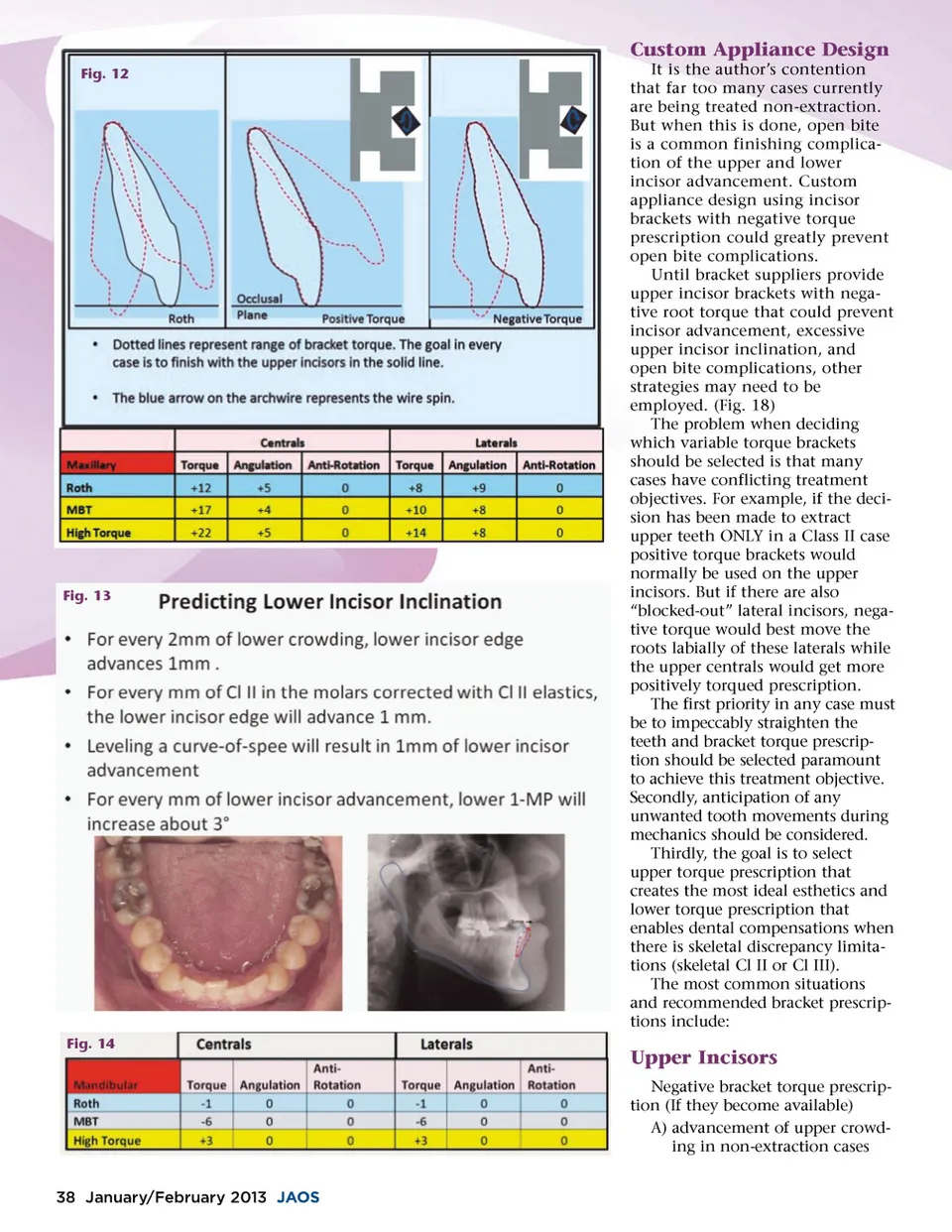
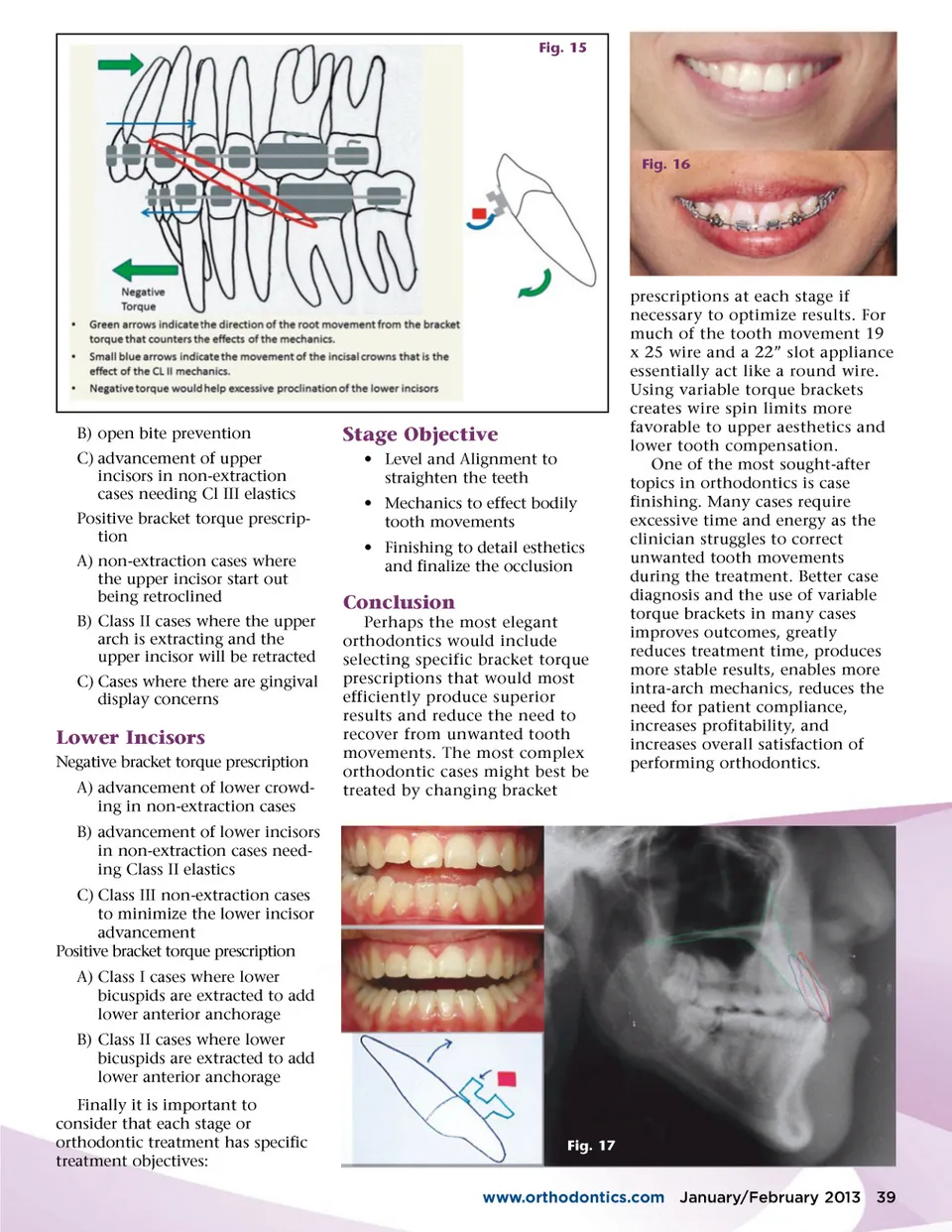
Fig. 15 Fig. 16 B) open bite prevention C) advancement of upper incisors in non-extraction cases needing Cl III elastics Positive bracket torque prescrip-tion A) non-extraction cases where the upper incisor start out being retroclined B) Class II cases where the upper arch is extracting and the upper incisor will be retracted C) Cases where there are gingival display concerns Stage Objective • Level and Alignment to straighten the teeth • Mechanics to effect bodily tooth movements • Finishing to detail esthetics and finalize the occlusion Conclusion Perhaps the most elegant orthodontics would include selecting specific bracket torque prescriptions that would most efficiently produce superior results and reduce the need to recover from unwanted tooth movements. The most complex orthodontic cases might best be treated by changing bracket Lower Incisors Negative bracket torque prescription A) advancement of lower crowd-ing in non-extraction cases B) advancement of lower incisors in non-extraction cases need-ing Class II elastics C) Class III non-extraction cases to minimize the lower incisor advancement Positive bracket torque prescription A) Class I cases where lower bicuspids are extracted to add lower anterior anchorage B) Class II cases where lower bicuspids are extracted to add lower anterior anchorage Finally it is important to consider that each stage or orthodontic treatment has specific treatment objectives: prescriptions at each stage if necessary to optimize results. For much of the tooth movement 19 x 25 wire and a 22” slot appliance essentially act like a round wire. Using variable torque brackets creates wire spin limits more favorable to upper aesthetics and lower tooth compensation. One of the most sought-after topics in orthodontics is case finishing. Many cases require excessive time and energy as the clinician struggles to correct unwanted tooth movements during the treatment. Better case diagnosis and the use of variable torque brackets in many cases improves outcomes, greatly reduces treatment time, produces more stable results, enables more intra-arch mechanics, reduces the need for patient compliance, increases profitability, and increases overall satisfaction of performing orthodontics. Fig. 17 www.orthodontics.com January/February 2013 39
Journal of the American Orthodontic Society January-February 2013: Page 39