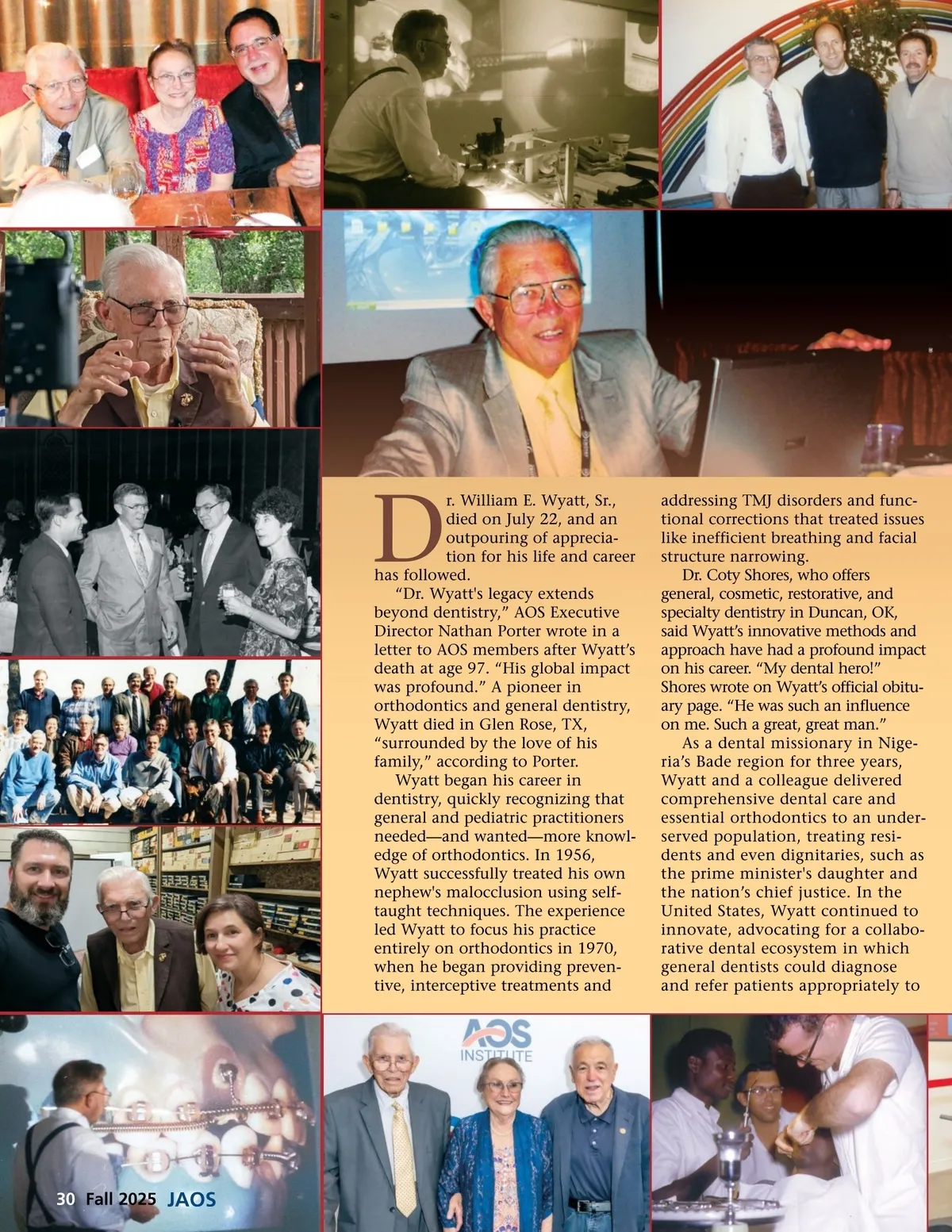
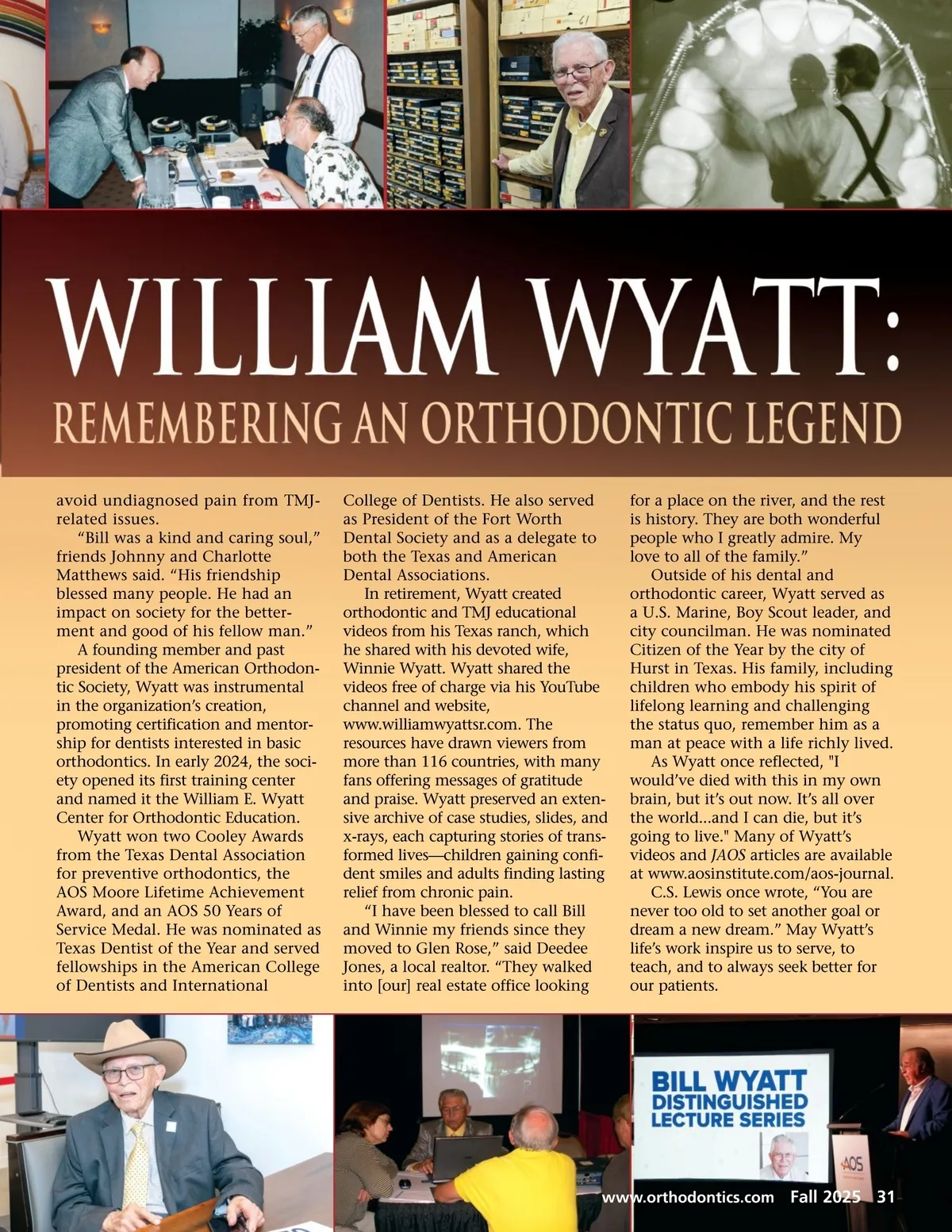
D r. William E. Wyatt, Sr., died on July 22, and an outpouring of apprecia-tion for his life and career has followed. “Dr. Wyatt's legacy extends beyond dentistry,” AOS Executive Director Nathan Porter wrote in a letter to AOS members after Wyatt’s death at age 97. “His global impact was profound.” A pioneer in orthodontics and general dentistry, Wyatt died in Glen Rose, TX, “surrounded by the love of his family,” according to Porter. Wyatt began his career in dentistry, quickly recognizing that general and pediatric practitioners needed—and wanted—more knowl-edge of orthodontics. In 1956, Wyatt successfully treated his own nephew's malocclusion using self-taught techniques. The experience led Wyatt to focus his practice entirely on orthodontics in 1970, when he began providing preven-tive, interceptive treatments and addressing TMJ disorders and func-tional corrections that treated issues like inefficient breathing and facial structure narrowing. Dr. Coty Shores, who offers general, cosmetic, restorative, and specialty dentistry in Duncan, OK, said Wyatt’s innovative methods and approach have had a profound impact on his career. “My dental hero!” Shores wrote on Wyatt’s official obitu-ary page. “He was such an influence on me. Such a great, great man.” As a dental missionary in Nige-ria’s Bade region for three years, Wyatt and a colleague delivered comprehensive dental care and essential orthodontics to an under-served population, treating resi-dents and even dignitaries, such as the prime minister's daughter and the nation’s chief justice. In the United States, Wyatt continued to innovate, advocating for a collabo-rative dental ecosystem in which general dentists could diagnose and refer patients appropriately to 30 Fall 2025 JAOS
Journal of the American Orthodontic Society Fall 2025: Page 30