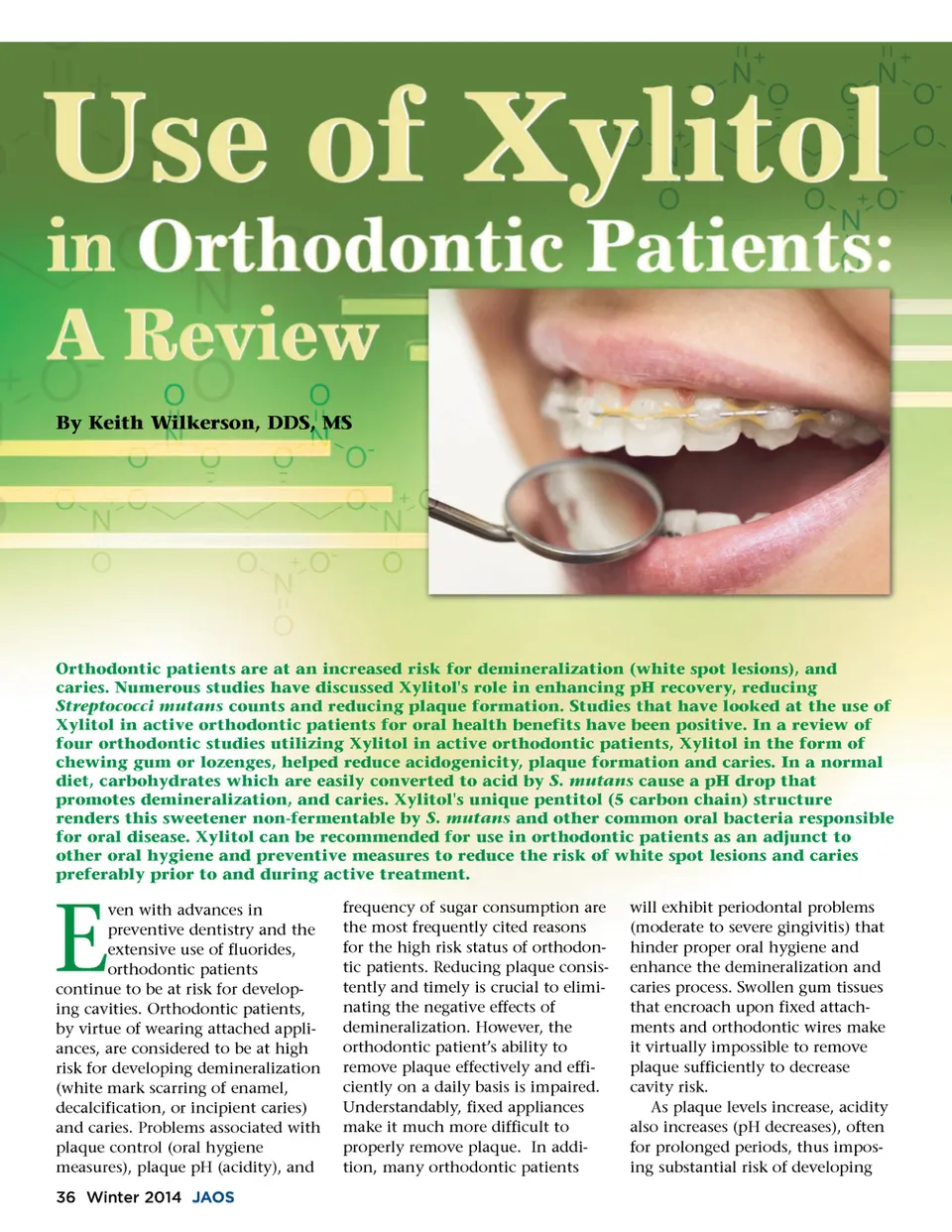
By Keith Wilkerson, DDS, MS Orthodontic patients are at an increased risk for demineralization (white spot lesions), and caries. Numerous studies have discussed Xylitol's role in enhancing pH recovery, reducing Streptococci mutans counts and reducing plaque formation. Studies that have looked at the use of Xylitol in active orthodontic patients for oral health benefits have been positive. In a review of four orthodontic studies utilizing Xylitol in active orthodontic patients, Xylitol in the form of chewing gum or lozenges, helped reduce acidogenicity, plaque formation and caries. In a normal diet, carbohydrates which are easily converted to acid by S. mutans cause a pH drop that promotes demineralization, and caries. Xylitol's unique pentitol (5 carbon chain) structure renders this sweetener non-fermentable by S. mutans and other common oral bacteria responsible for oral disease. Xylitol can be recommended for use in orthodontic patients as an adjunct to other oral hygiene and preventive measures to reduce the risk of white spot lesions and caries preferably prior to and during active treatment. E ven with advances in preventive dentistry and the extensive use of fluorides, orthodontic patients continue to be at risk for develop-ing cavities. Orthodontic patients, by virtue of wearing attached appli-ances, are considered to be at high risk for developing demineralization (white mark scarring of enamel, decalcification, or incipient caries) and caries. Problems associated with plaque control (oral hygiene measures), plaque pH (acidity), and 36 Winter 2014 JAOS frequency of sugar consumption are the most frequently cited reasons for the high risk status of orthodon-tic patients. Reducing plaque consis-tently and timely is crucial to elimi-nating the negative effects of demineralization. However, the orthodontic patient’s ability to remove plaque effectively and effi-ciently on a daily basis is impaired. Understandably, fixed appliances make it much more difficult to properly remove plaque. In addi-tion, many orthodontic patients will exhibit periodontal problems (moderate to severe gingivitis) that hinder proper oral hygiene and enhance the demineralization and caries process. Swollen gum tissues that encroach upon fixed attach-ments and orthodontic wires make it virtually impossible to remove plaque sufficiently to decrease cavity risk. As plaque levels increase, acidity also increases (pH decreases), often for prolonged periods, thus impos-ing substantial risk of developing
Journal of the American Orthodontic Society Winter 2014: Page 36