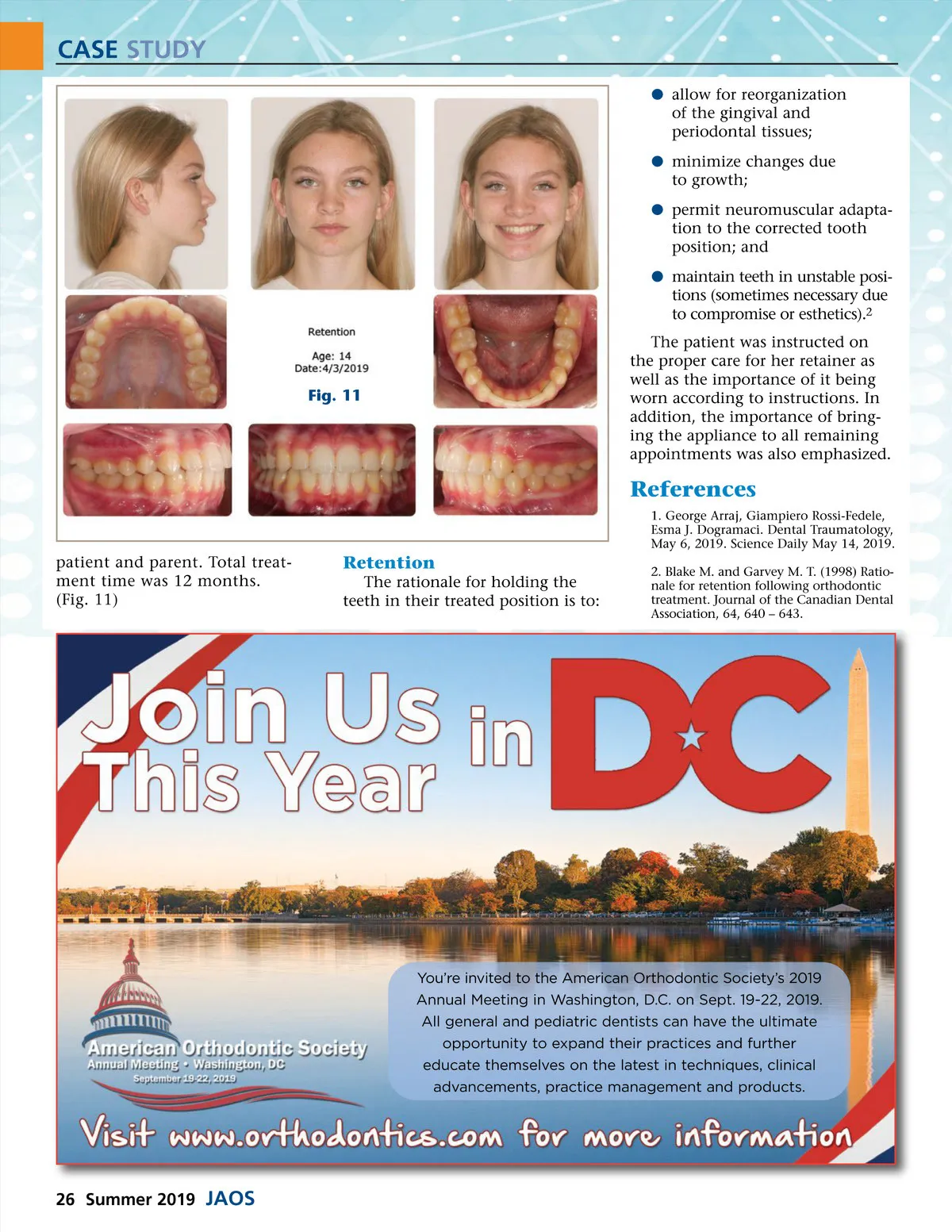
CASE STUDY b allow for reorganization of the gingival and periodontal tissues; b minimize changes due to growth; b permit neuromuscular adapta-tion to the corrected tooth position; and b maintain teeth in unstable posi-tions (sometimes necessary due to compromise or esthetics). 2 The patient was instructed on the proper care for her retainer as well as the importance of it being worn according to instructions. In addition, the importance of bring-ing the appliance to all remaining appointments was also emphasized. Fig. 11 References 1. George Arraj, Giampiero Rossi-Fedele, Esma J. Dogramaci. Dental Traumatology, May 6, 2019. Science Daily May 14, 2019. patient and parent. Total treat-ment time was 12 months. (Fig. 11) Retention The rationale for holding the teeth in their treated position is to: 2. Blake M. and Garvey M. T. (1998) Ratio-nale for retention following orthodontic treatment. Journal of the Canadian Dental Association, 64, 640 – 643. You’re invited to the American Orthodontic Society’s 2019 Annual Meeting in Washington, D.C. on Sept. 19-22, 2019. All general and pediatric dentists can have the ultimate opportunity to expand their practices and further educate themselves on the latest in techniques, clinical advancements, practice management and products. 26 Summer 2019 JAOS
Journal of the American Orthodontic Society Summer 2019: Page 26