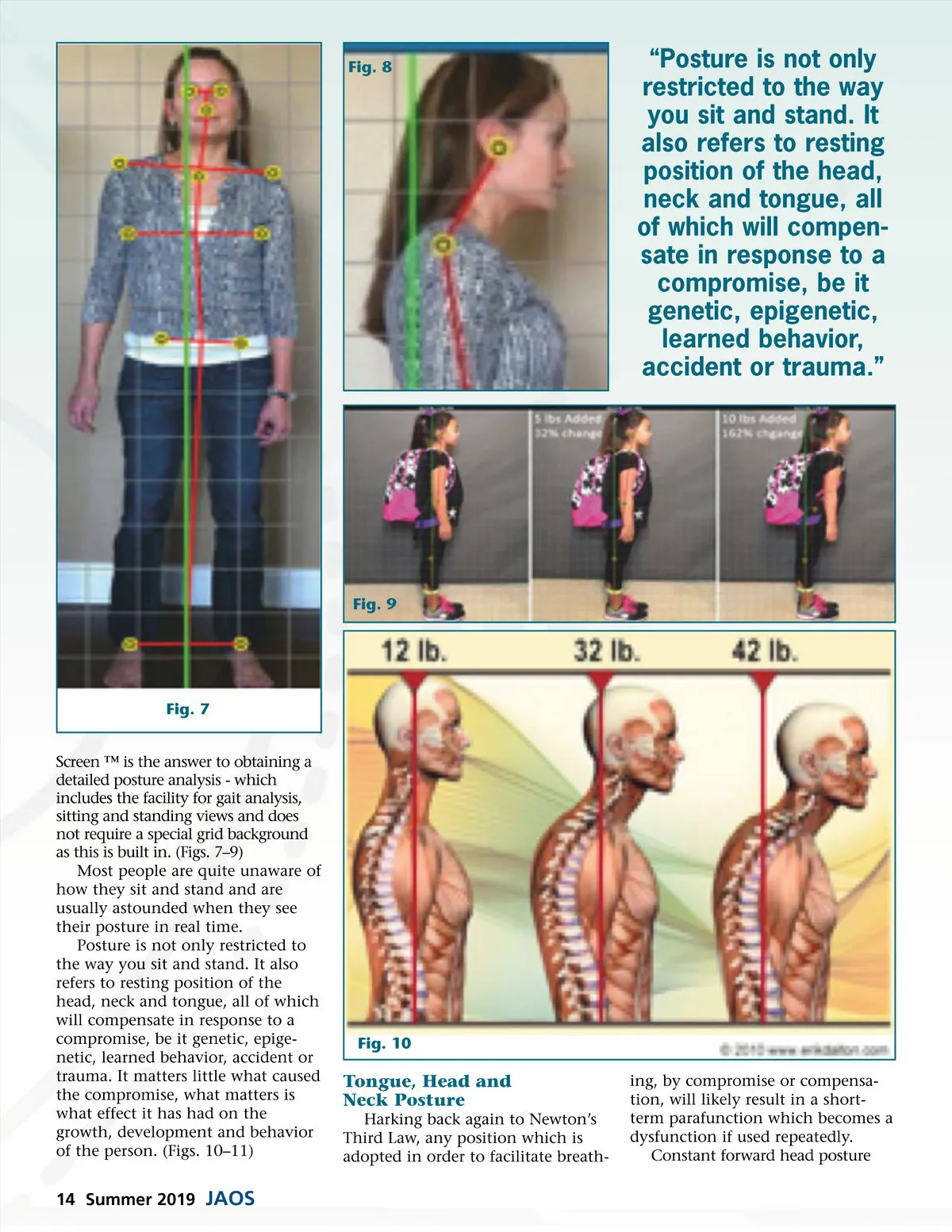
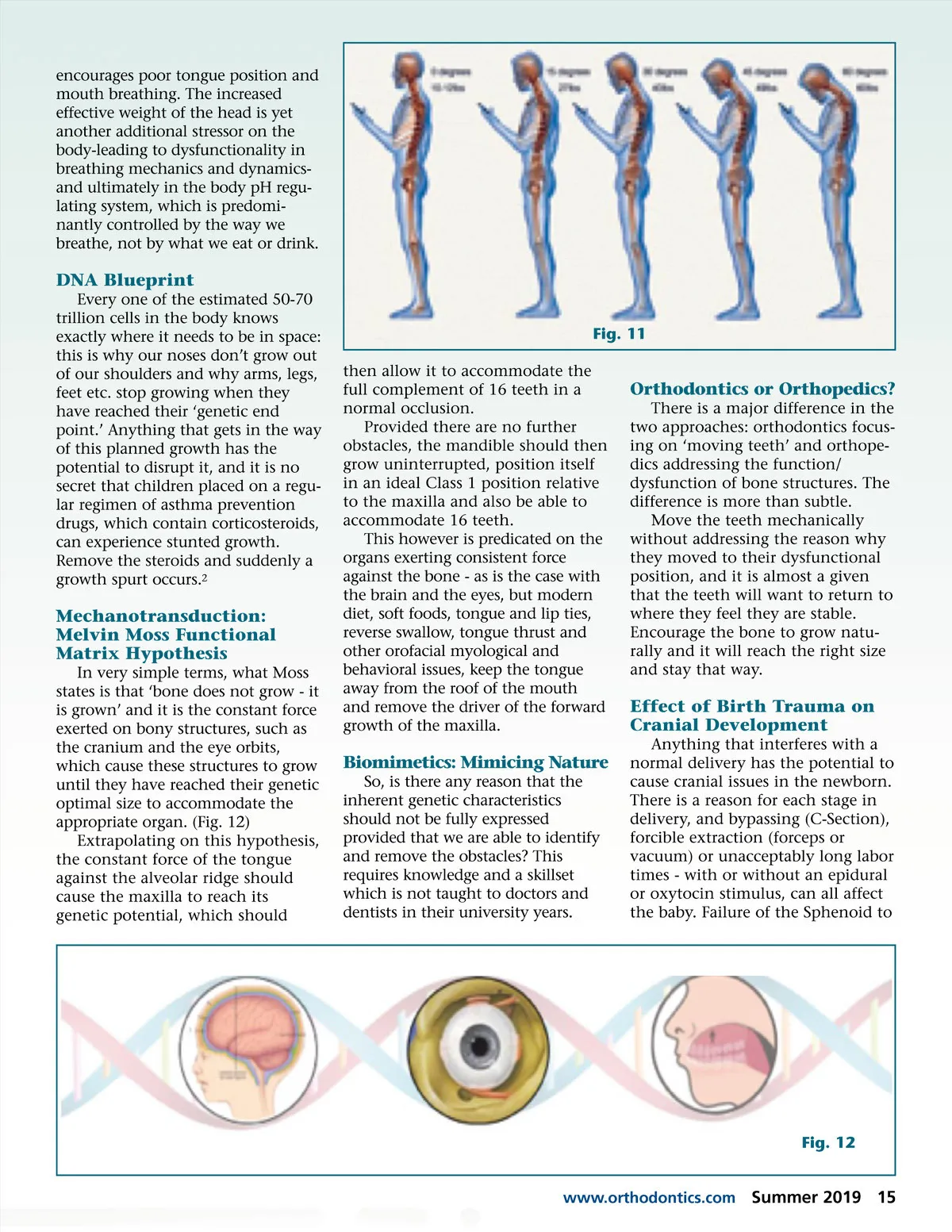
encourages poor tongue position and mouth breathing. The increased effective weight of the head is yet another additional stressor on the body-leading to dysfunctionality in breathing mechanics and dynamics-and ultimately in the body pH regu-lating system, which is predomi-nantly controlled by the way we breathe, not by what we eat or drink. DNA Blueprint Every one of the estimated 50-70 trillion cells in the body knows exactly where it needs to be in space: this is why our noses don’t grow out of our shoulders and why arms, legs, feet etc. stop growing when they have reached their ‘genetic end point.’ Anything that gets in the way of this planned growth has the potential to disrupt it, and it is no secret that children placed on a regu-lar regimen of asthma prevention drugs, which contain corticosteroids, can experience stunted growth. Remove the steroids and suddenly a growth spurt occurs. 2 Fig. 11 then allow it to accommodate the full complement of 16 teeth in a normal occlusion. Provided there are no further obstacles, the mandible should then grow uninterrupted, position itself in an ideal Class 1 position relative to the maxilla and also be able to accommodate 16 teeth. This however is predicated on the organs exerting consistent force against the bone -as is the case with the brain and the eyes, but modern diet, soft foods, tongue and lip ties, reverse swallow, tongue thrust and other orofacial myological and behavioral issues, keep the tongue away from the roof of the mouth and remove the driver of the forward growth of the maxilla. Orthodontics or Orthopedics? There is a major difference in the two approaches: orthodontics focus-ing on ‘moving teeth’ and orthope-dics addressing the function/ dysfunction of bone structures. The difference is more than subtle. Move the teeth mechanically without addressing the reason why they moved to their dysfunctional position, and it is almost a given that the teeth will want to return to where they feel they are stable. Encourage the bone to grow natu-rally and it will reach the right size and stay that way. Mechanotransduction: Melvin Moss Functional Matrix Hypothesis In very simple terms, what Moss states is that ‘bone does not grow -it is grown’ and it is the constant force exerted on bony structures, such as the cranium and the eye orbits, which cause these structures to grow until they have reached their genetic optimal size to accommodate the appropriate organ. (Fig. 12) Extrapolating on this hypothesis, the constant force of the tongue against the alveolar ridge should cause the maxilla to reach its genetic potential, which should Effect of Birth Trauma on Cranial Development Anything that interferes with a normal delivery has the potential to cause cranial issues in the newborn. There is a reason for each stage in delivery, and bypassing (C-Section), forcible extraction (forceps or vacuum) or unacceptably long labor times -with or without an epidural or oxytocin stimulus, can all affect the baby. Failure of the Sphenoid to Biomimetics: Mimicing Nature So, is there any reason that the inherent genetic characteristics should not be fully expressed provided that we are able to identify and remove the obstacles? This requires knowledge and a skillset which is not taught to doctors and dentists in their university years. Fig. 12 www.orthodontics.com Summer 2019 15
Journal of the American Orthodontic Society Summer 2019: Page 15