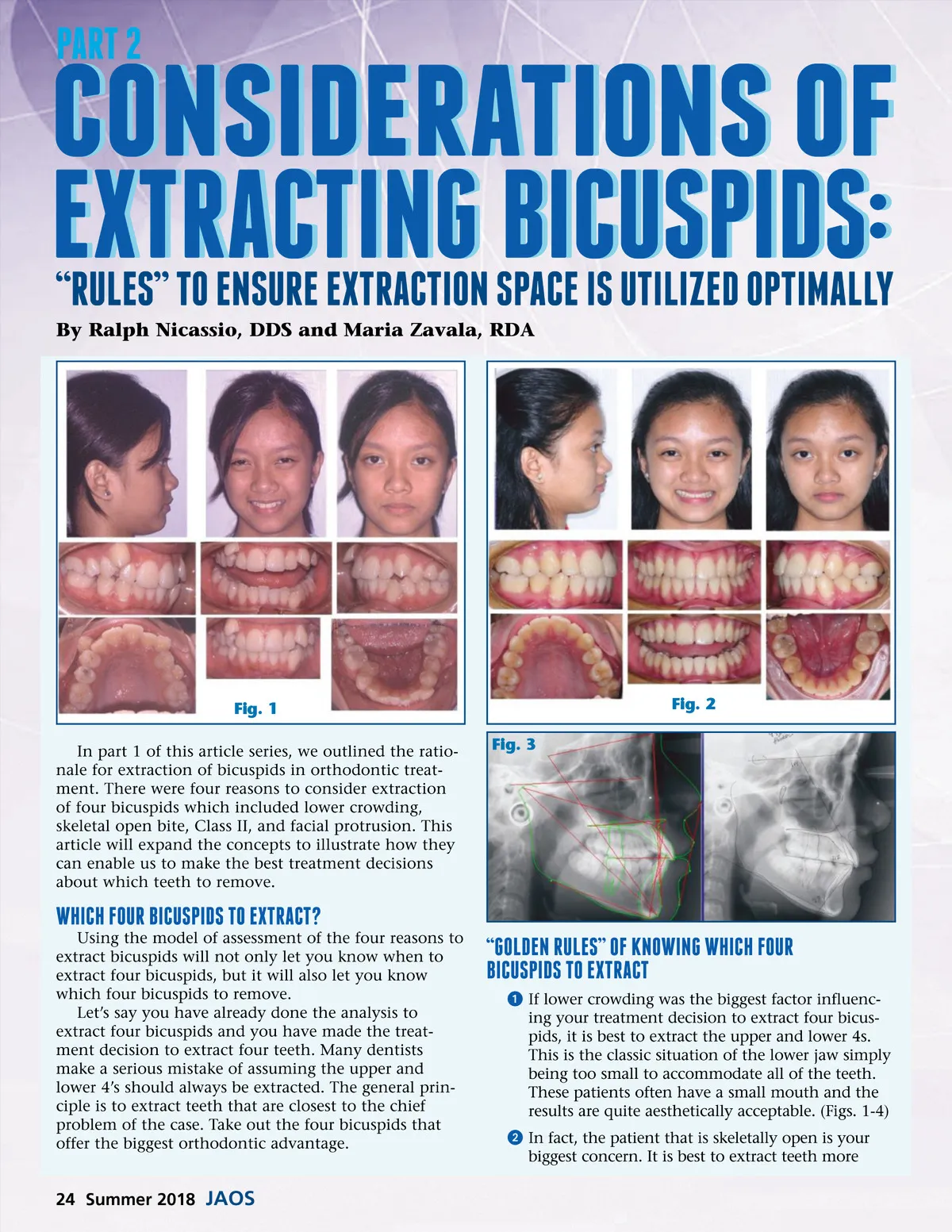
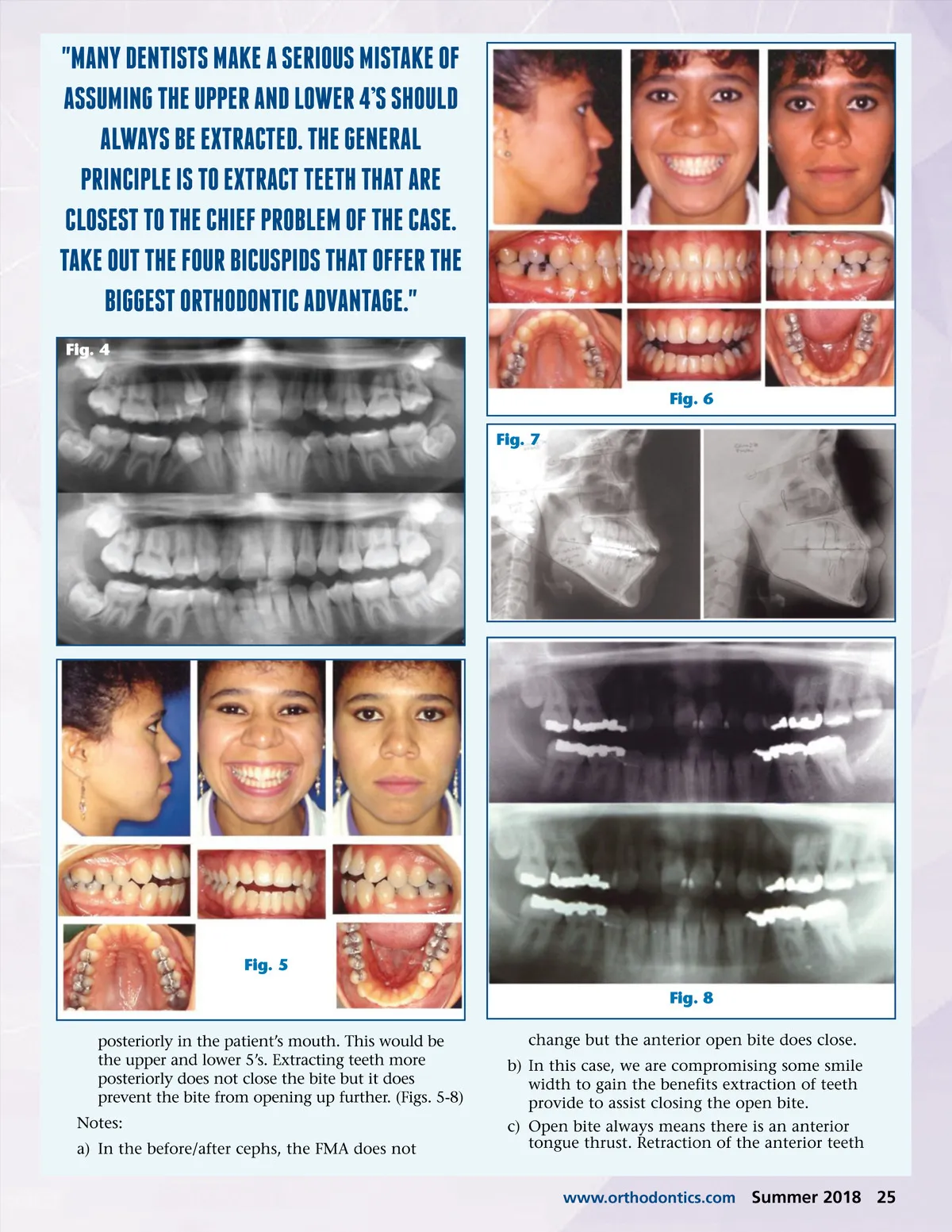
considerations of extRacting Bicuspids: “Rules” to ensuRe extRaction space is utilized optimally By Ralph Nicassio, DDS and Maria Zavala, RDA paRt 2 Fig. 1 In part 1 of this article series, we outlined the ratio-nale for extraction of bicuspids in orthodontic treat-ment. There were four reasons to consider extraction of four bicuspids which included lower crowding, skeletal open bite, Class II, and facial protrusion. This article will expand the concepts to illustrate how they can enable us to make the best treatment decisions about which teeth to remove. Fig. 3 Fig. 2 Which FouR Bicuspids to extRact? Using the model of assessment of the four reasons to extract bicuspids will not only let you know when to extract four bicuspids, but it will also let you know which four bicuspids to remove. Let’s say you have already done the analysis to extract four bicuspids and you have made the treat-ment decision to extract four teeth. Many dentists make a serious mistake of assuming the upper and lower 4’s should always be extracted. The general prin-ciple is to extract teeth that are closest to the chief problem of the case. Take out the four bicuspids that offer the biggest orthodontic advantage. “golden Rules” oF KnoWing Which FouR Bicuspids to extRact ᕡ If lower crowding was the biggest factor influenc-ing your treatment decision to extract four bicus-pids, it is best to extract the upper and lower 4s. This is the classic situation of the lower jaw simply being too small to accommodate all of the teeth. These patients often have a small mouth and the results are quite aesthetically acceptable. (Figs. 1-4) ᕢ In fact, the patient that is skeletally open is your biggest concern. It is best to extract teeth more 24 Summer 2018 JAOS
Journal of the American Orthodontic Society Summer 2018/Buyer's Guide: Page 24