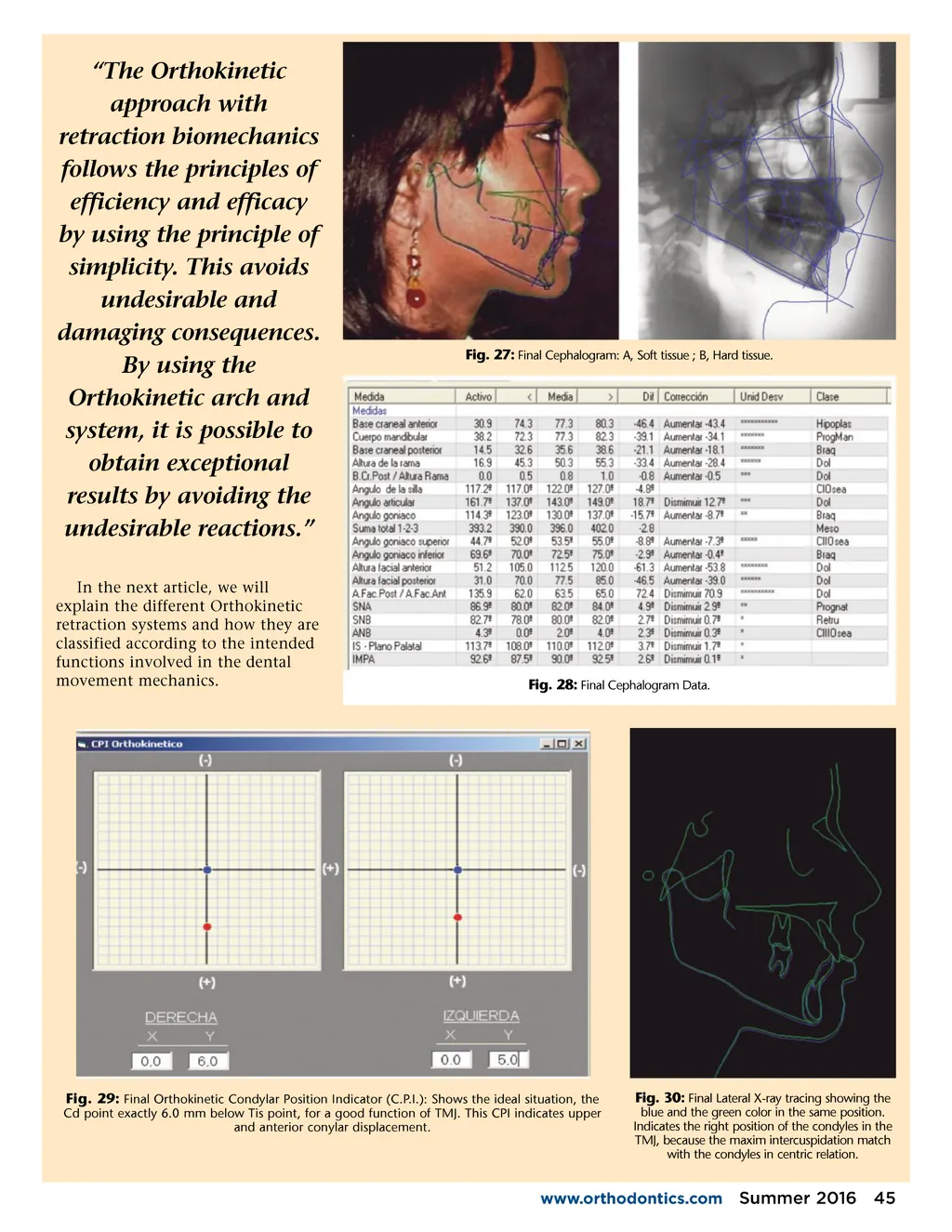
“The Orthokinetic approach with retraction biomechanics follows the principles of efficiency and efficacy by using the principle of simplicity. This avoids undesirable and damaging consequences. By using the Orthokinetic arch and system, it is possible to obtain exceptional results by avoiding the undesirable reactions.” In the next article, we will explain the different Orthokinetic retraction systems and how they are classified according to the intended functions involved in the dental movement mechanics. Fig. 27: Final Cephalogram: A, Soft tissue ; B, Hard tissue. Fig. 28: Final Cephalogram Data. Fig. 29: Final Orthokinetic Condylar Position Indicator (C.P.I.): Shows the ideal situation, the Cd point exactly 6.0 mm below Tis point, for a good function of TMJ. This CPI indicates upper and anterior conylar displacement. Fig. 30: Final Lateral X-ray tracing showing the blue and the green color in the same position. Indicates the right position of the condyles in the TMJ, because the maxim intercuspidation match with the condyles in centric relation. www.orthodontics.com Summer 2016 45
Journal of the American Orthodontic Society Summer 2016 / Buyer's Guide: Page 45