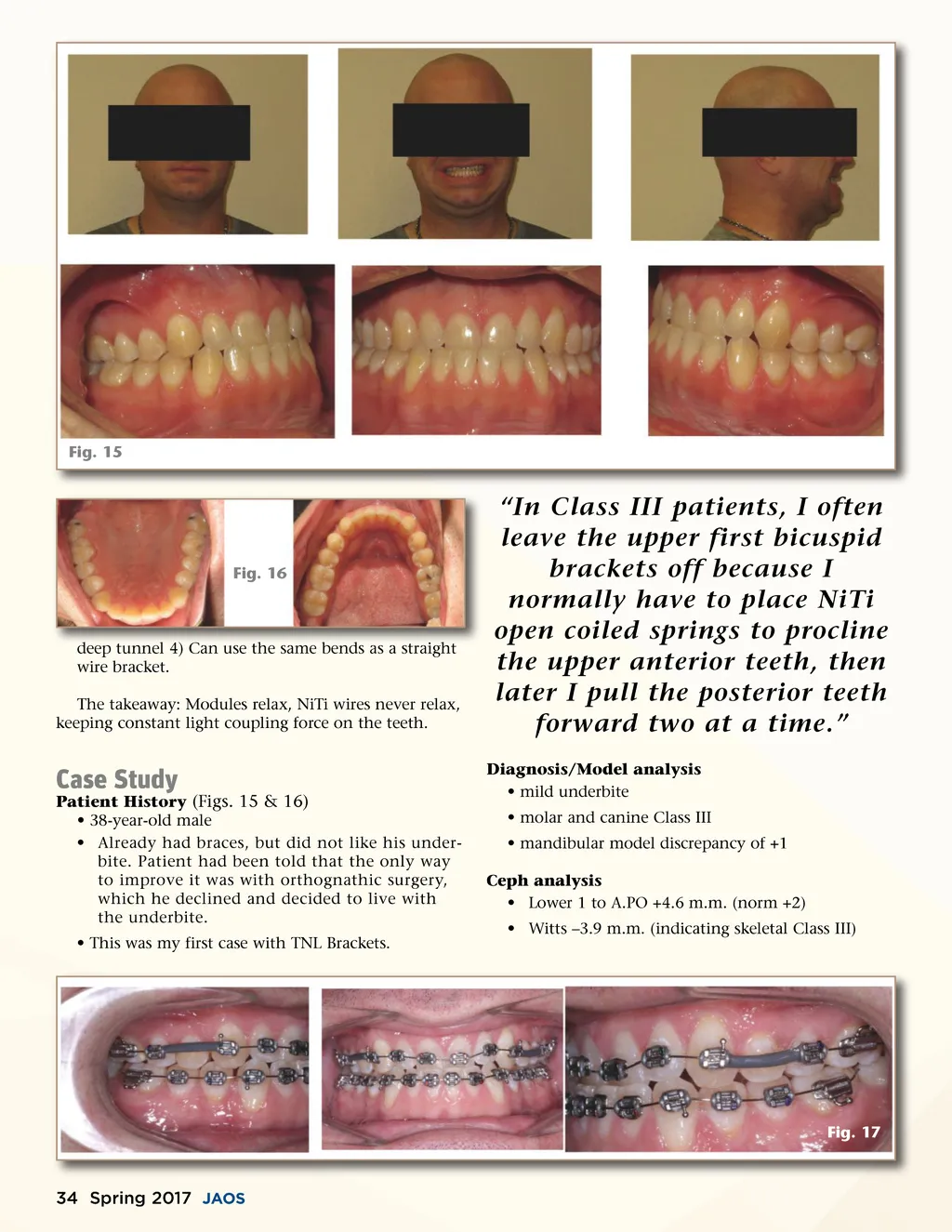
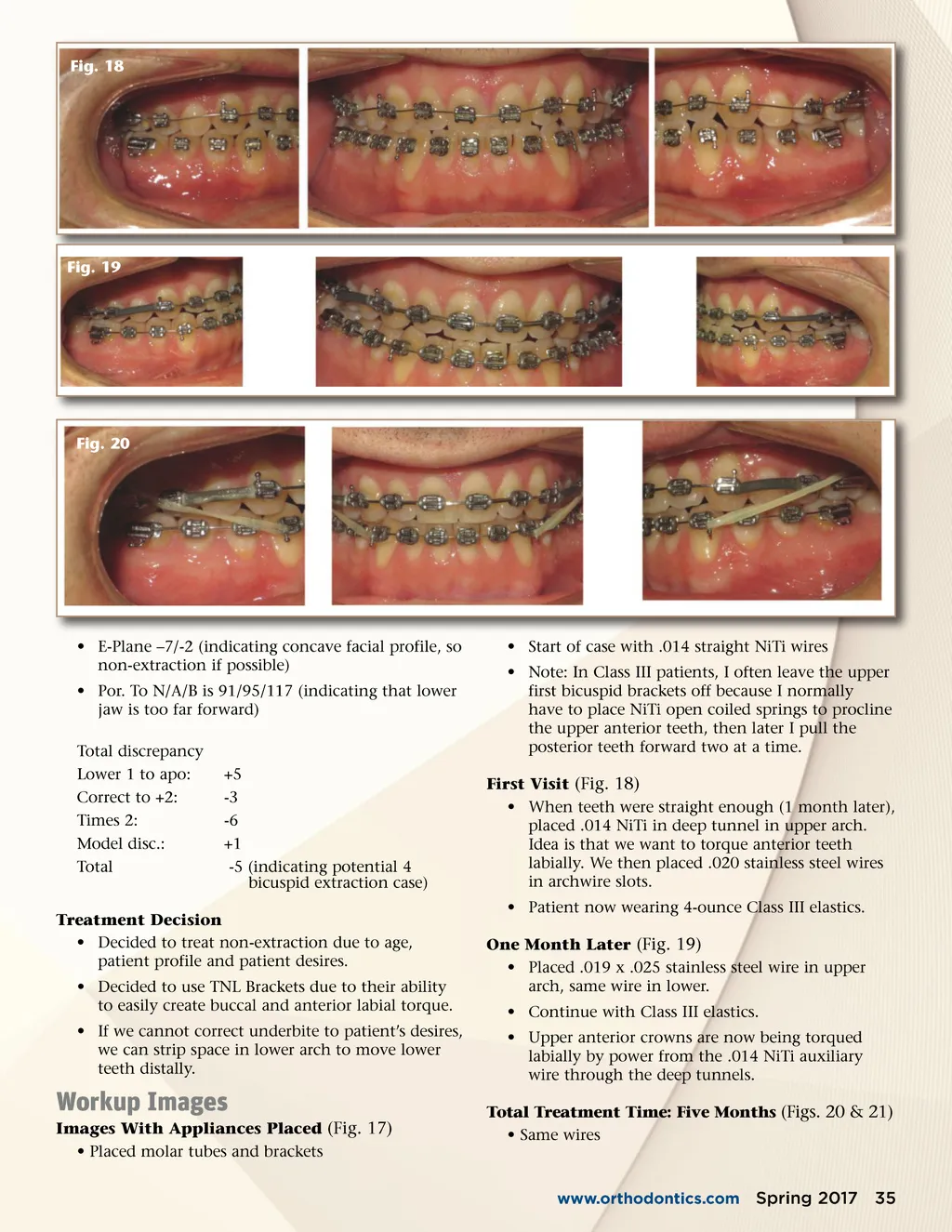
Fig. 18 Fig. 19 Fig. 20 • E-Plane –7/-2 (indicating concave facial profile, so non-extraction if possible) • Por. To N/A/B is 91/95/117 (indicating that lower jaw is too far forward) Total discrepancy Lower 1 to apo: Correct to +2: Times 2: Model disc.: Total • Start of case with .014 straight NiTi wires • Note: In Class III patients, I often leave the upper first bicuspid brackets off because I normally have to place NiTi open coiled springs to procline the upper anterior teeth, then later I pull the posterior teeth forward two at a time. First Visit (Fig. 18) • When teeth were straight enough (1 month later), placed .014 NiTi in deep tunnel in upper arch. Idea is that we want to torque anterior teeth labially. We then placed .020 stainless steel wires in archwire slots. • Patient now wearing 4-ounce Class III elastics. One Month Later (Fig. 19) • Placed .019 x .025 stainless steel wire in upper arch, same wire in lower. • Continue with Class III elastics. • Upper anterior crowns are now being torqued labially by power from the .014 NiTi auxiliary wire through the deep tunnels. Total Treatment Time: Five Months (Figs. 20 & 21) • Same wires +5 -3 -6 +1 -5 (indicating potential 4 bicuspid extraction case) Treatment Decision • Decided to treat non-extraction due to age, patient profile and patient desires. • Decided to use TNL Brackets due to their ability to easily create buccal and anterior labial torque. • If we cannot correct underbite to patient’s desires, we can strip space in lower arch to move lower teeth distally. Workup Images Images With Appliances Placed (Fig. 17) • Placed molar tubes and brackets www.orthodontics.com Spring 2017 35
Journal of the American Orthodontic Society Spring 2017: Page 35