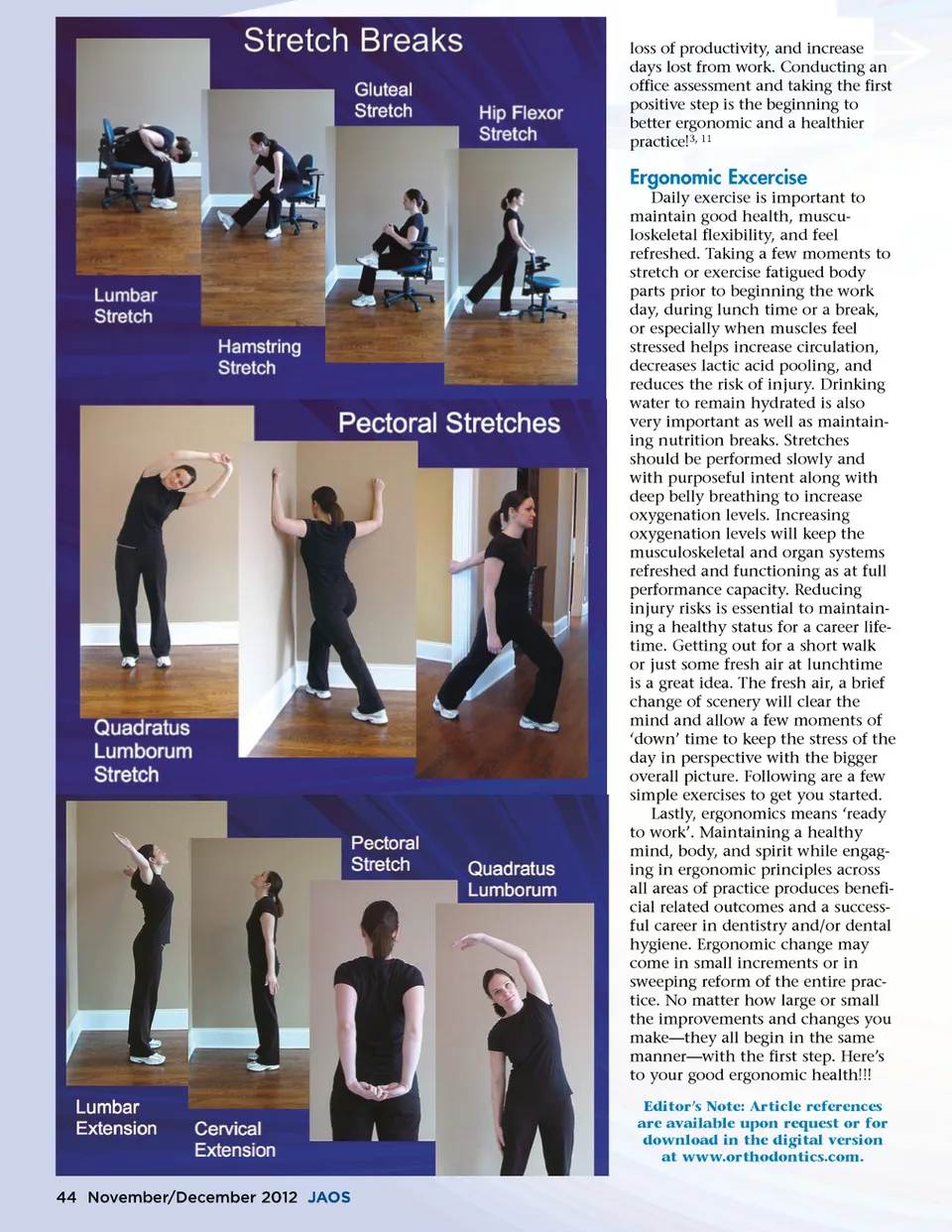
loss of productivity, and increase days lost from work. Conducting an office assessment and taking the first positive step is the beginning to better ergonomic and a healthier practice! 3, 11 Ergonomic Excercise Daily exercise is important to maintain good health, muscu-loskeletal flexibility, and feel refreshed. Taking a few moments to stretch or exercise fatigued body parts prior to beginning the work day, during lunch time or a break, or especially when muscles feel stressed helps increase circulation, decreases lactic acid pooling, and reduces the risk of injury. Drinking water to remain hydrated is also very important as well as maintain-ing nutrition breaks. Stretches should be performed slowly and with purposeful intent along with deep belly breathing to increase oxygenation levels. Increasing oxygenation levels will keep the musculoskeletal and organ systems refreshed and functioning as at full performance capacity. Reducing injury risks is essential to maintain-ing a healthy status for a career life-time. Getting out for a short walk or just some fresh air at lunchtime is a great idea. The fresh air, a brief change of scenery will clear the mind and allow a few moments of ‘down’ time to keep the stress of the day in perspective with the bigger overall picture. Following are a few simple exercises to get you started. Lastly, ergonomics means ‘ready to work’. Maintaining a healthy mind, body, and spirit while engag-ing in ergonomic principles across all areas of practice produces benefi-cial related outcomes and a success-ful career in dentistry and/or dental hygiene. Ergonomic change may come in small increments or in sweeping reform of the entire prac-tice. No matter how large or small the improvements and changes you make––they all begin in the same manner––with the first step. Here’s to your good ergonomic health!!! Editor’s Note: Article references are available upon request or for download in the digital version at www.orthodontics.com. 44 November/December 2012 JAOS
Journal of the American Orthodontic Society November-December 2012: Page 44