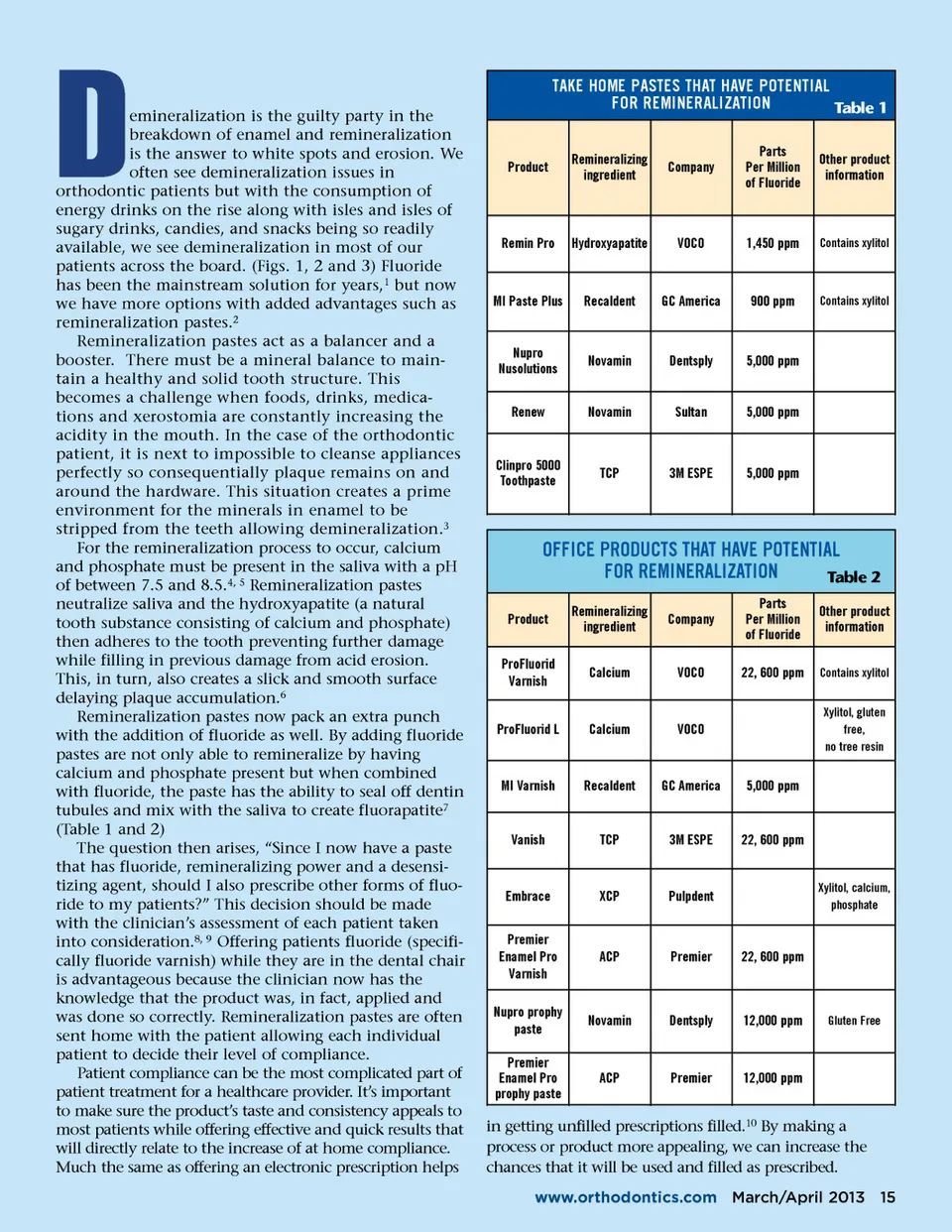
D emineralization is the guilty party in the breakdown of enamel and remineralization is the answer to white spots and erosion. We often see demineralization issues in orthodontic patients but with the consumption of energy drinks on the rise along with isles and isles of sugary drinks, candies, and snacks being so readily available, we see demineralization in most of our patients across the board. (Figs. 1, 2 and 3) Fluoride has been the mainstream solution for years, 1 but now we have more options with added advantages such as remineralization pastes. 2 Remineralization pastes act as a balancer and a booster. There must be a mineral balance to main-tain a healthy and solid tooth structure. This becomes a challenge when foods, drinks, medica-tions and xerostomia are constantly increasing the acidity in the mouth. In the case of the orthodontic patient, it is next to impossible to cleanse appliances perfectly so consequentially plaque remains on and around the hardware. This situation creates a prime environment for the minerals in enamel to be stripped from the teeth allowing demineralization. 3 For the remineralization process to occur, calcium and phosphate must be present in the saliva with a pH of between 7.5 and 8.5. 4, 5 Remineralization pastes neutralize saliva and the hydroxyapatite (a natural tooth substance consisting of calcium and phosphate) then adheres to the tooth preventing further damage while filling in previous damage from acid erosion. This, in turn, also creates a slick and smooth surface delaying plaque accumulation. 6 Remineralization pastes now pack an extra punch with the addition of fluoride as well. By adding fluoride pastes are not only able to remineralize by having calcium and phosphate present but when combined with fluoride, the paste has the ability to seal off dentin tubules and mix with the saliva to create fluorapatite 7 (Table 1 and 2) The question then arises, “Since I now have a paste that has fluoride, remineralizing power and a desensi-tizing agent, should I also prescribe other forms of fluo-ride to my patients?” This decision should be made with the clinician’s assessment of each patient taken into consideration. 8, 9 Offering patients fluoride (specifi-cally fluoride varnish) while they are in the dental chair is advantageous because the clinician now has the knowledge that the product was, in fact, applied and was done so correctly. Remineralization pastes are often sent home with the patient allowing each individual patient to decide their level of compliance. Patient compliance can be the most complicated part of patient treatment for a healthcare provider. It’s important to make sure the product’s taste and consistency appeals to most patients while offering effective and quick results that will directly relate to the increase of at home compliance. Much the same as offering an electronic prescription helps TAKE HOME PASTES THAT HAVE POTENTIAL FOR REMINERALIZATION Table 1 Remineralizing ingredient Parts Per Million of Fluoride Other product information Product Company Remin Pro Hydroxyapatite VOCO 1,450 ppm Contains xylitol MI Paste Plus Recaldent GC America 900 ppm Contains xylitol Nupro Nusolutions Renew Novamin Dentsply 5,000 ppm Novamin Sultan 5,000 ppm Clinpro 5000 Toothpaste TCP 3M ESPE 5,000 ppm OFFICE PRODUCTS THAT HAVE POTENTIAL FOR REMINERALIZATION Table 2 Product ProFluorid Varnish Remineralizing ingredient Calcium Company Parts Per Million of Fluoride 22, 600 ppm Other product information Contains xylitol Xylitol, gluten free, no tree resin VOCO ProFluorid L Calcium VOCO MI Varnish Recaldent GC America 5,000 ppm Vanish TCP 3M ESPE 22, 600 ppm Embrace Premier Enamel Pro Varnish Nupro prophy paste Premier Enamel Pro prophy paste XCP Pulpdent Xylitol, calcium, phosphate ACP Premier 22, 600 ppm Novamin Dentsply 12,000 ppm Gluten Free ACP Premier 12,000 ppm in getting unfilled prescriptions filled. 10 By making a process or product more appealing, we can increase the chances that it will be used and filled as prescribed. www.orthodontics.com March/April 2013 15
Journal of the American Orthodontic Society March-April 2013: Page 15