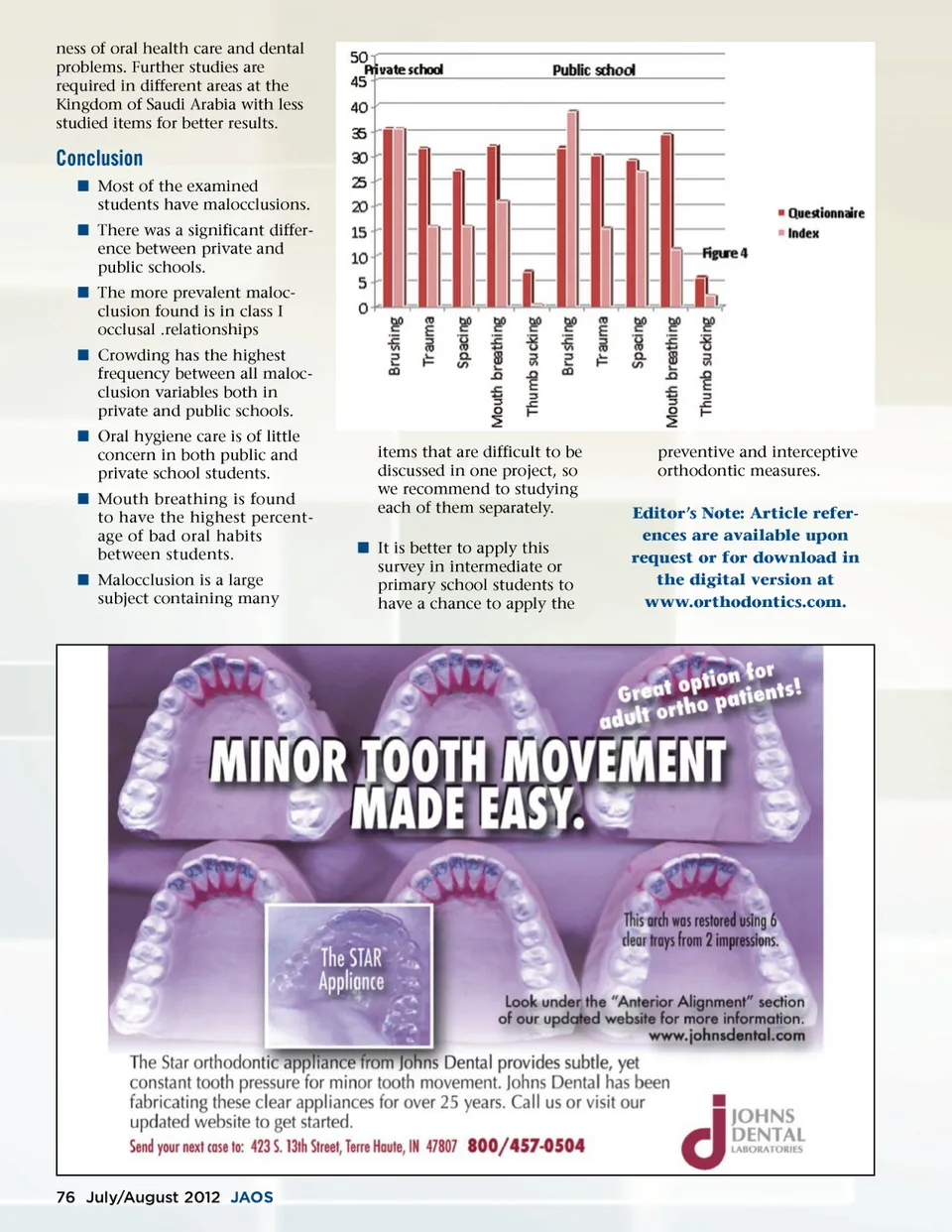
ness of oral health care and dental problems. Further studies are required in different areas at the Kingdom of Saudi Arabia with less studied items for better results. Conclusion í Most of the examined students have malocclusions. í There was a significant differ-ence between private and public schools. í The more prevalent maloc-clusion found is in class I occlusal .relationships í Crowding has the highest frequency between all maloc-clusion variables both in private and public schools. í Oral hygiene care is of little concern in both public and private school students. í Mouth breathing is found to have the highest percent-age of bad oral habits between students. í Malocclusion is a large subject containing many items that are difficult to be discussed in one project, so we recommend to studying each of them separately. í It is better to apply this survey in intermediate or primary school students to have a chance to apply the preventive and interceptive orthodontic measures. Editor’s Note: Article refer-ences are available upon request or for download in the digital version at www.orthodontics.com. 76 July/August 2012 JAOS
Journal of the American Orthodontic Society July-August 2012 Buyer's Guide: Page 76