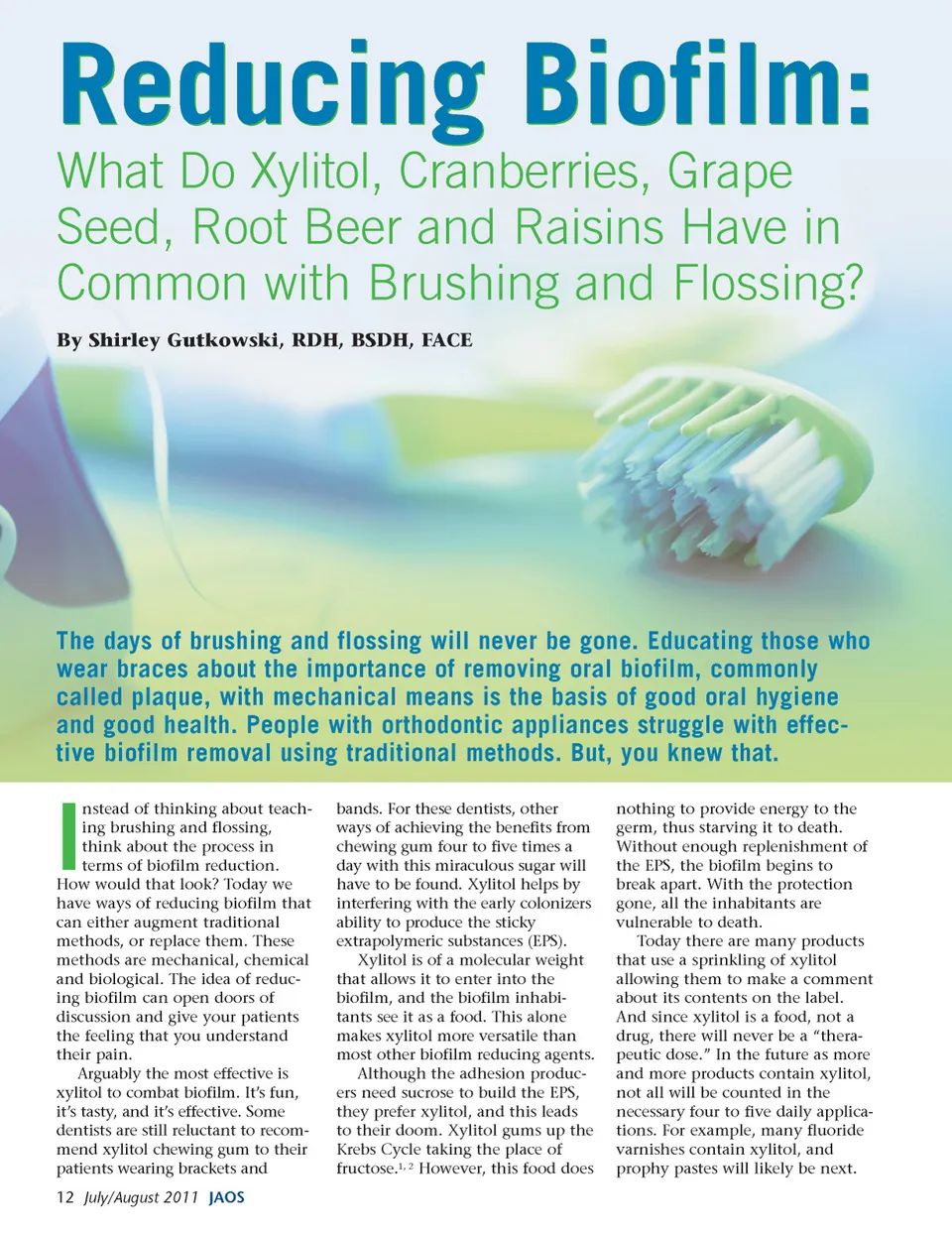
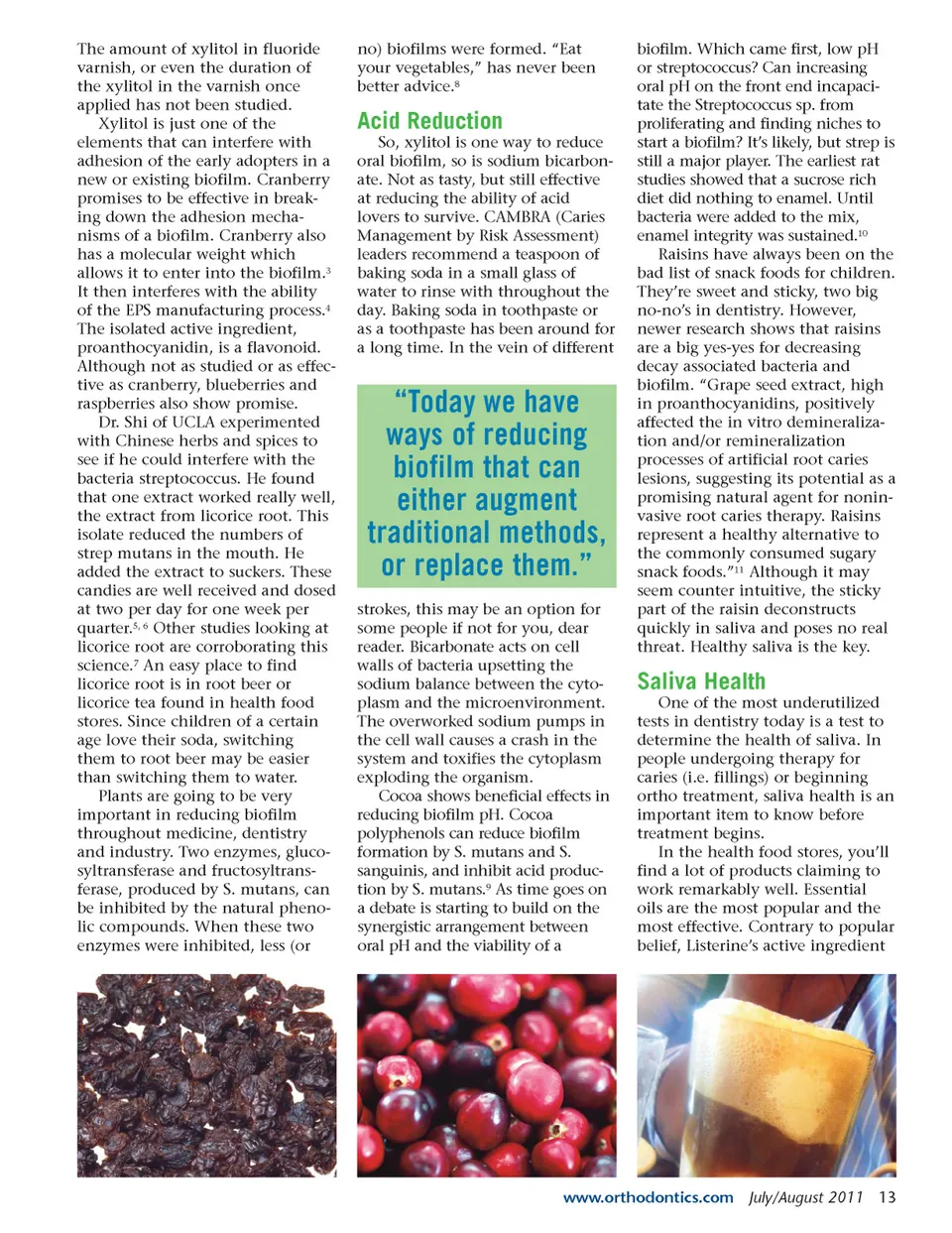
The amount of xylitol in fluoride varnish, or even the duration of the xylitol in the varnish once applied has not been studied. Xylitol is just one of the elements that can interfere with adhesion of the early adopters in a new or existing biofilm. Cranberry promises to be effective in break-ing down the adhesion mecha-nisms of a biofilm. Cranberry also has a molecular weight which allows it to enter into the biofilm. 3 It then interferes with the ability of the EPS manufacturing process. 4 The isolated active ingredient, proanthocyanidin, is a flavonoid. Although not as studied or as effec-tive as cranberry, blueberries and raspberries also show promise. Dr. Shi of UCLA experimented with Chinese herbs and spices to see if he could interfere with the bacteria streptococcus. He found that one extract worked really well, the extract from licorice root. This isolate reduced the numbers of strep mutans in the mouth. He added the extract to suckers. These candies are well received and dosed at two per day for one week per quarter. 5, 6 Other studies looking at licorice root are corroborating this science. 7 An easy place to find licorice root is in root beer or licorice tea found in health food stores. Since children of a certain age love their soda, switching them to root beer may be easier than switching them to water. Plants are going to be very important in reducing biofilm throughout medicine, dentistry and industry. Two enzymes, gluco-syltransferase and fructosyltrans-ferase, produced by S. mutans, can be inhibited by the natural pheno-lic compounds. When these two enzymes were inhibited, less (or no) biofilms were formed. “Eat your vegetables,” has never been better advice. 8 Acid Reduction So, xylitol is one way to reduce oral biofilm, so is sodium bicarbon-ate. Not as tasty, but still effective at reducing the ability of acid lovers to survive. CAMBRA (Caries Management by Risk Assessment) leaders recommend a teaspoon of baking soda in a small glass of water to rinse with throughout the day. Baking soda in toothpaste or as a toothpaste has been around for a long time. In the vein of different “Today we have ways of reducing biofilm that can either augment traditional methods, or replace them.” strokes, this may be an option for some people if not for you, dear reader. Bicarbonate acts on cell walls of bacteria upsetting the sodium balance between the cyto-plasm and the microenvironment. The overworked sodium pumps in the cell wall causes a crash in the system and toxifies the cytoplasm exploding the organism. Cocoa shows beneficial effects in reducing biofilm pH. Cocoa polyphenols can reduce biofilm formation by S. mutans and S. sanguinis, and inhibit acid produc-tion by S. mutans. 9 As time goes on a debate is starting to build on the synergistic arrangement between oral pH and the viability of a biofilm. Which came first, low pH or streptococcus? Can increasing oral pH on the front end incapaci-tate the Streptococcus sp. from proliferating and finding niches to start a biofilm? It’s likely, but strep is still a major player. The earliest rat studies showed that a sucrose rich diet did nothing to enamel. Until bacteria were added to the mix, enamel integrity was sustained. 10 Raisins have always been on the bad list of snack foods for children. They’re sweet and sticky, two big no-no’s in dentistry. However, newer research shows that raisins are a big yes-yes for decreasing decay associated bacteria and biofilm. “Grape seed extract, high in proanthocyanidins, positively affected the in vitro demineraliza-tion and/or remineralization processes of artificial root caries lesions, suggesting its potential as a promising natural agent for nonin-vasive root caries therapy. Raisins represent a healthy alternative to the commonly consumed sugary snack foods.” 11 Although it may seem counter intuitive, the sticky part of the raisin deconstructs quickly in saliva and poses no real threat. Healthy saliva is the key. Saliva Health One of the most underutilized tests in dentistry today is a test to determine the health of saliva. In people undergoing therapy for caries (i.e. fillings) or beginning ortho treatment, saliva health is an important item to know before treatment begins. In the health food stores, you’ll find a lot of products claiming to work remarkably well. Essential oils are the most popular and the most effective. Contrary to popular belief, Listerine’s active ingredient www.orthodontics.com July/August 2011 13
Journal of the American Orthodontic Society July-August 2011-Buyer's Guide: Page 13