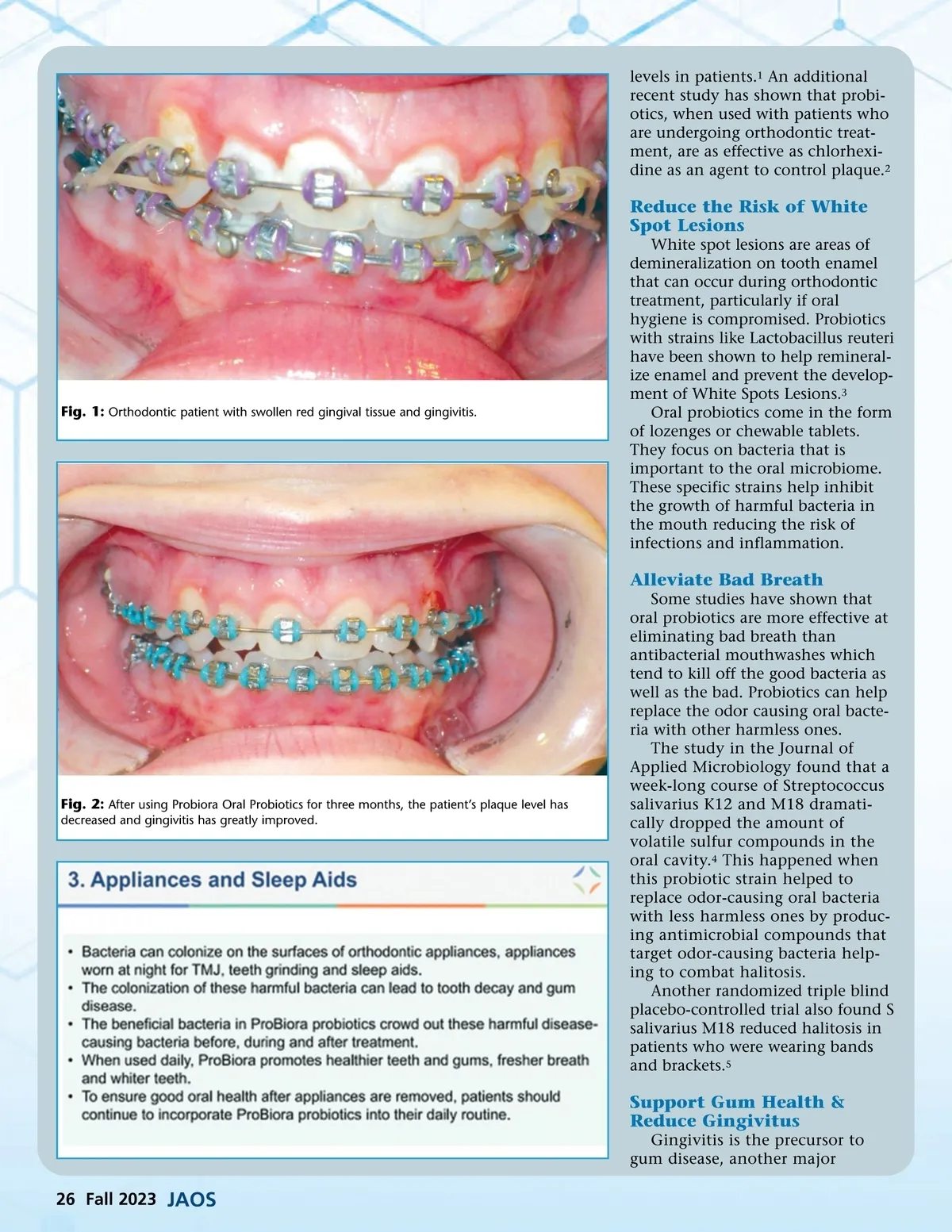
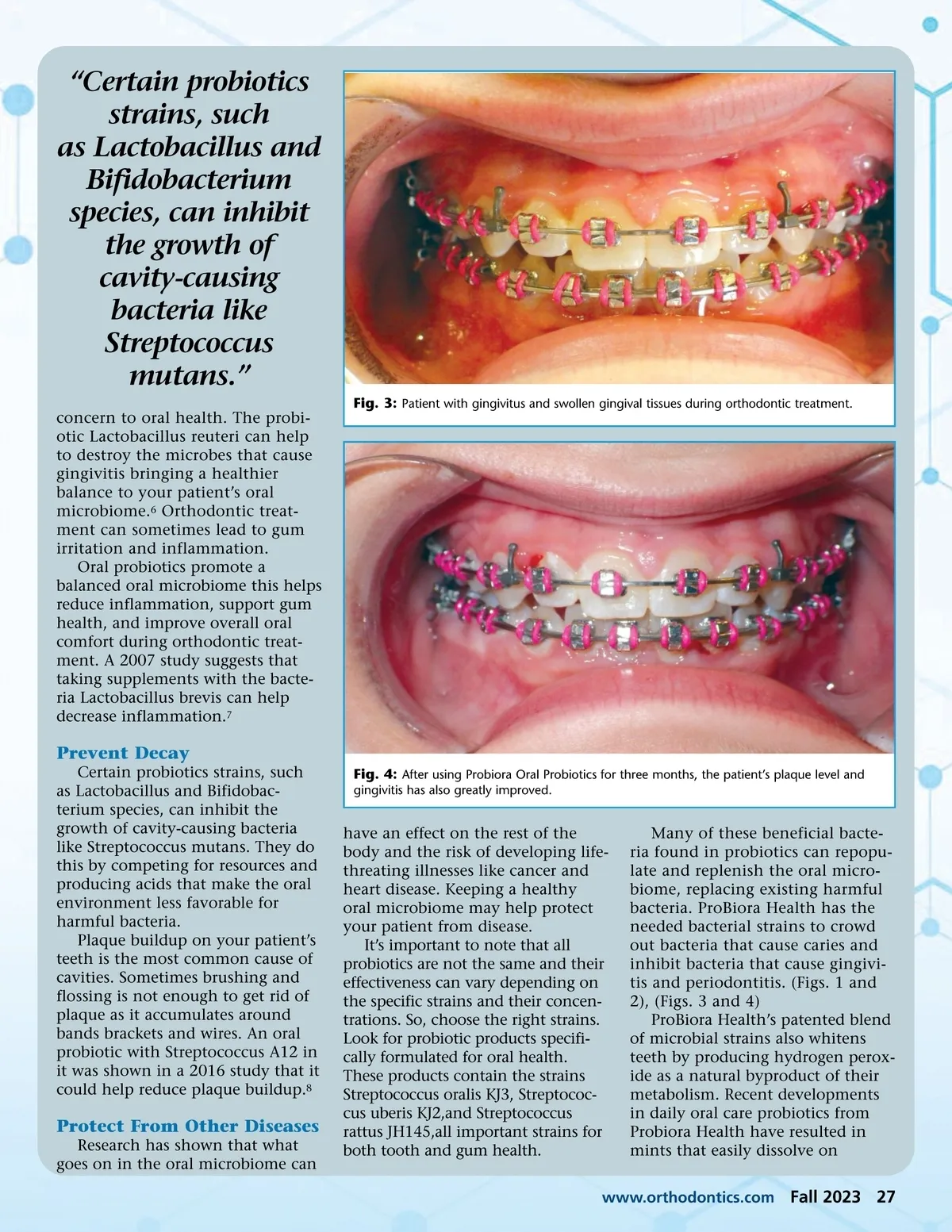
levels in patients. 1 An additional recent study has shown that probi-otics, when used with patients who are undergoing orthodontic treat-ment, are as effective as chlorhexi-dine as an agent to control plaque. 2 Reduce the Risk of White Spot Lesions White spot lesions are areas of demineralization on tooth enamel that can occur during orthodontic treatment, particularly if oral hygiene is compromised. Probiotics with strains like Lactobacillus reuteri have been shown to help remineral-ize enamel and prevent the develop-ment of White Spots Lesions. 3 Oral probiotics come in the form of lozenges or chewable tablets. They focus on bacteria that is important to the oral microbiome. These specific strains help inhibit the growth of harmful bacteria in the mouth reducing the risk of infections and inflammation. Fig. 1: Orthodontic patient with swollen red gingival tissue and gingivitis. Alleviate Bad Breath Some studies have shown that oral probiotics are more effective at eliminating bad breath than antibacterial mouthwashes which tend to kill off the good bacteria as well as the bad. Probiotics can help replace the odor causing oral bacte-ria with other harmless ones. The study in the Journal of Applied Microbiology found that a week-long course of Streptococcus salivarius K12 and M18 dramati-cally dropped the amount of volatile sulfur compounds in the oral cavity. 4 This happened when this probiotic strain helped to replace odor-causing oral bacteria with less harmless ones by produc-ing antimicrobial compounds that target odor-causing bacteria help-ing to combat halitosis. Another randomized triple blind placebo-controlled trial also found S salivarius M18 reduced halitosis in patients who were wearing bands and brackets. 5 Fig. 2: After using Probiora Oral Probiotics for three months, the patient’s plaque level has decreased and gingivitis has greatly improved. Support Gum Health & Reduce Gingivitus Gingivitis is the precursor to gum disease, another major 26 Fall 2023 JAOS
Journal of the American Orthodontic Society Fall 2023: Page 26